
Saiga antelope
Saiga tatarica
— Where the name comes from
Saiga is Russian, a loan from a Turkic language of Central Asia, and appears in Europe in the writings of the Austrian traveller Sigismund von Herberstein in the 16th century. Tatarica points to the Tatars and to the steppes this animal has always crossed. It is one of the few large European mammals to have survived from the ice age in its original environment, almost unchanged.
— Facts
- Group
- Mammals · Mammalia
- Order
- Even-toed ungulates
- Habitat
- Arid steppe and semi-desert, open continental grassland
- Range
- Kazakhstan above all, then southern Russia, Mongolia and Uzbekistan
- Size
- 110–150 cm long, 25–70 kg
- Diet
- Herbivore — steppe grasses, low shrubs, plants toxic to livestock
- Lifespan
- 6–10 years
— Characteristics
- 01
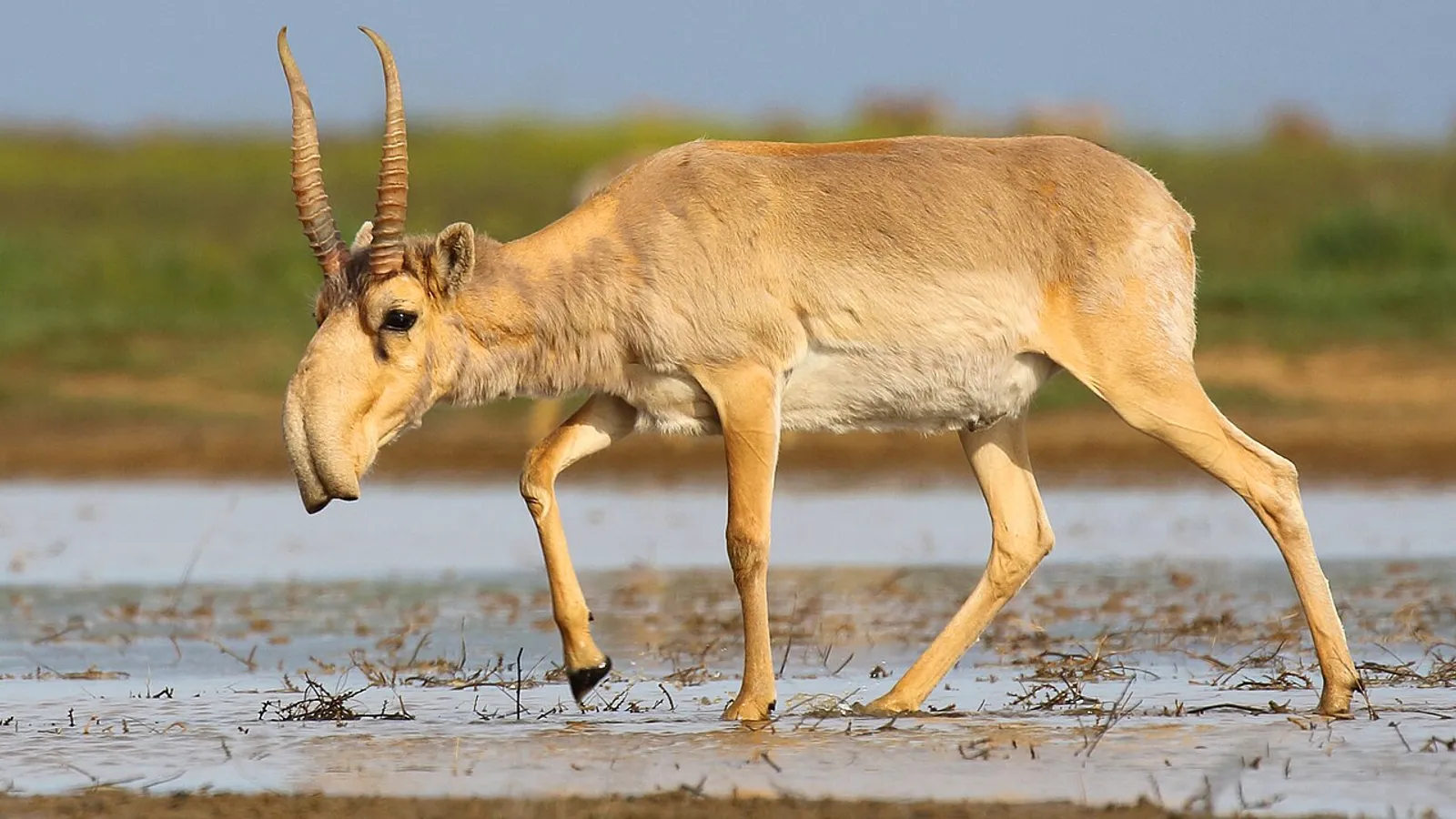
The huge mobile nose filters dust in summer and warms freezing air in winter.
- 02
It migrates in herds of tens of thousands, covering over a thousand kilometres a year.
- 03
The females nearly all give birth within a single week, swamping the predators with prey.
— What sets it apart
In May 2015, in three weeks, over two hundred thousand saiga died: two thirds of the world population, whole herds laid out on the Kazakh steppe. The cause was identified as a harmless bacterium, Pasteurella multocida, which almost every animal carries without harm and which turned lethal after a spell of abnormally warm, humid weather. It is the fastest collapse ever documented for a large mammal, and the species has since recovered to hundreds of thousands — enough to be downlisted from threatened, with nobody able to guarantee it will not happen again.
