
Pronghorn
Antilocapra americana
— Where the name comes from
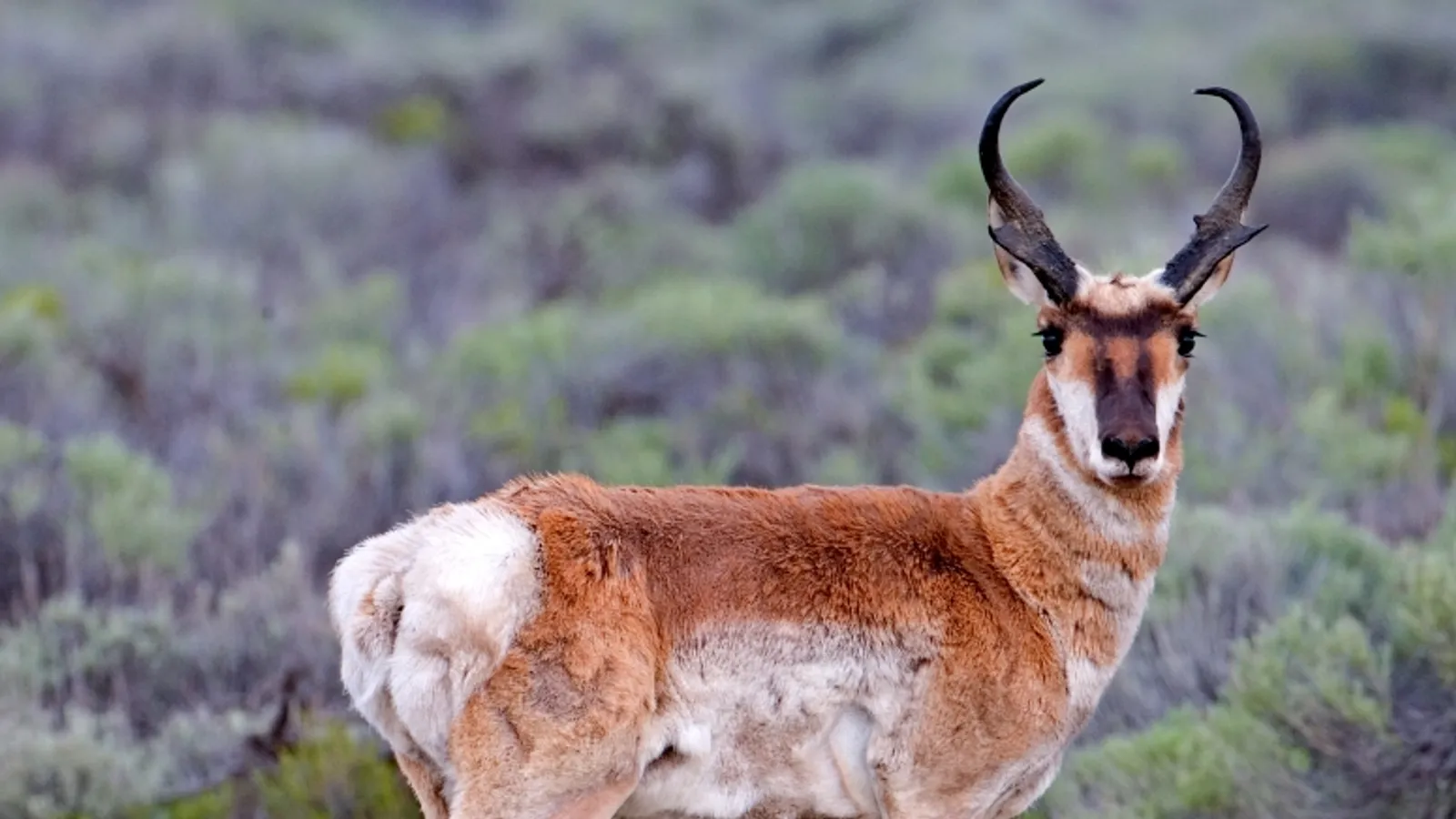
Antilocapra is a name that admits its own confusion: it joins antelope and the Latin capra, goat, because the naturalists did not know where to put it. The doubt was right — it is neither, and it is the only surviving species of an entire American family. The English pronghorn describes instead the one certain thing: the branched horns.
— Facts
- Group
- Mammals · Mammalia
- Order
- Even-toed ungulates
- Habitat
- Prairie, sagebrush, open semi-desert
- Range
- Western North America, from southern Canada to northern Mexico
- Size
- 130–150 cm long, 35–65 kg
- Diet
- Herbivore — sagebrush, shrubs, grasses, plants toxic to other grazers
- Lifespan
- 10–15 years
— Characteristics
- 01
It runs at 88 km/h and is the fastest mammal over distance: it holds 60 km/h for kilometres.
- 02
It has branched hollow horns whose sheath drops and regrows every year, a case unique in the world.
- 03
It jumps poorly and does not clear fences: it goes under, and low wires block it on migration.
— What sets it apart
It runs far faster than any living North American predator, and for decades that looked like an inexplicable luxury. The answer is in the fossils: until about twelve thousand years ago the American prairies held the American cheetah, Miracinonyx, along with lions and hyenas. Those hunters died out, the pronghorn did not, and it goes on running from a ghost. Its speed is the living proof of a predation that ended with the last ice age.
