
Indian rhinoceros
Rhinoceros unicornis
— Where the name comes from
Rhinoceros is pure Greek: rhís, rhinós, “nose”, and kéras, “horn”. Unicornis is Latin, “single-horned”, and separates this species from the African ones with two. That horn is neither bone nor ivory but compacted keratin, the same stuff as hair and nails: the reason the animal is killed is, chemically, a mass of hair fused together.
— Facts
- Group
- Mammals · Mammalia
- Order
- Odd-toed ungulates
- Habitat
- Alluvial tall-grass plains, marshes, riverine forest
- Range
- North-eastern India and southern Nepal, in a few protected areas
- Size
- 300–380 cm long, 1,800–2,700 kg
- Diet
- Herbivore — tall grasses, water plants, leaves, fallen fruit
- Lifespan
- 35–45 years
— Characteristics
- 01
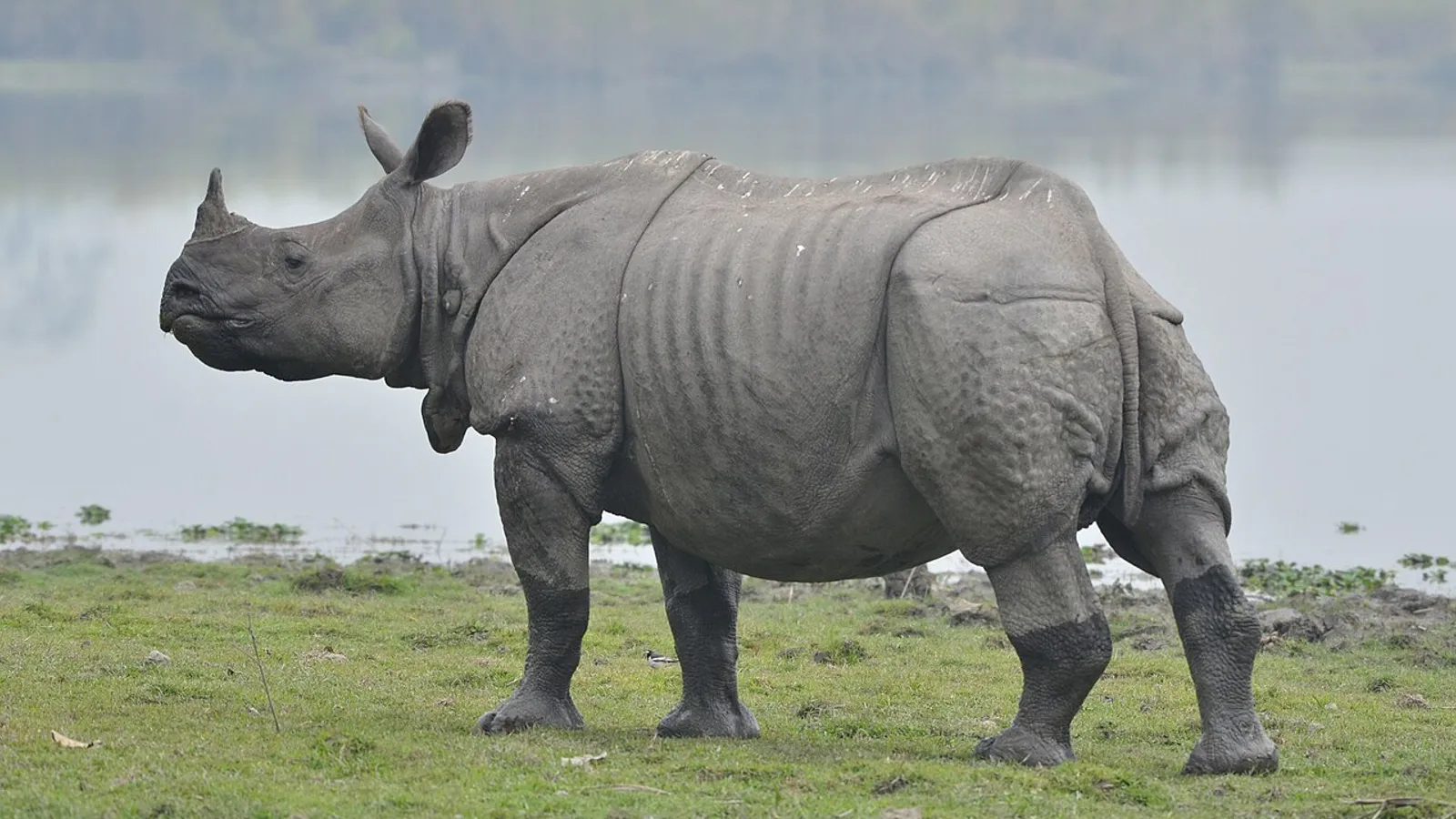
The plated skin with its deep folds looks like riveted armour and inspired Dürer’s famous woodcut.
- 02
The upper lip is prehensile and folds away when it grazes short grass.
- 03
It swims well and crosses wide rivers, unlike the African rhinos.
— What sets it apart
In 1515 an Indian rhinoceros reached Lisbon, the first in Europe since Roman antiquity. Albrecht Dürer never saw it: he cut his famous woodcut from a letter and somebody else’s sketch, and added armour plates, scales on the legs and a small horn on the back that does not exist. That mistaken image was copied into natural history books for over three centuries, and generations of Europeans learnt what a rhinoceros looked like from an artist who had only heard one described.
