
Cane toad
Rhinella marina
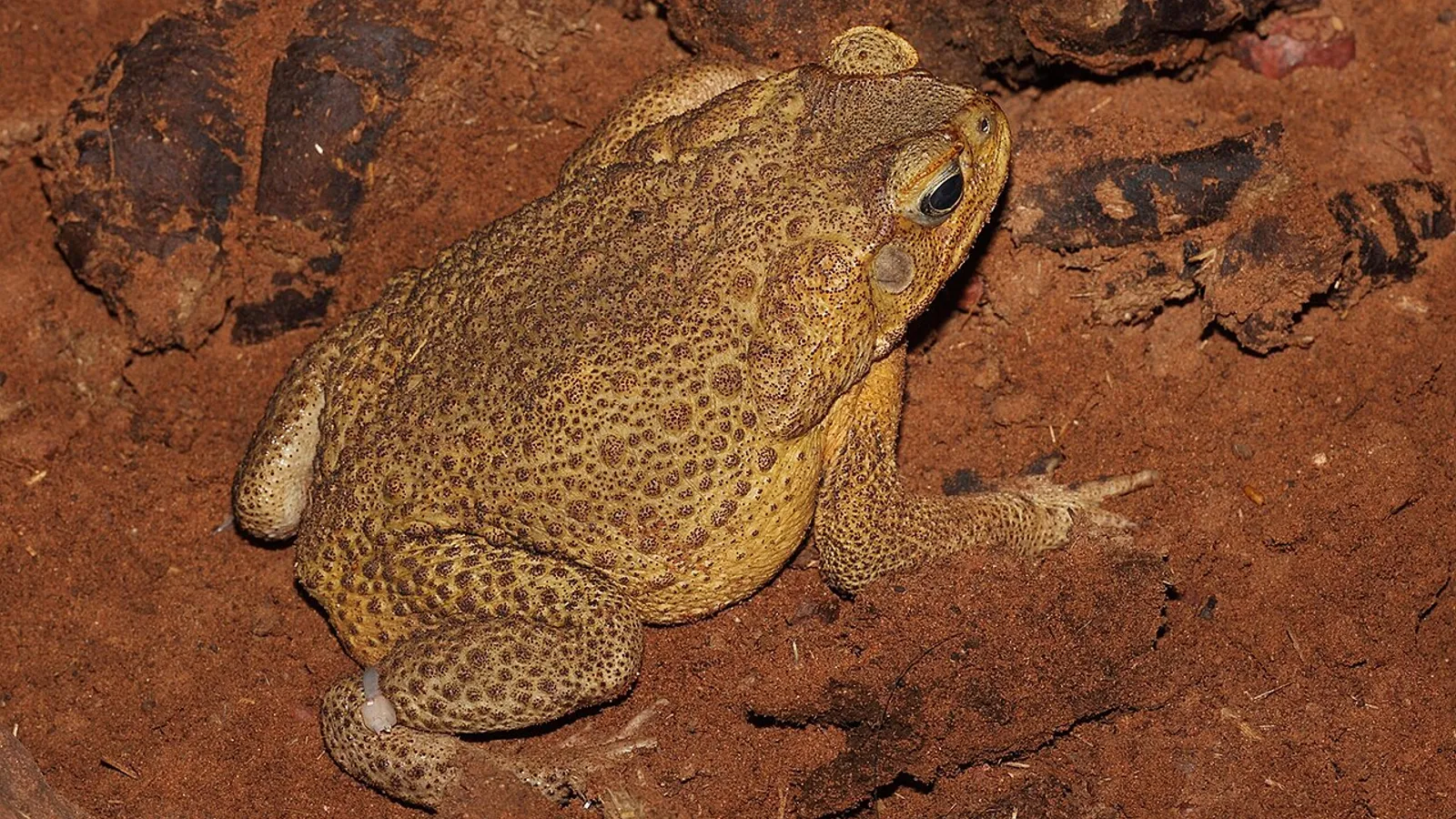
— Where the name comes from
Rhinella is a diminutive from the Greek rhís, nose, for the snout; marina, Latin, comes from an old and misleading Linnaean name, Bufo marinus, though there is nothing marine about it. In English it is the cane toad, because it was introduced into sugar cane plantations to fight pests. It is one of the most famous ecological disasters in history.
— Facts
- Group
- Amphibians · Amphibia
- Order
- Frogs and toads
- Habitat
- Open country, farmland, gardens, disturbed ground
- Range
- Native to Central and South America; introduced to Australia and elsewhere
- Size
- 10–15 cm, up to 24 cm
- Diet
- Omnivore — insects and anything that fits in its mouth
- Lifespan
- 10–15 years
— Characteristics
- 01
Glands behind the eyes secrete a powerful poison that kills whatever tries to eat it.
- 02
A female lays up to 30,000 eggs in a clutch.
- 03
It eats practically anything that moves and fits in its mouth.
— What sets it apart
In 1935 a few dozen cane toads were released in Australia to fight a sugar cane beetle. They never touched the pest, but they found a continent with no predators able to digest their poison: today there are over two billion of them, advancing tens of kilometres a year and poisoning the snakes, crocodiles and marsupials that bite them. It is the textbook case of a human remedy becoming a plague worse than the disease.
