
Dyeing poison dart frog
Dendrobates tinctorius
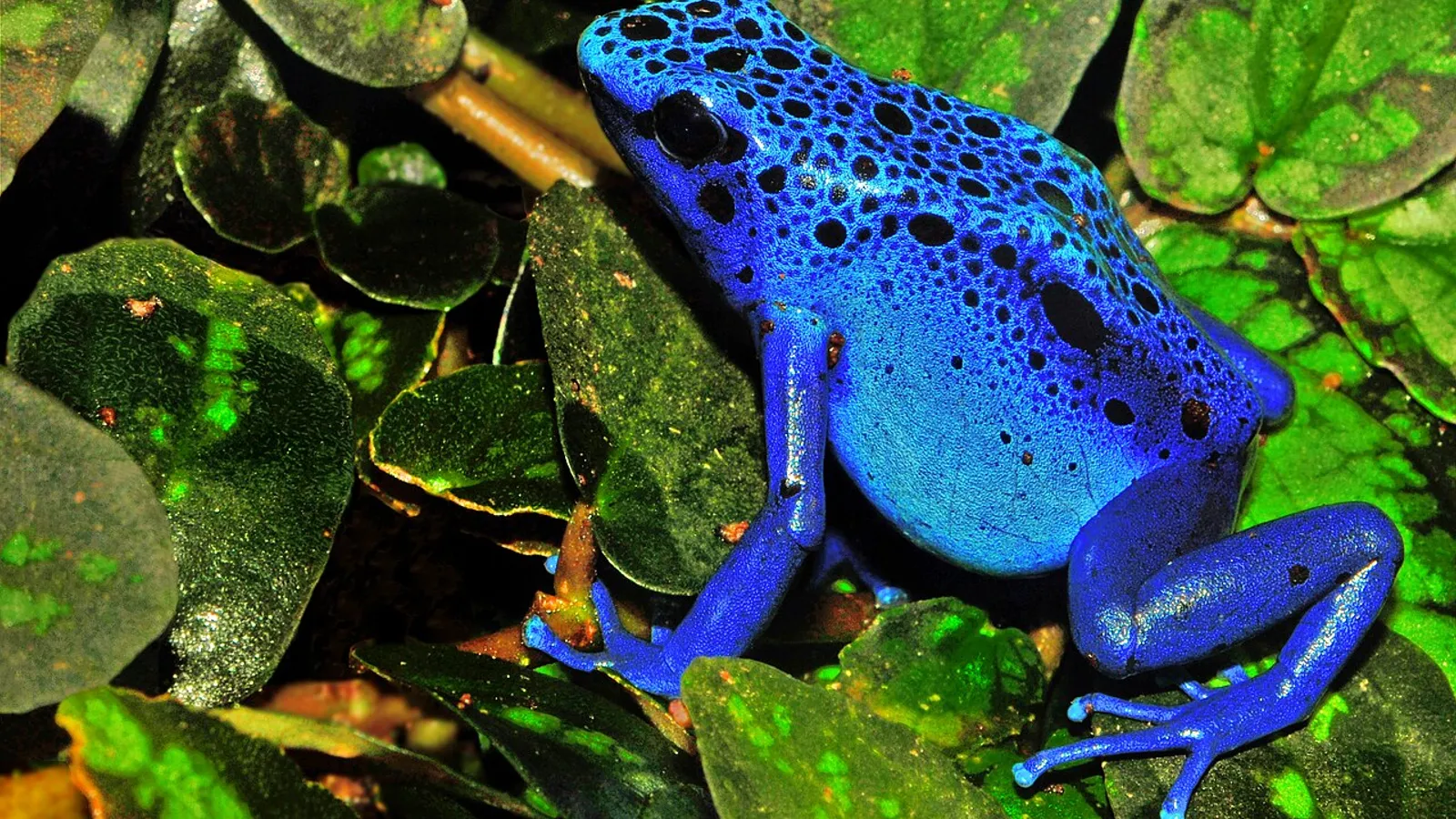
— Where the name comes from
Dendrobates is Greek for “tree walker”, from déndron, tree, and baínō, I walk. Tinctorius, Latin, “dyer”: indigenous people were said to use its secretions to colour parrots’ feathers. It is one of the famous poison dart frogs, whose colours are a warning sign.
— Facts
- Group
- Amphibians · Amphibia
- Order
- Frogs and toads
- Habitat
- Rainforest floor, near streams
- Range
- The Guianas, Suriname, northern Brazil
- Size
- 3–5 cm
- Diet
- Insectivore — ants, termites, small arthropods
- Lifespan
- 10–15 years
— Characteristics
- 01
The blazing colours are aposematic: they warn predators of its toxicity.
- 02
The poison is not made by the frog but derived from the ants it eats.
- 03
The male carries the tadpoles on his back, one at a time, to small pools among the leaves.
— What sets it apart
Dart frogs are not born poisonous: they build their toxins out of the arthropods they eat, certain ants above all, and in captivity, fed on “neutral” food, they become entirely harmless. Their poison is, in essence, their diet transformed. The male is also a most attentive father: when the tadpoles hatch he loads them onto his back and carries them, one by one, to distribute them among tiny pools of water held in leaves, so they do not eat each other.
