
Colorado River toad
Incilius alvarius
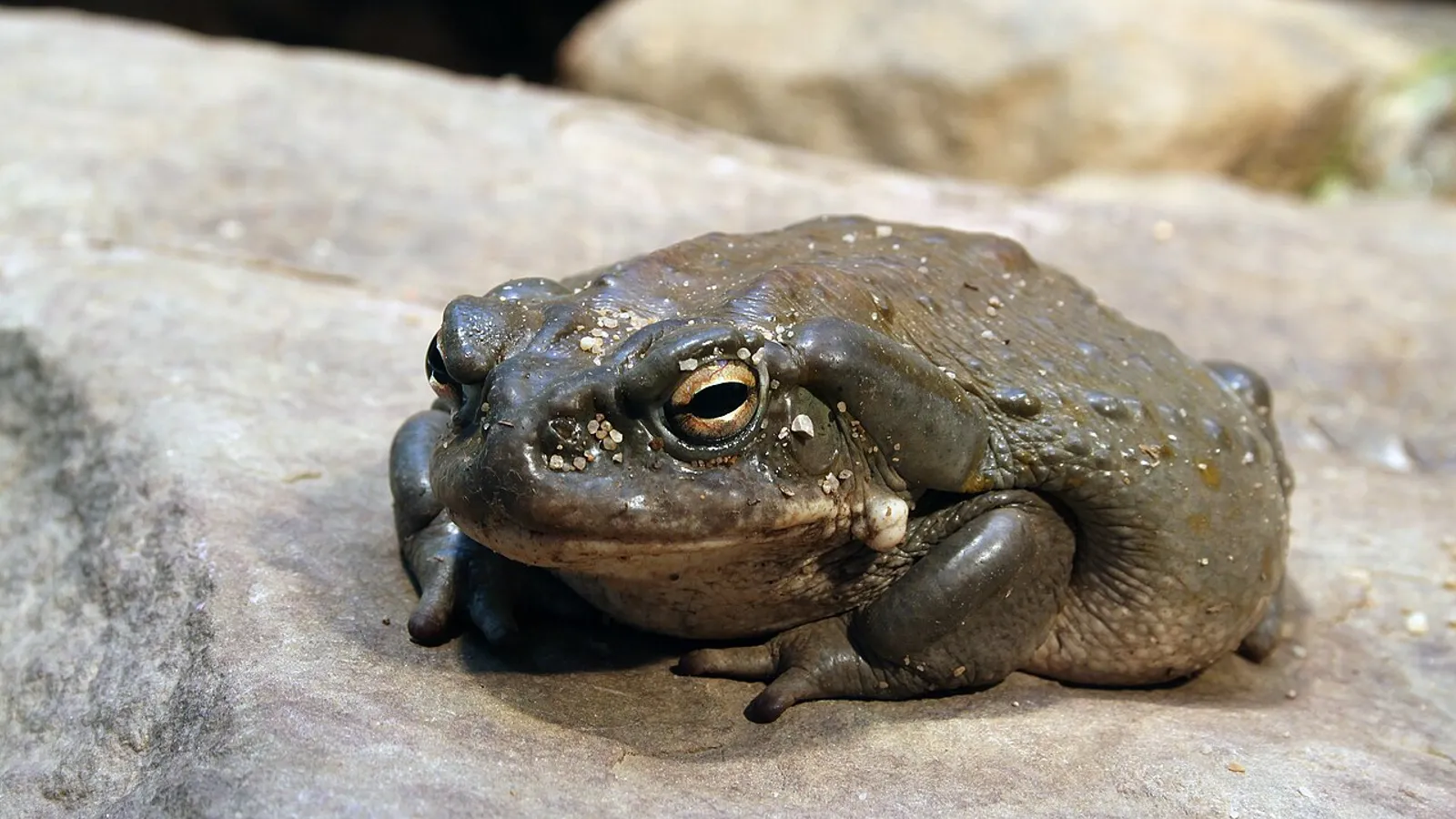
— Where the name comes from
Incilius comes from the Latin incile, the drainage channel or ditch, and alludes to the head grooves of these American toads; alvarius derives from alveus, a riverbed, and says where it is found. The common name recalls the Sonoran Desert, between Arizona and Mexico, where it spends nearly the whole year buried, waiting for the July rains.
— Facts
- Group
- Amphibians · Amphibia
- Order
- Frogs and toads
- Habitat
- Cactus desert, canals, sandy washes, temporary ponds
- Range
- Arizona, south-eastern California, north-western Mexico
- Size
- 11–19 cm, 200–900 g
- Diet
- Insects, spiders, small vertebrates
- Lifespan
- 20 years
— Characteristics
- 01
It is the largest toad in North America.
- 02
It spends nine months of the year buried in a state of torpor.
- 03
It has enormous parotoid glands behind the eyes and on the thighs.
— What sets it apart
Its skin secretion contains a powerful hallucinogen, and that is getting it into trouble. For twenty years “toad medicine” has been a fashion on the personal-development circuit in America and Europe, and the animals are caught, repeatedly squeezed and sometimes killed. In 2022 the United States National Park Service had to issue a statement asking visitors, in so many words, to stop licking the toads. The Californian populations have meanwhile disappeared.
