
Panamanian golden frog
Atelopus zeteki
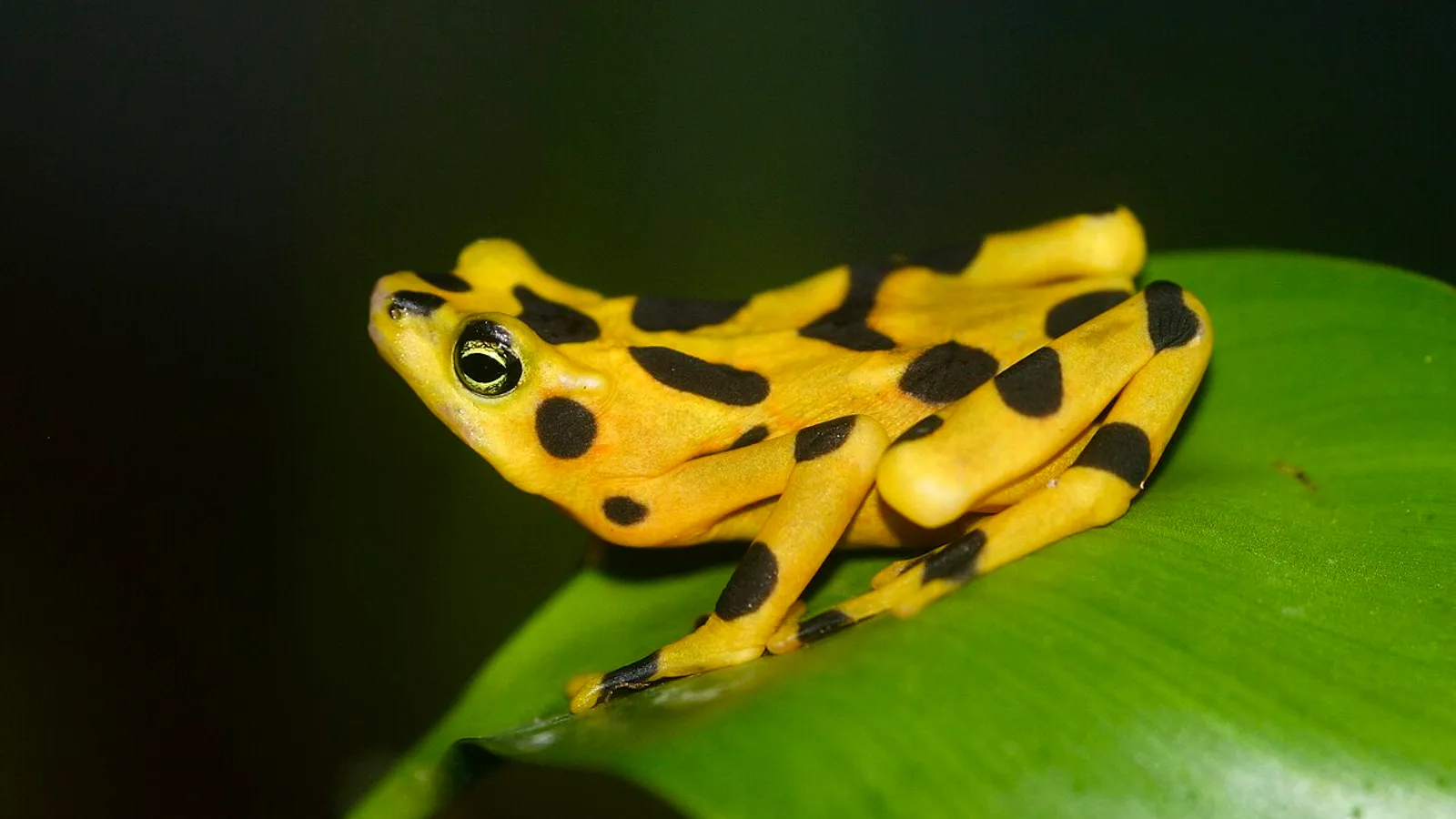
— Where the name comes from
Atelopus is “imperfect foot”, from atelḗs and poús, for the reduced structure of this genus’s legs; zeteki recalls James Zetek, the entomologist who ran the Barro Colorado research station in the Panama Canal for decades. The common name looks at the yellow and black costume, which recalls a harlequin’s.
— Facts
- Group
- Amphibians · Amphibia
- Order
- Frogs and toads
- Habitat
- Streams in cloud forest between 300 and 1,300 metres
- Range
- Western Panama
- Size
- 3.5–6.3 cm, 3–12 g
- Diet
- Ants, mites, small insects
- Lifespan
- 12 years in captivity
— Characteristics
- 01
Its skin holds one of the most potent toxins known among amphibians.
- 02
It has no middle ear and hears very little.
- 03
It is the national symbol of Panama and appears on lottery tickets.
— What sets it apart
Living beside roaring streams where no call would carry, it communicates by gesture: it raises a foreleg slowly and rotates it in the air, a signal the others see and answer. It is one of very few amphibians in the world to use a visual language. It has not been seen in the wild since 2009, swept away by the chytrid fungus; it survives only in some ninety institutions between Panama and the United States, waiting for somebody to work out how to put it back in its streams.
