
Titicaca water frog
Telmatobius culeus
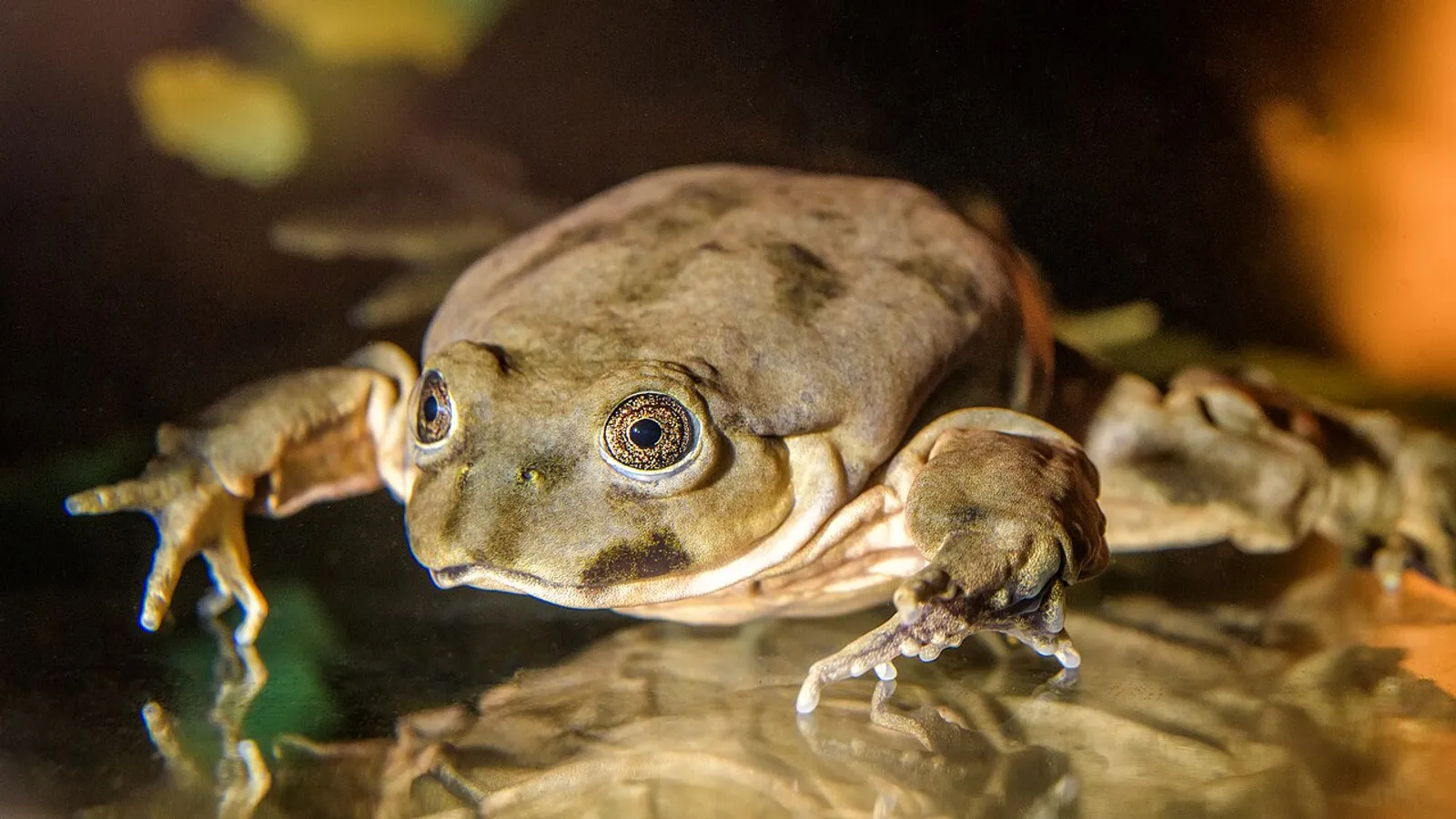
— Where the name comes from
Telmatobius is “dweller in the marsh”, from télma and bíos; culeus in Latin is the great leather sack in which wine was carried, and alludes to the folds of skin hanging from the animal like a suit several sizes too large. The English name, scrotum frog, was coined in the same spirit and with a good deal less elegance.
— Facts
- Group
- Amphibians · Amphibia
- Order
- Frogs and toads
- Habitat
- The bed of Lake Titicaca, down to 120 metres
- Range
- Lake Titicaca, between Peru and Bolivia, at 3,800 metres
- Size
- 7–14 cm, 150–350 g
- Diet
- Amphipods, snails, tadpoles, small fish
- Lifespan
- 20 years
— Characteristics
- 01
It never comes to the surface to breathe: it takes oxygen through its skin.
- 02
If the water is poor in oxygen it does press-ups to move water over the folds.
- 03
Its red blood cells are the smallest and most numerous of any amphibian.
— What sets it apart
At nearly four thousand metres the air holds a third of the oxygen it does at sea level, and this frog solved the problem by increasing surface rather than capacity: the folds of skin multiply the area through which oxygen enters, and the lungs have shrunk almost to nothing. In 2016 ten thousand of them were found dead at the mouth of the Coata river, killed by the untreated sewage of the town of Juliaca: an animal that breathes entirely through its skin has no defence at all against dirty water.
