
Couch's spadefoot toad
Scaphiopus couchii
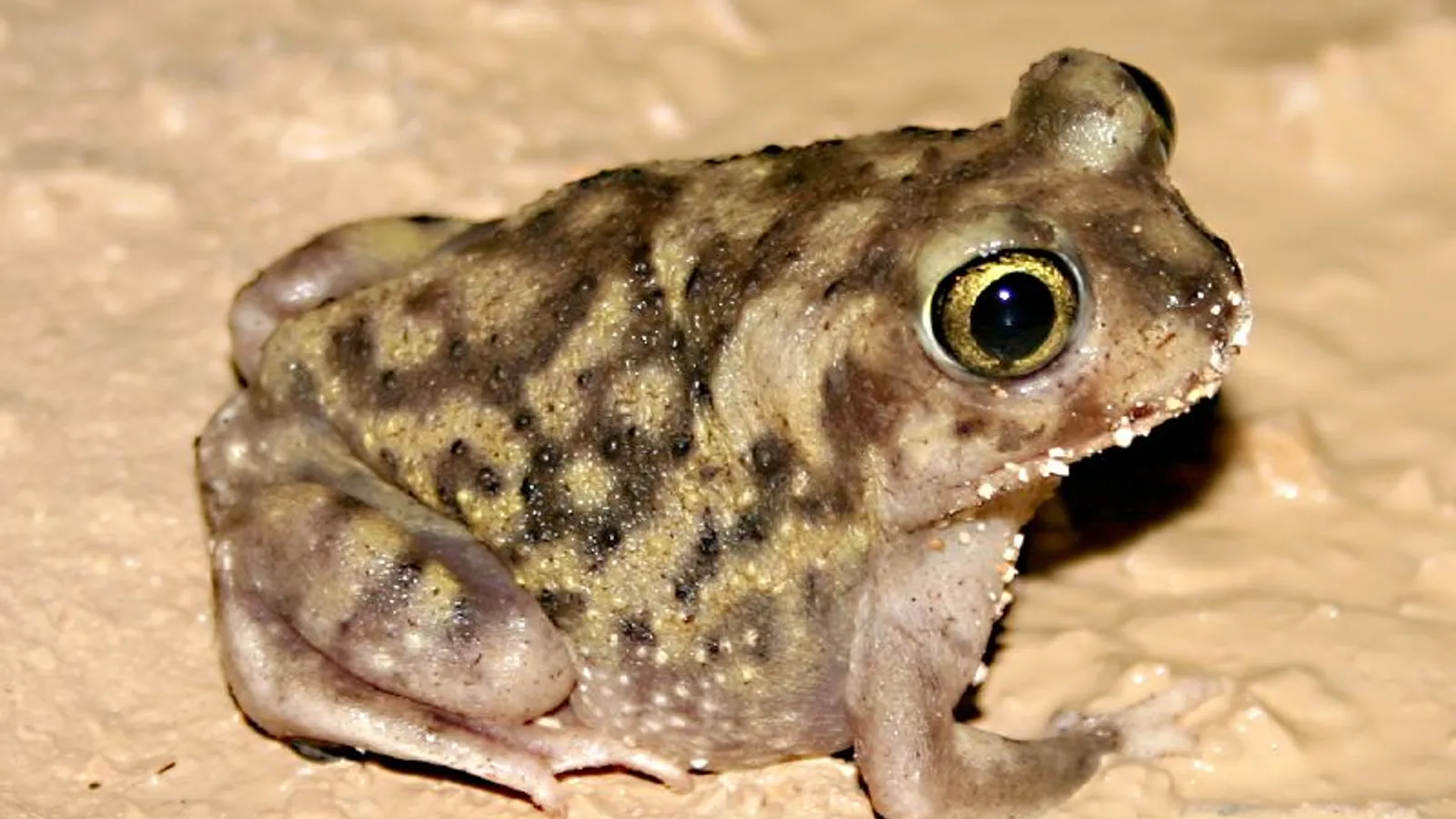
— Where the name comes from
Scaphiopus is “spade foot”, from skaphís, the little shovel, and poús: on the hind heel it carries a black, sharp horny tubercle with which it digs backwards, screwing itself into the ground. Couchii recalls Darius Couch, an American officer who collected animals in northern Mexico during a survey expedition in the mid-nineteenth century.
— Facts
- Group
- Amphibians · Amphibia
- Order
- Frogs and toads
- Habitat
- Deserts and arid grassland, sandy ground
- Range
- The south-western United States and northern Mexico
- Size
- 5–9 cm, 20–60 g
- Diet
- Termites, ants, beetles, grasshoppers
- Lifespan
- 13 years
— Characteristics
- 01
It spends ten months of the year buried, without eating or drinking.
- 02
It absorbs water from damp soil through the skin of its belly.
- 03
It comes up only after the first big summer storms.
— What sets it apart
It does not wait for the rain: it waits for the thunder. Buried half a metre down, this toad senses the low-frequency vibrations of approaching storms and begins to climb before a drop has fallen; within an hour of the downpour ending the temporary pools are full of calling males. Then everything must happen fast, because the pool will last a few days: the eggs hatch in under two days and the tadpoles turn into toadlets in little more than a week, the quickest cycle known among amphibians.
