
Common spadefoot toad
Pelobates fuscus
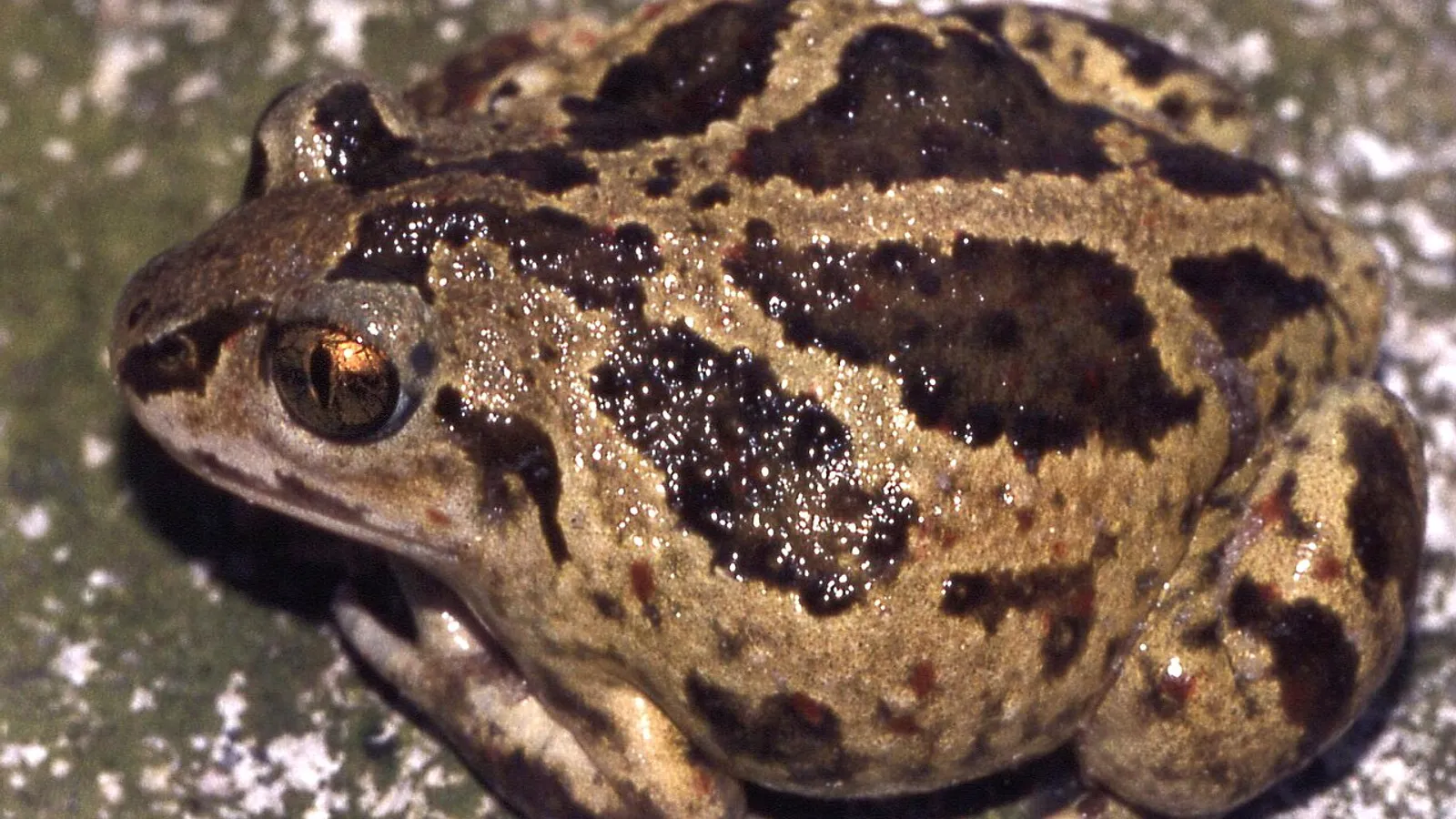
— Where the name comes from
Pelobates is “mud walker”, from pēlós and bátēs; fuscus means “dark”. Like its American relative it has a horny blade on the heel for digging, and in Italian it is also called the garlic toad: disturbed, it gives off from its skin a pungent smell that really does recall garlic.
— Facts
- Group
- Amphibians · Amphibia
- Order
- Frogs and toads
- Habitat
- Sandy soils and light farmland with ponds nearby
- Range
- Central and eastern Europe, from France to Russia
- Size
- 4–8 cm, 20–50 g
- Diet
- Insects, spiders, earthworms, slugs
- Lifespan
- 10 years
— Characteristics
- 01
It buries itself backwards in minutes, screwing down with its heels.
- 02
It has a vertical pupil, unusual among European frogs.
- 03
The male calls underwater, and the sound is barely audible from the bank.
— What sets it apart
Its tadpoles can grow larger than the adults. In good conditions they pass twelve centimetres and occasionally reach eighteen, more than twice the length of the toad they will become: they grow for a long time before transforming, because in a rich pond it pays to stay a tadpole as long as you can. Anyone who nets one thinks they have caught a fish; then they notice the hind legs and the tail being reabsorbed.
