
Natterjack toad
Epidalea calamita
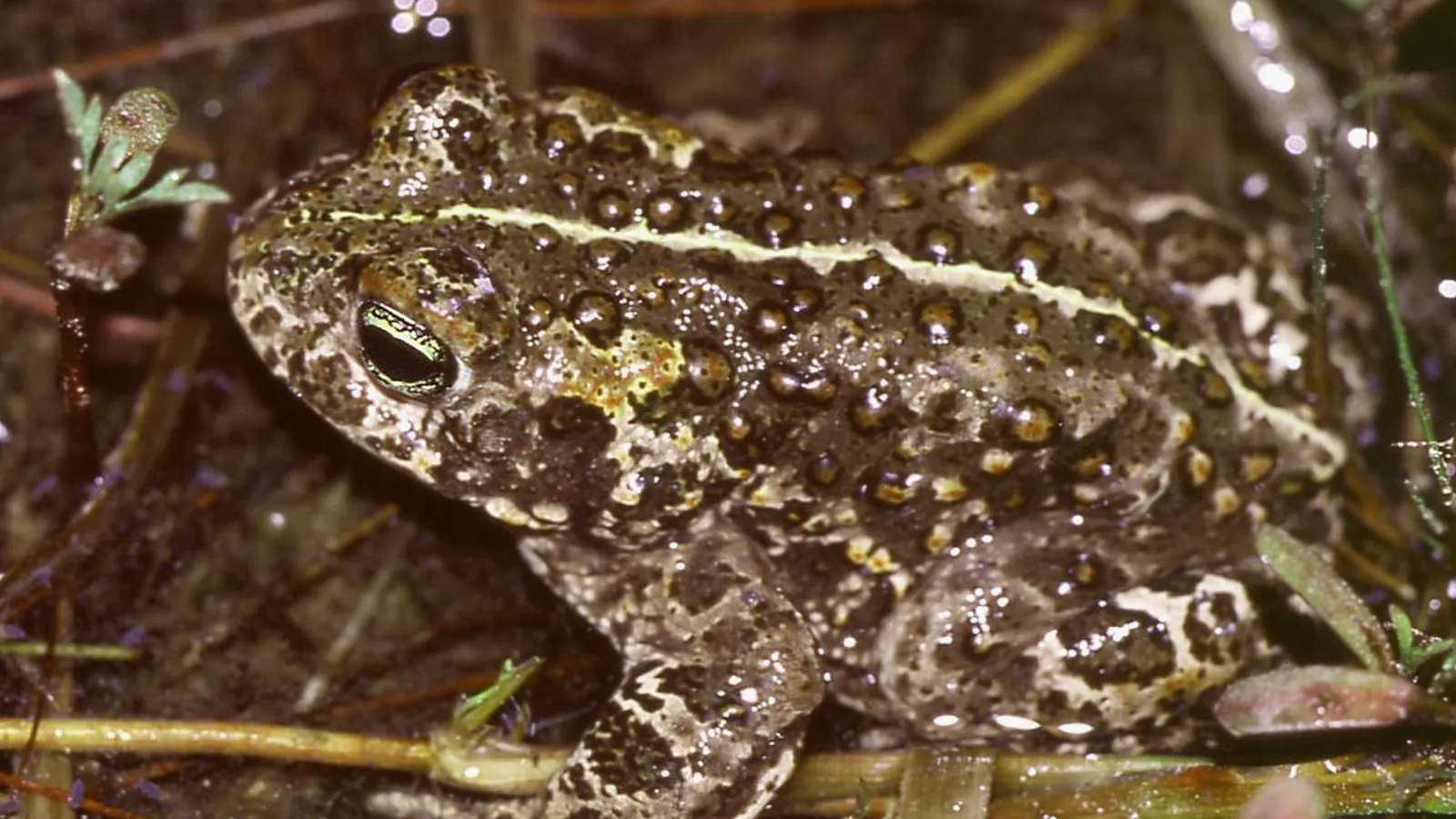
— Where the name comes from
Calamita in late Latin denoted a small green frog that climbed among reeds, from calamus: the name has nothing to do with magnets or with calamities. Epidalea is a name created in the nineteenth century and left unused for a hundred years, fished out again when genetics separated this species from the common toads.
— Facts
- Group
- Amphibians · Amphibia
- Order
- Frogs and toads
- Habitat
- Coastal dunes, sandy heaths, quarries, river gravels
- Range
- Western and central Europe, from Spain to Belarus
- Size
- 6–8 cm, 20–60 g
- Diet
- Beetles, ants, spiders, moths
- Lifespan
- 15 years
— Characteristics
- 01
It does not hop: it runs in short quick steps, like a mouse.
- 02
It has a thin yellow line down the whole of its back.
- 03
It spawns in very shallow pools that warm fast and last a few weeks.
— What sets it apart
For its size it is the loudest animal in Europe: the chorus of males carries over a kilometre and a half, and close to it passes a hundred decibels — a forty-gram toad producing the volume of a chainsaw. The call exists to bring females to pools that have only just formed, and which in dunes can appear and vanish within a week: if the summons does not carry far, nobody comes to the right pool.
