
American toad
Anaxyrus americanus
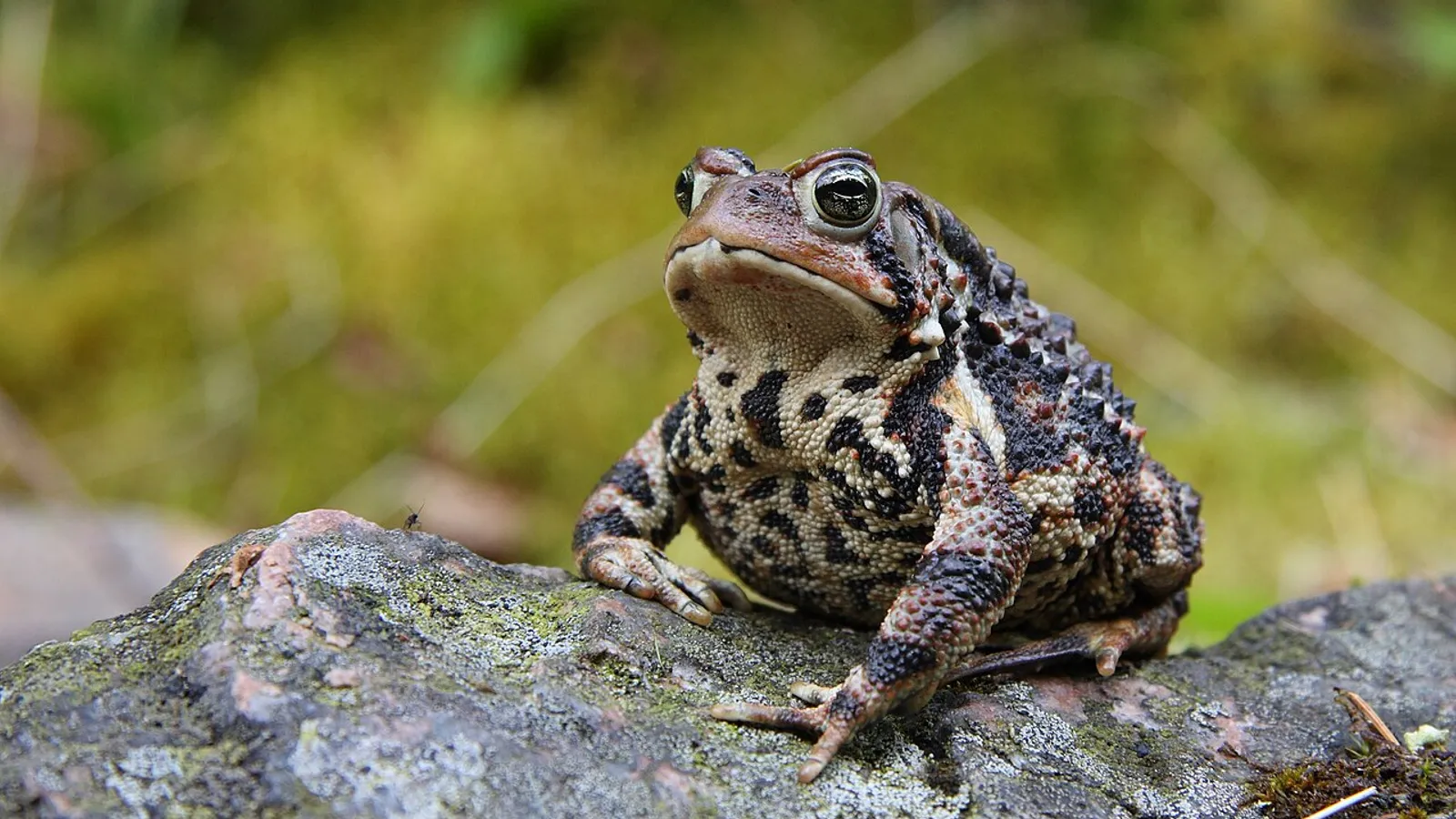
— Where the name comes from
Anaxyrus is a Greek word meaning roughly “chief, lord”, chosen in the nineteenth century by Johann Jakob von Tschudi without his explaining why: it is one of those solemn names taxonomists of the period handed out freely. The genus was revived in 2006 to separate the American toads from the vast old genus Bufo.
— Facts
- Group
- Amphibians · Amphibia
- Order
- Frogs and toads
- Habitat
- Gardens, woodland, vegetable plots, meadows, pond margins
- Range
- Eastern North America, from Canada to the Gulf of Mexico
- Size
- 5–9 cm, 20–100 g
- Diet
- Insects, earthworms, slugs, spiders
- Lifespan
- 10 years in the wild, over 30 in captivity
— Characteristics
- 01
It has two oval glands behind the eyes that secrete a milky toxin.
- 02
Its call is a long continuous trill lasting up to half a minute.
- 03
It returns every year to the pond where it was born to breed.
— What sets it apart
It gives nobody warts, but the poison is real. The glands behind the eyes contain bufotoxins that act on the heart, and every year in the United States thousands of dogs end up at the vet for having mouthed a toad: foaming, vomiting, arrhythmia. In people, contact with the hands is harmless, and the only real risk is rubbing your eyes afterwards. The toad, for its part, attacks nothing and nobody: it sits in the vegetable patch and eats the slugs.
