
Turbot
Scophthalmus maximus
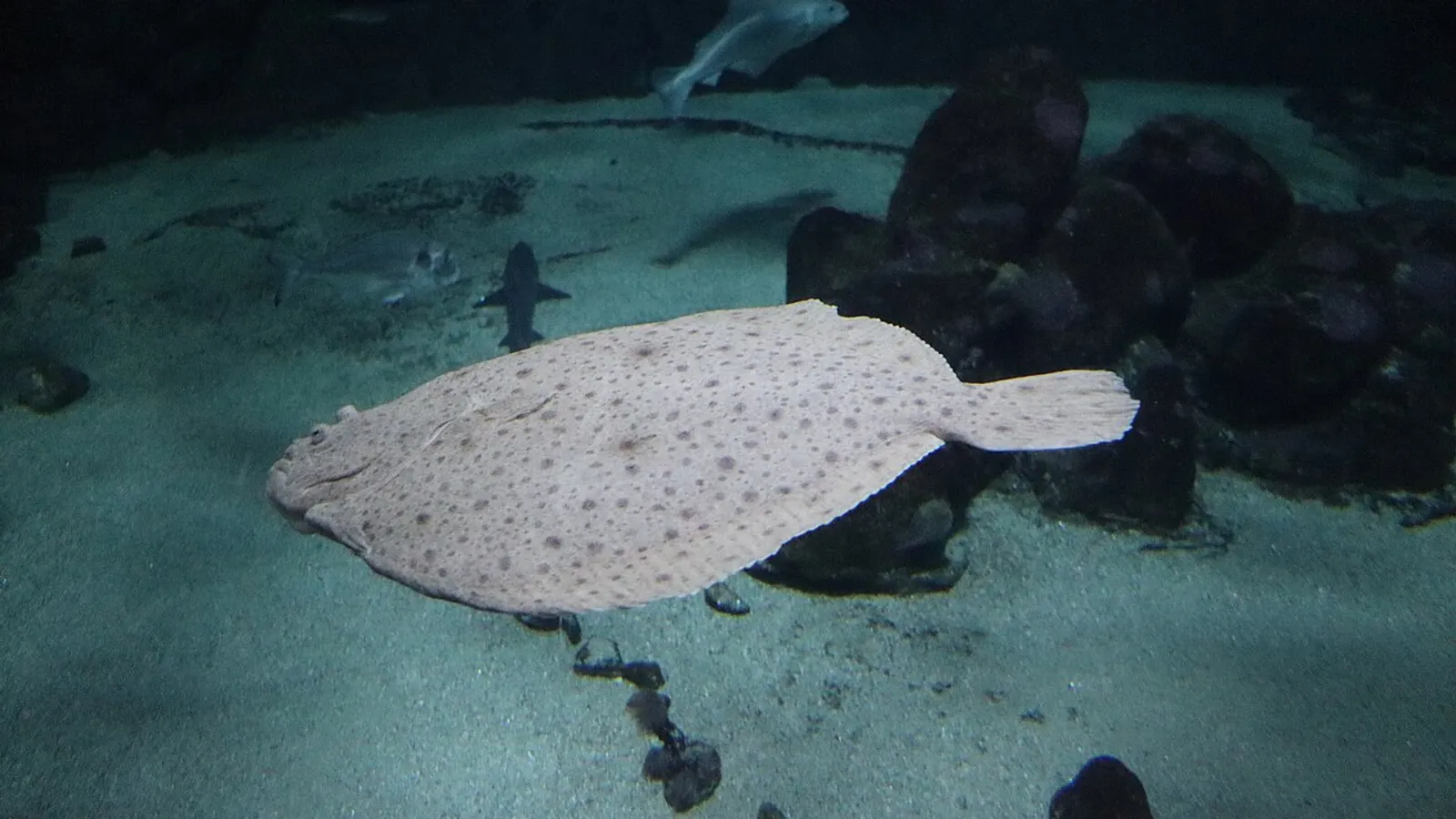
— Where the name comes from
Scophthalmus contains ophthalmós, the eye, and a first element alluding to looking: both eyes sit on the left side, turned upwards. Maximus gives the size. The Italian name looks instead at the bony tubercles scattered over the naked skin, which look like nail heads driven into the body.
— Facts
- Group
- Fish · Actinopterygii · Chondrichthyes
- Order
- Flatfishes
- Habitat
- Sandy and gravelly bottoms between 20 and 70 metres
- Range
- The eastern Atlantic, the Mediterranean, the Black Sea, the Baltic
- Size
- 40–70 cm, up to 100 cm; 2–10 kg, record 25 kg
- Diet
- Fish, crustaceans, molluscs
- Lifespan
- 25 years
— Characteristics
- 01
It has no scales: the skin is naked and covered in bony tubercles.
- 02
It changes colour within minutes to match the bottom.
- 03
It is one of the most prized marine farmed fish in Europe.
— What sets it apart
In Juvenal’s fourth satire the emperor Domitian summons the Roman Senate on an urgent matter of state: a fisherman has brought him a turbot so large that no dish exists to cook it in, and the most eminent senators of the empire debate whether to cut it up or have a pan made specially. The second view prevails. It is one of the fiercest satires ever written about power, and its unwitting protagonist is this fish.
