
Reef stonefish
Synanceia verrucosa
— Where the name comes from
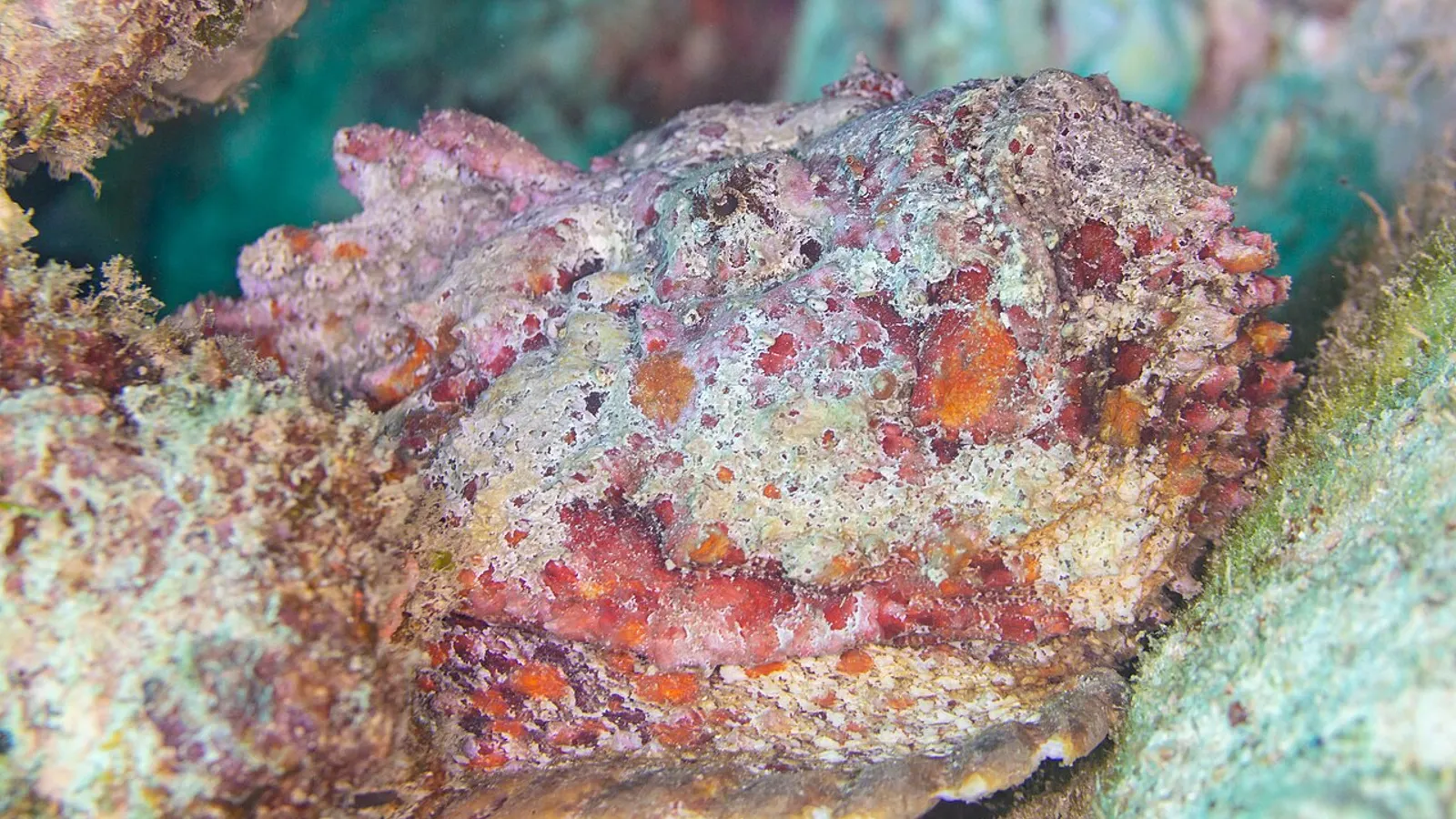
Verrucosa means “covered in warts”, and that is what the skin looks like: lumpy, encrusted with algae and sediment, indistinguishable from a lump of reef. Synanceia is a compound of Greek elements whose reading is still debated. The common name, in every language in the world, says the same thing: it looks like a stone.
— Facts
- Group
- Fish · Actinopterygii · Chondrichthyes
- Order
- Scorpionfishes
- Habitat
- Reef bottoms, tide pools, sand among the corals
- Range
- The tropical Indo-Pacific, from the Red Sea to Polynesia
- Size
- 30–40 cm, up to 1.5 kg
- Diet
- Small fish and crustaceans sucked in instantly
- Lifespan
- 10 years
— Characteristics
- 01
It has thirteen dorsal spines, each linked to two venom glands.
- 02
It survives up to twenty-four hours out of water.
- 03
It stays motionless for days, partly buried in the sand.
— What sets it apart
It is the most venomous fish in the world, and the venom is not for hunting: it is a defence that works only when somebody stands on it. The dorsal spines are syringes driven by pressure — the harder you tread, the more venom goes in — and the pain is described as the most intense known in marine toxicology. An antivenom has existed since 1959, made in Australia, and it is one of the very few fish antivenoms in the world; before that, in the Pacific islands, the most effective remedy was to put the foot in water as hot as could be borne, which denatures the toxin.
