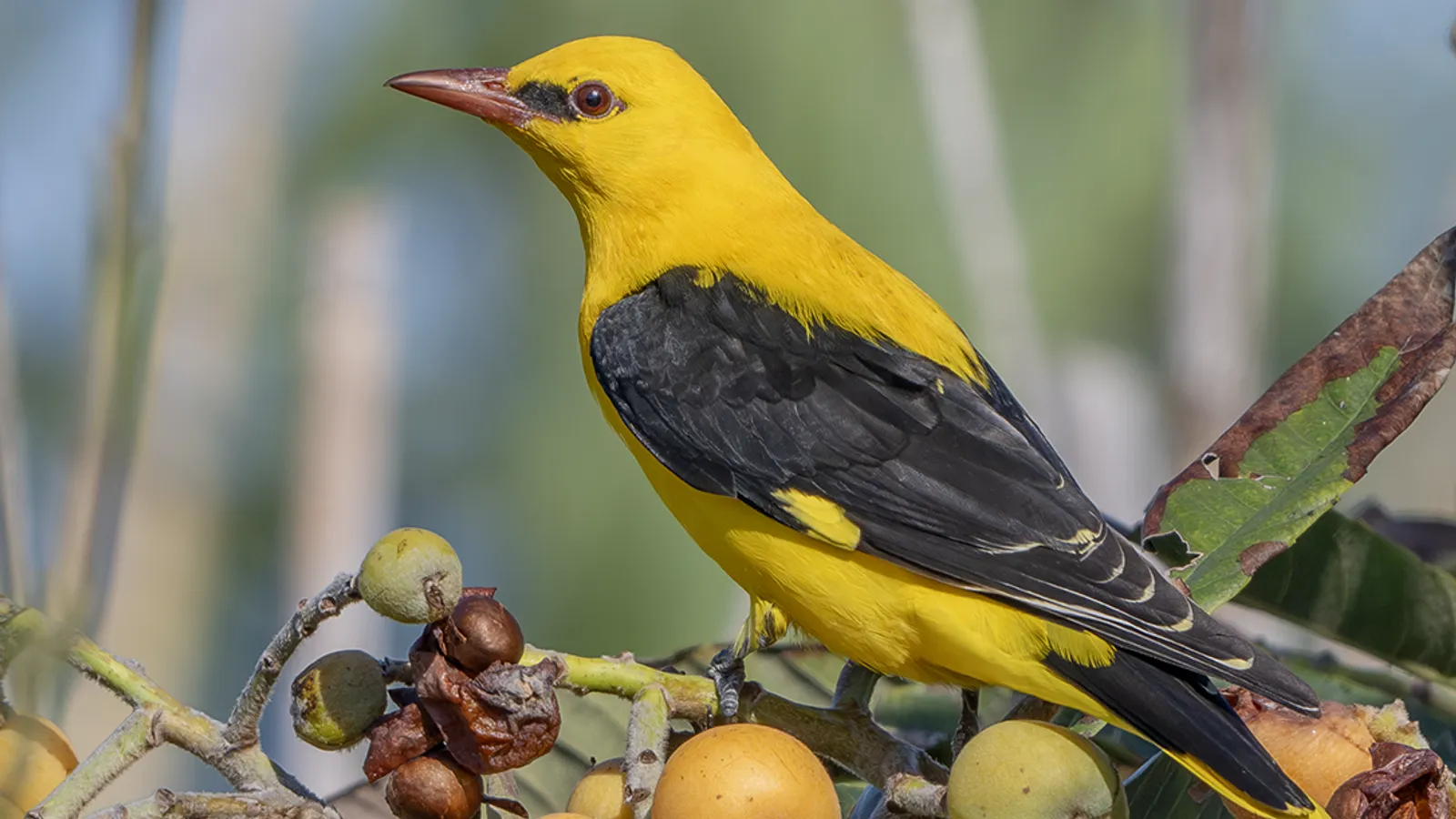
Eurasian golden oriole
Oriolus oriolus
— Where the name comes from
Oriolus comes from the Latin aureolus, “golden”, the colour of the male. From aureolus also come the French loriot and the old English name oriole. The Italian rigogolo seems to imitate its fluting call, a liquid whistle of three or four notes often heard without the bird being seen.
— Facts
- Group
- Birds · Aves
- Order
- Passerines
- Habitat
- Broadleaf woodland, poplar groves, orchards, wooded parks
- Range
- Europe, western Asia to Siberia; winters in sub-Saharan Africa
- Size
- 22–25 cm, 50–79 g
- Diet
- Insects and caterpillars, hairy ones too; cherries, figs, berries
- Lifespan
- A few years
— Characteristics
- 01
The male is golden yellow with black wings and tail, the female yellow-green.
- 02
It stays almost always hidden in the tree canopy.
- 03
It slings its nest like a hammock in the fork of a branch.
— What sets it apart
It is one of the most colourful birds in Europe and one of the least seen. It arrives in May, when the leaves are already thick, spends all its time in the high canopy, and leaves again at the end of summer: many people know it only by its whistle. The nest is a suspended masterpiece: a cup of woven grass and fibres hung by its rim between two twigs, swaying in the wind without tipping over. It readily eats hairy caterpillars that many other birds avoid, and in autumn it is greedy for figs and cherries, which in the past earned it farmers’ gunshots.