
Greater amberjack
Seriola dumerili
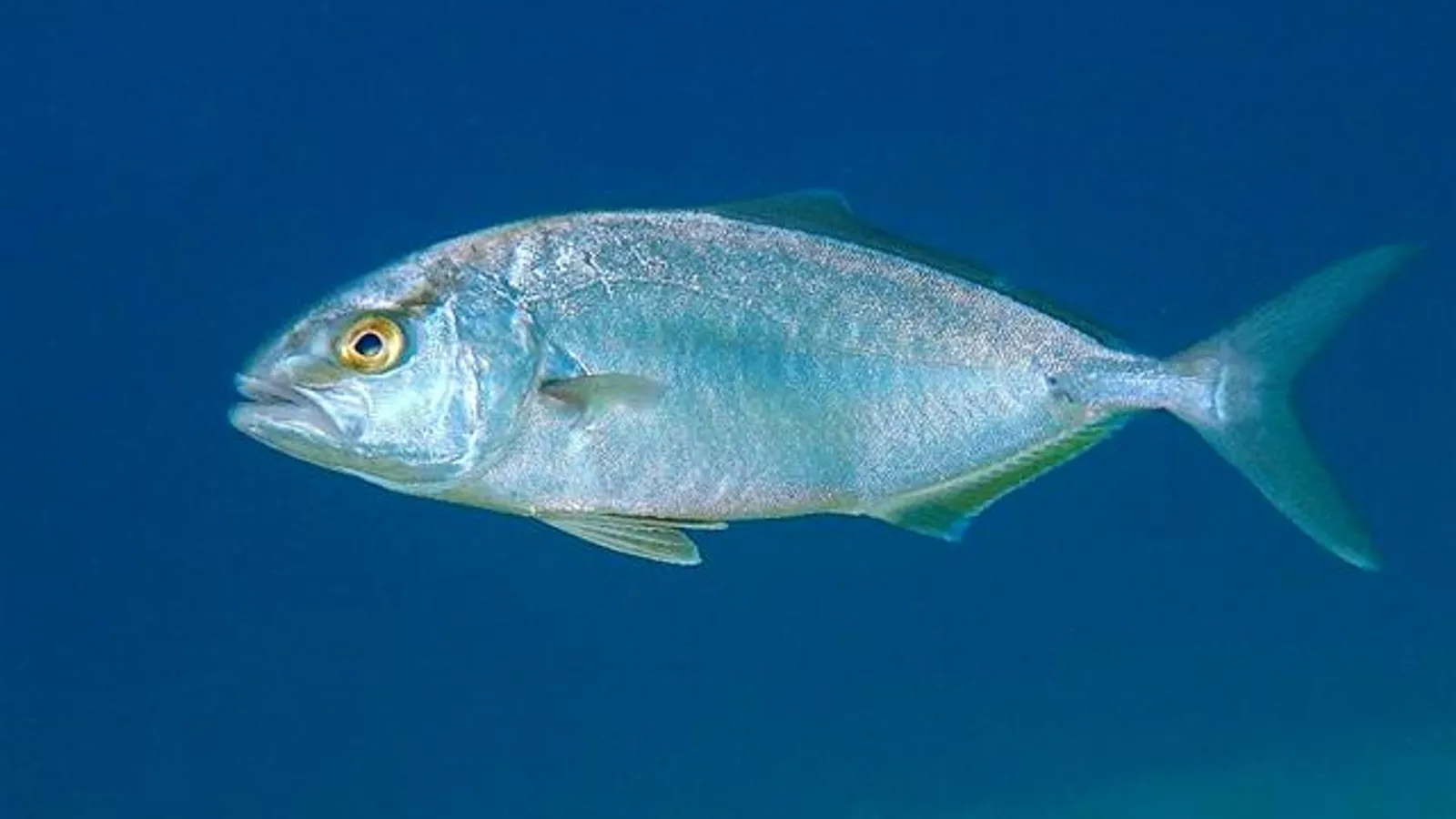
— Where the name comes from
Seriola is a diminutive of the Latin seria, the storage jar: it alludes to the tapered, full-bodied shape. Dumerili recalls André Duméril, a nineteenth-century French zoologist. The Italian name comes from the oblique golden band crossing the eye, which fishermen called the ricciolo, the curl.
— Facts
- Group
- Fish · Actinopterygii · Chondrichthyes
- Order
- Jacks and allies
- Habitat
- Banks, wrecks and submerged reefs between 20 and 350 metres
- Range
- Temperate and tropical seas worldwide
- Size
- 80–150 cm, up to 190 cm; 10–40 kg, record 96 kg
- Diet
- Shoaling fish, squid, crustaceans
- Lifespan
- 17 years
— Characteristics
- 01
It hunts in groups, surrounding shoals of small pelagic fish.
- 02
It travels hundreds of kilometres between Mediterranean banks.
- 03
The young shelter beneath floating objects and jellyfish.
— What sets it apart
The young live under floating things. A log, a jellyfish, a bag, a buoy: any drifting object gathers a small ecosystem beneath it, and young amberjack spend their first months there, sheltered and fed by what collects around it. Fishermen have always known this and use anchored rafts to attract them, with the side effect that floating plastic now performs the same function — and the young of this species increasingly grow up under a piece of rubbish.
