
Goldcrest
Regulus regulus
— Where the name comes from
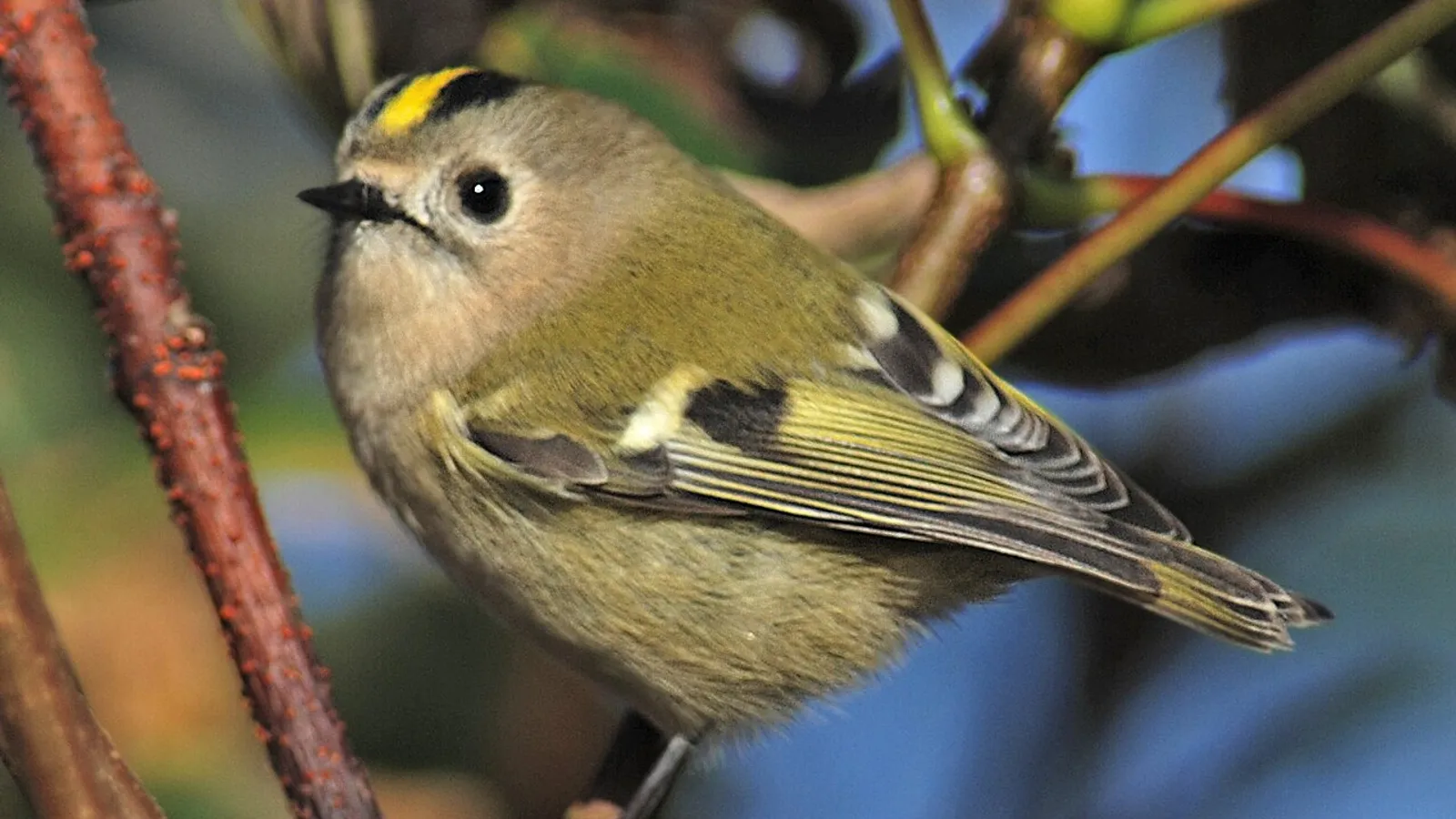
Regulus is the diminutive of rex: the little king, for the yellow and orange stripe on its head that looks like a crown. The name comes from a fable the Greeks already told and that turns up across half of Europe: the birds decided to make king whoever flew highest, and while the eagle climbed, the smallest of them all sat hidden among its feathers and at the last moment rose a hand’s breadth above it.
— Facts
- Group
- Birds · Aves
- Order
- Passerines
- Habitat
- Conifer woodland, spruce forest, parks with cedars and yews
- Range
- Europe and temperate Asia as far as Japan
- Size
- 8–9 cm, wingspan 13–16 cm, 5–7 g
- Diet
- Minute insects, spiders, insect eggs
- Lifespan
- 2 years in the wild
— Characteristics
- 01
It is the smallest bird in Europe: it weighs about as much as a five-cent coin.
- 02
It must feed almost continuously or starve within hours.
- 03
It hovers beneath branches like a hummingbird to take spiders.
— What sets it apart
A six-gram animal crosses the North Sea in autumn, and for centuries nobody believed it. On the English coast it was said that goldcrests arrived riding on woodcocks, which migrate on the same nights and are fifty times their size: “the woodcock’s pilot”, the Norfolk fishermen called them. None of it is true, and the truth is harder to picture than the legend — five grams of muscle flying from Scandinavia to England without once coming down.
