
Eurasian bullfinch
Pyrrhula pyrrhula
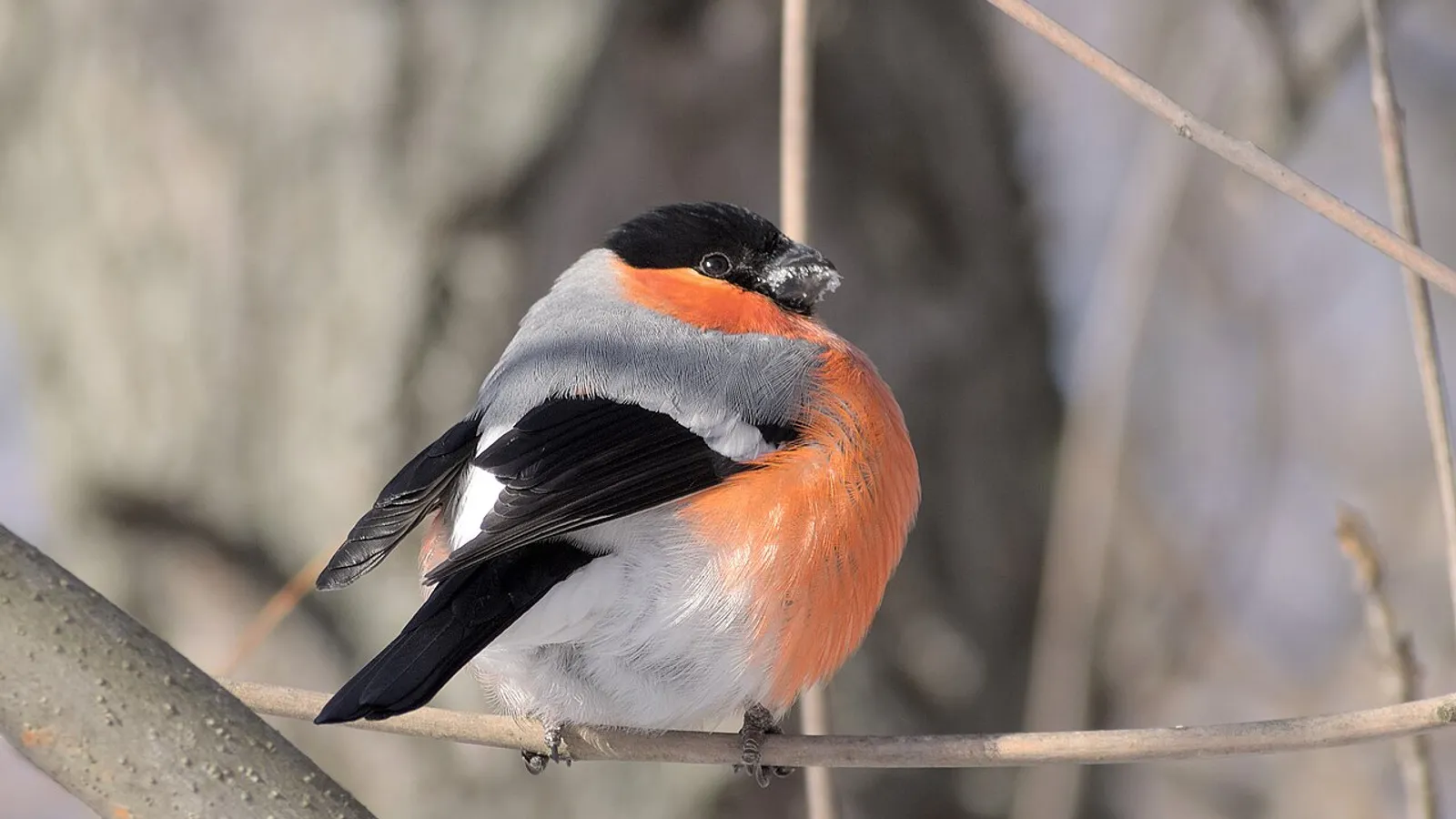
— Where the name comes from
Pyrrhula comes from the Greek pyrrhós, “flame-coloured”, from pŷr: the male’s breast is a bright pink that shows across a winter wood. The Italian name has nothing to do with a crest but with the verb ciufolare, to whistle: the call is a soft, melancholy whistle, one falling note, the most discreet thing a bird of that colour could possibly do.
— Facts
- Group
- Birds · Aves
- Order
- Passerines
- Habitat
- Mixed woodland, orchards, hedges, gardens with conifers
- Range
- Europe and northern Asia as far as Japan
- Size
- 15–17 cm, wingspan 22–29 cm, 21–27 g
- Diet
- Seeds, buds of fruit trees, berries, shoots
- Lifespan
- 4 years in the wild
— Characteristics
- 01
The male has a pink breast, the female brownish grey: the black cap is on both.
- 02
In February it eats the buds of apple and cherry trees, up to thirty a minute.
- 03
It is almost always in a pair, even outside the breeding season.
— What sets it apart
For two centuries, in Hesse and Thuringia, people made a living from trained bullfinches. The young were taken from the nest and raised hearing a flute or a barrel organ play the same air over and over until they could repeat the whole of it: a bird that knew three tunes was worth as much as a cow and ended up in drawing rooms in London and St Petersburg. The trade died with the nineteenth century, but the reason it worked is the same one that interests neurobiologists today — it learns sounds that are not its own and keeps them for life.
