
Corn crake
Crex crex
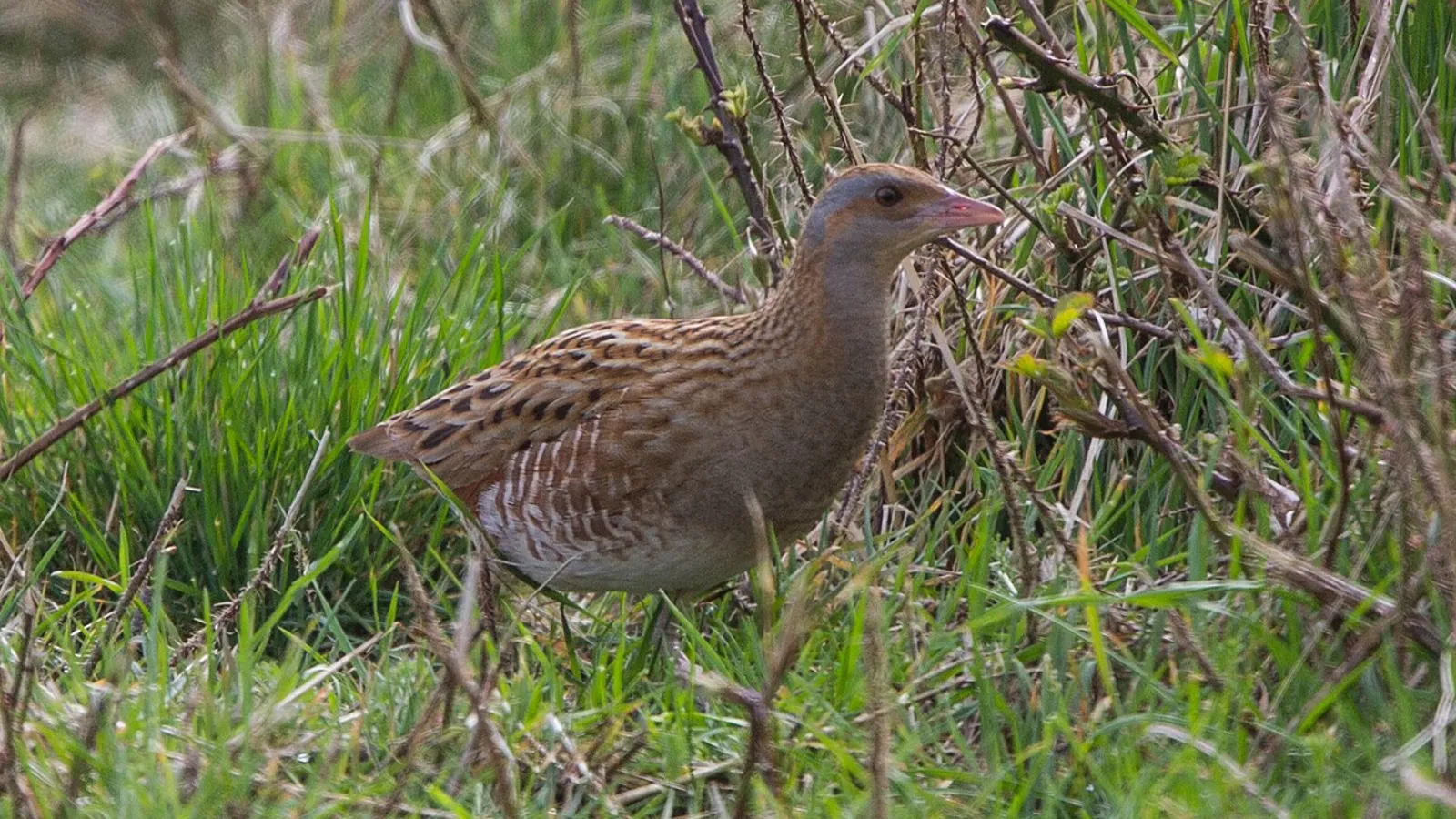
— Where the name comes from
Crex is the name the Greeks gave a bird with a grating voice, and the repeated binomial imitates its song exactly: two dry, rasping notes, crex-crex, which can be reproduced by running a fingernail along the teeth of a comb. The Italian name, “king of quails”, like the German Wachtelkönig and the French roi des cailles, comes from an old belief: it was thought to lead the quails on migration, because it left with them and was larger.
— Facts
- Group
- Birds · Aves
- Order
- Cranes and allies
- Habitat
- Hay meadows, wet grassland, clearings with tall grass
- Range
- Breeds from Europe to Siberia; winters in south-eastern Africa
- Size
- 27–30 cm, wingspan 42–53 cm, 130–200 g
- Diet
- Insects, earthworms, snails, seeds
- Lifespan
- A few years
— Characteristics
- 01
The male calls all night long, and can be heard more than a kilometre away.
- 02
It lives hidden in tall grass and rarely takes flight.
- 03
It migrates by night to southern Africa.
— What sets it apart
Its enemy is the mower. It nests in hay meadows just when the first cut is made, and mechanical mowing, which works from the outside of the field towards the centre, drives the chicks into an ever smaller island of grass until the blades reach them. Across half of Europe it has vanished from the lowlands for this reason. The remedy is simple: put off mowing for a few weeks, or mow from the centre outwards, so the birds can escape into the surrounding grass. Where farmers do so, the corncrake sings again.