
Thornback ray
Raja clavata
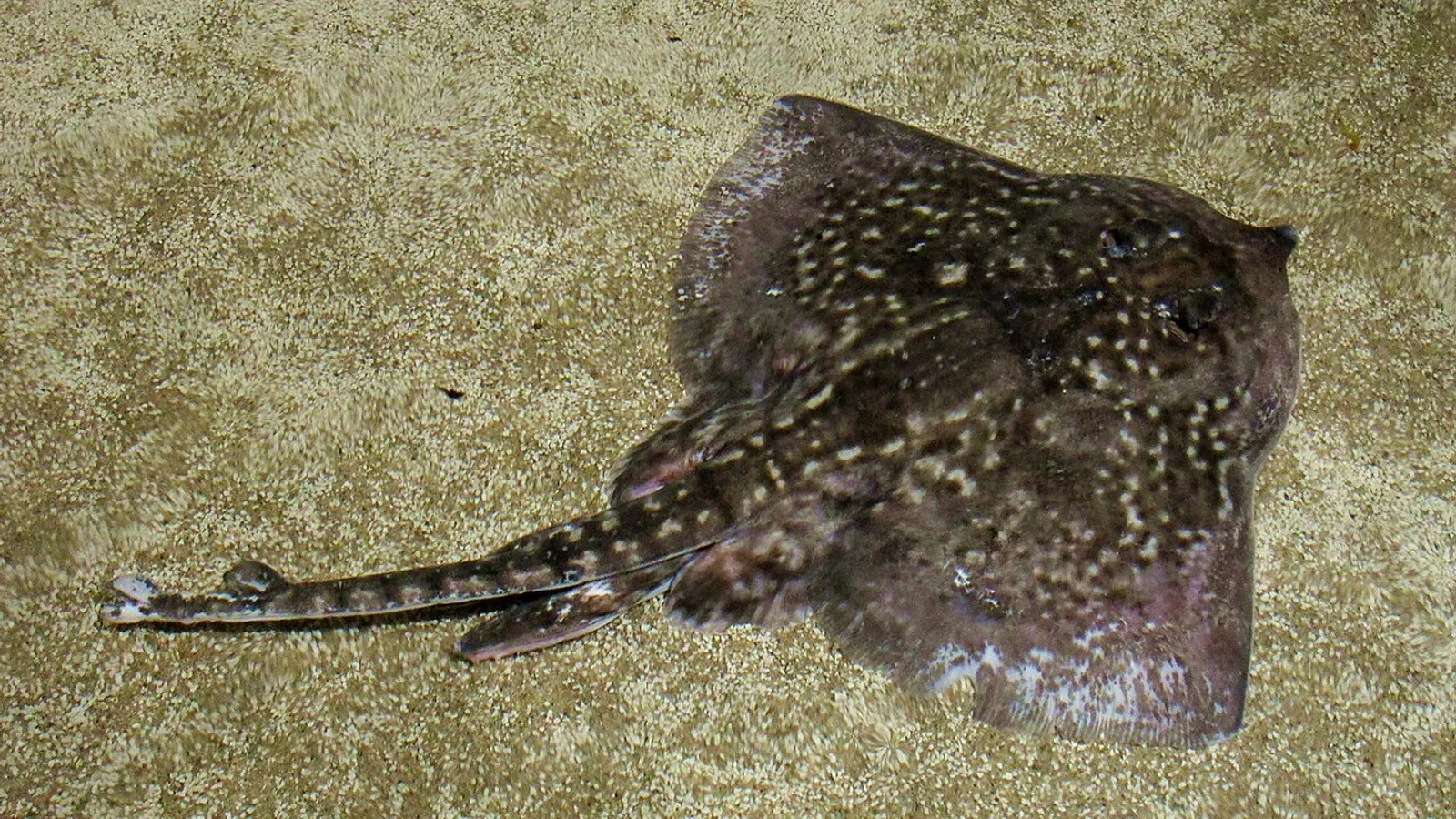
— Where the name comes from
Raja is the Latin name of these fish, source of the Italian razza; clavata means “armed with clubs”, for the large button-based spiny tubercles it carries on the back and tail. The Italian common name looks at the same thing: those spines really do look like nails driven into the skin.
— Facts
- Group
- Fish · Actinopterygii · Chondrichthyes
- Order
- Skates
- Habitat
- Sandy, muddy and shelly bottoms between 10 and 300 metres
- Range
- The eastern Atlantic, the Mediterranean, the Black Sea
- Size
- 70–100 cm, up to 120 cm; 3–10 kg
- Diet
- Crustaceans, molluscs, small fish
- Lifespan
- 15 years
— Characteristics
- 01
Males have pointed teeth and females flat ones: they look like two species.
- 02
It lays rectangular horny capsules that storms wash ashore.
- 03
It buries itself in sand leaving out the eyes and spiracles.
— What sets it apart
Males and females have different teeth, and not for dietary reasons: females have plate-like teeth for crushing shells, males sharp ones that serve to hold their partner during mating. The difference is so marked that in the nineteenth century the two sexes were described as separate species. It is a case in which a character that looks dietary is in fact sexual, and to see it one had to look at living animals rather than at jaws in a drawer.
