
Black rat
Rattus rattus
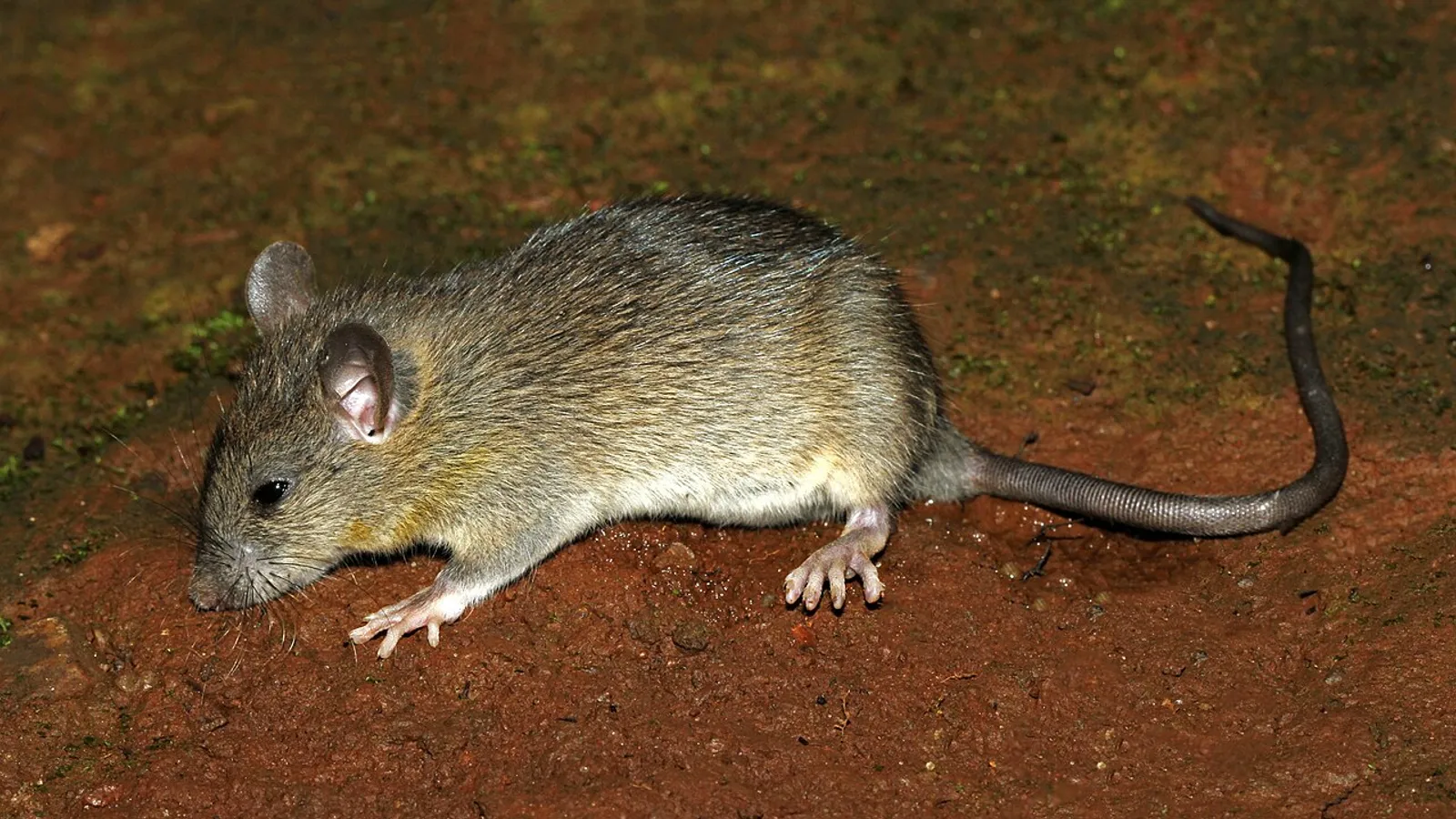
— Where the name comes from
Rattus is late Latin, and probably comes from the Germanic languages: the same root as the German Ratte and the English rat, perhaps tied to a verb meaning “to gnaw”. It has nothing to do with the Italian adjective ratto meaning swift, which descends instead from the Latin raptus. The binomial repeats the name twice, as Linnaeus did with species he considered typical of their genus.
— Facts
- Group
- Mammals · Mammalia
- Order
- Rodents
- Habitat
- Buildings, warehouses, ships, palms, tropical forest
- Range
- Native to India, today worldwide
- Size
- 16–24 cm of body, tail longer than the body, 75–230 g
- Diet
- Omnivore — seeds, fruit, insects, eggs, scraps
- Lifespan
- 1 year in the wild
— Characteristics
- 01
It climbs superbly: it lives in roof spaces the brown rat cannot reach.
- 02
It has a longer tail, larger ears and a slimmer body than the brown rat.
- 03
On oceanic islands it has caused the extinction of dozens of ground-nesting birds.
— What sets it apart
It brought plague to Europe, but not alone and not as the story goes. The bacterium travels in the flea, the flea on the rat, the rat on the ships: the Black Death of 1347 reached Messina on Genoese galleys from Caffa. Recent research, however, shows that in the later European epidemics human-to-human transmission through human fleas and lice explains the spread better than rats, which in northern cities of the 14th century may have been too few. The historical culprit remains, but the case has been reopened.
