
Mongolian gerbil
Meriones unguiculatus
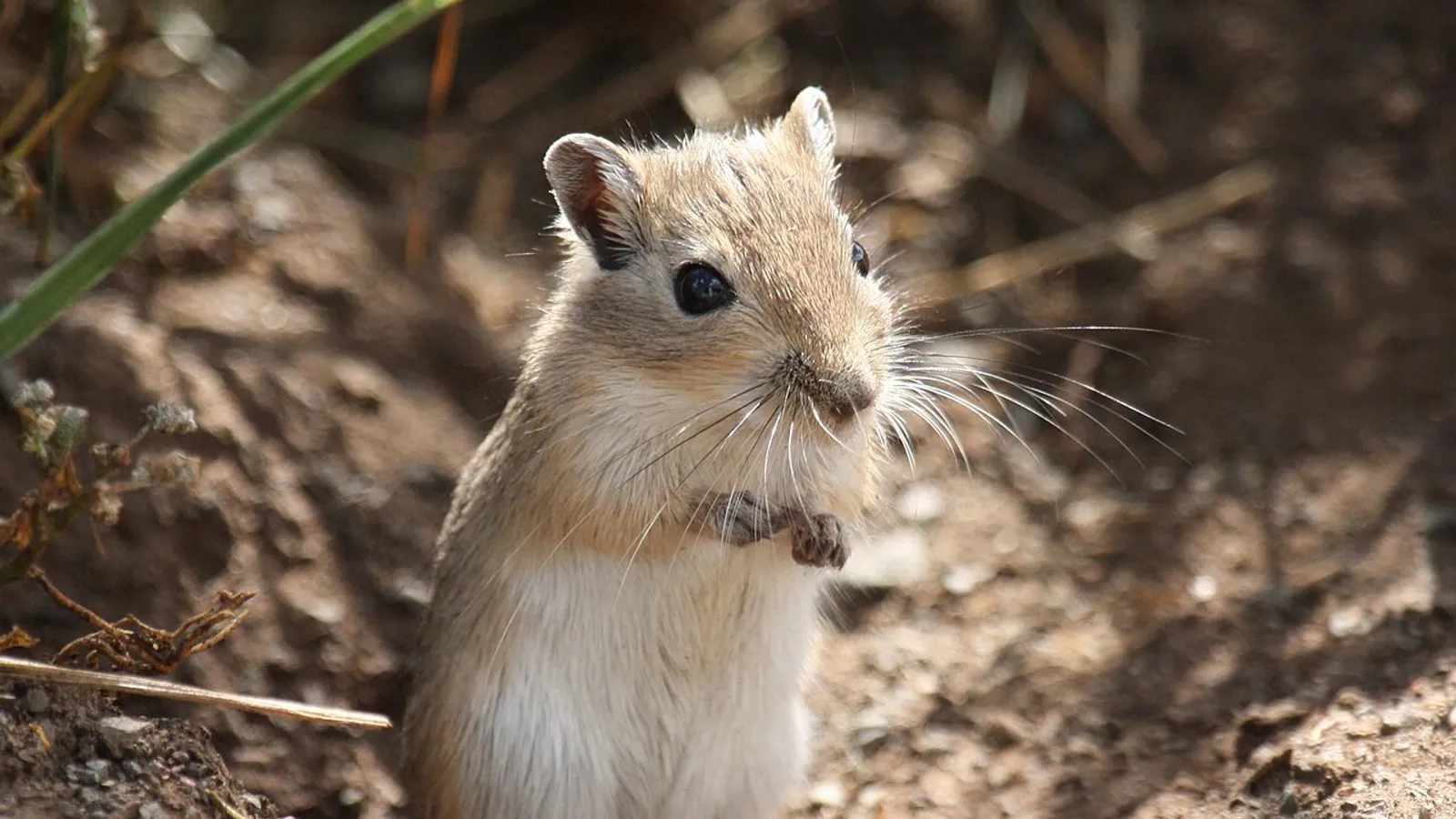
— Where the name comes from
Meriones is the name of a hero of the Iliad, the Cretan Meriones, charioteer to Idomeneus — Illiger chose it in 1811 without explanation, perhaps for the boar-tusk helmet Homer gives him. Unguiculatus, “with small claws”, describes the sturdy little nails. “Gerbil” comes instead from the Arabic yarbū‘, the name of the jerboa, passed into scientific Latin and then made a diminutive.
— Facts
- Group
- Mammals · Mammalia
- Order
- Rodents
- Habitat
- Dry steppe, semi-desert, sandy ground
- Range
- Mongolia, northern China, southern Russia
- Size
- 10–13 cm of body, tail as long again, 60–130 g
- Diet
- Seeds, roots, shoots, insects
- Lifespan
- 3–4 years
— Characteristics
- 01
It lives in stable families, with both parents tending the young.
- 02
It drums its hind feet on the ground to warn of danger.
- 03
It produces very little urine: on the steppe it takes its water from seeds.
— What sets it apart
It became a pet by an unexpected route: in 1935 a Japanese researcher brought twenty pairs from Mongolia to study, and nearly every domestic gerbil in the world descends from the four males and five females that survived that founding colony. In the United States they are banned in California, because in the dry climate of the west coast they could establish themselves in the wild — a cage animal outlawed as a potential invader.
