
Dassie rat
Petromus typicus
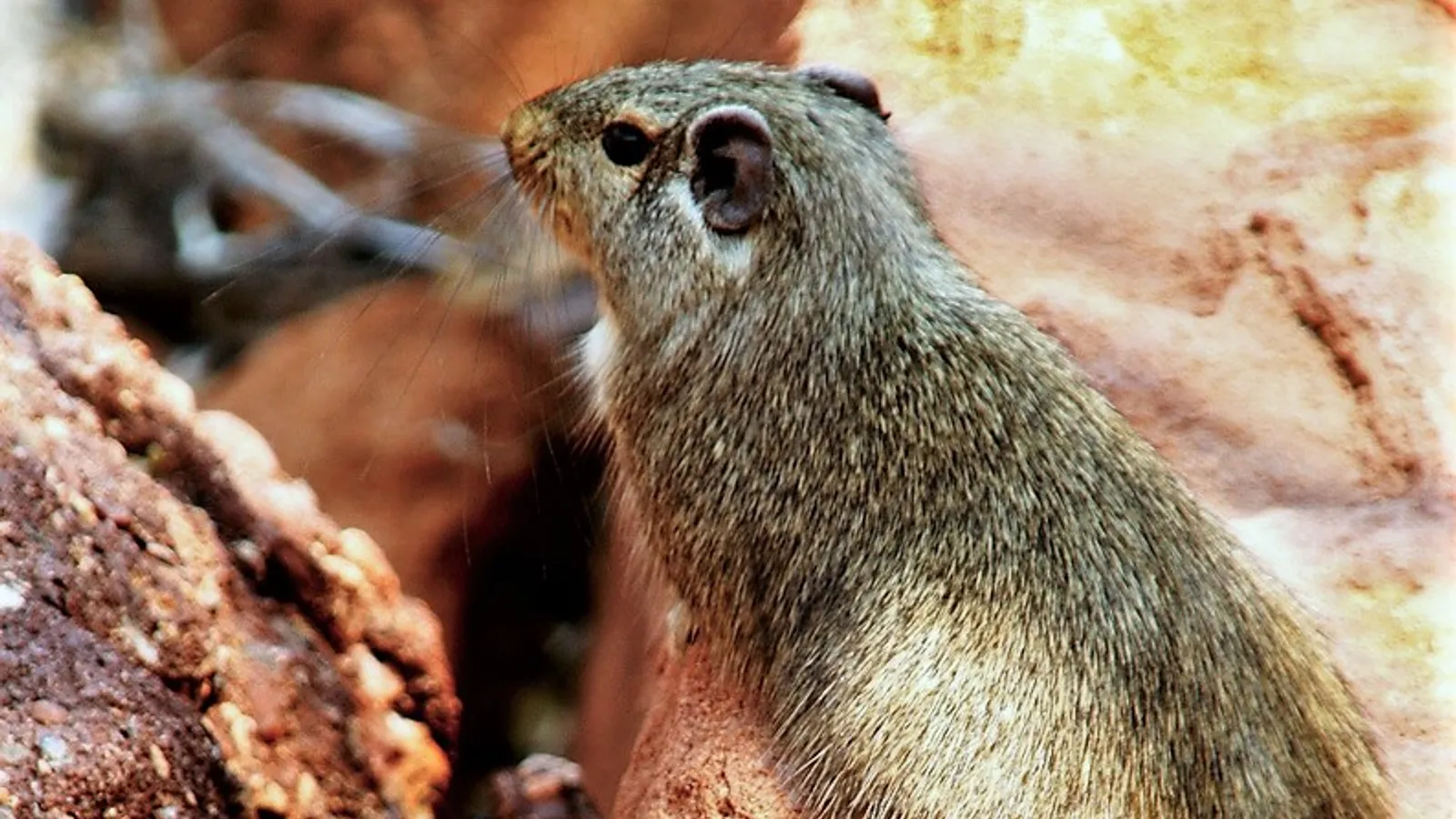
— Where the name comes from
Petromus is “stone mouse”, from pétra and mŷs. Typicus means “typical”, that is, exemplary of its own genus — an elegant device taxonomists use when the species is the only one in the genus and there is nothing to tell it apart from. In Namibia it is called the dassie rat because it shares its rocks with the hyrax, which Afrikaners call the dassie.
— Facts
- Group
- Mammals · Mammalia
- Order
- Rodents
- Habitat
- Rock outcrops and desert cliffs
- Range
- Namibia, south-western Angola, north-western South Africa
- Size
- 14–20 cm, tail 13–18 cm, 170–300 g
- Diet
- Leaves, flowers, seeds, grasses
- Lifespan
- 6 years
— Characteristics
- 01
Its skull is flattened and its ribs flexible: it slips into cracks two centimetres wide.
- 02
It neither digs nor builds nests: it depends entirely on fissures in the rock.
- 03
Females have their teats high on the flanks, to suckle inside narrow crevices.
— What sets it apart
The position of the teats is an anatomical detail that tells a whole ecology: they sit on the sides of the chest, almost on the back, so the young can suckle while the mother is squeezed into a horizontal crack, without her having to lie on her side. In the Namibian rocks space is so tight that nursing would otherwise have meant coming out into the open — that is, for a two-hundred-gram animal with eagles overhead, risking its life at every feed.
