
Common gundi
Ctenodactylus gundi
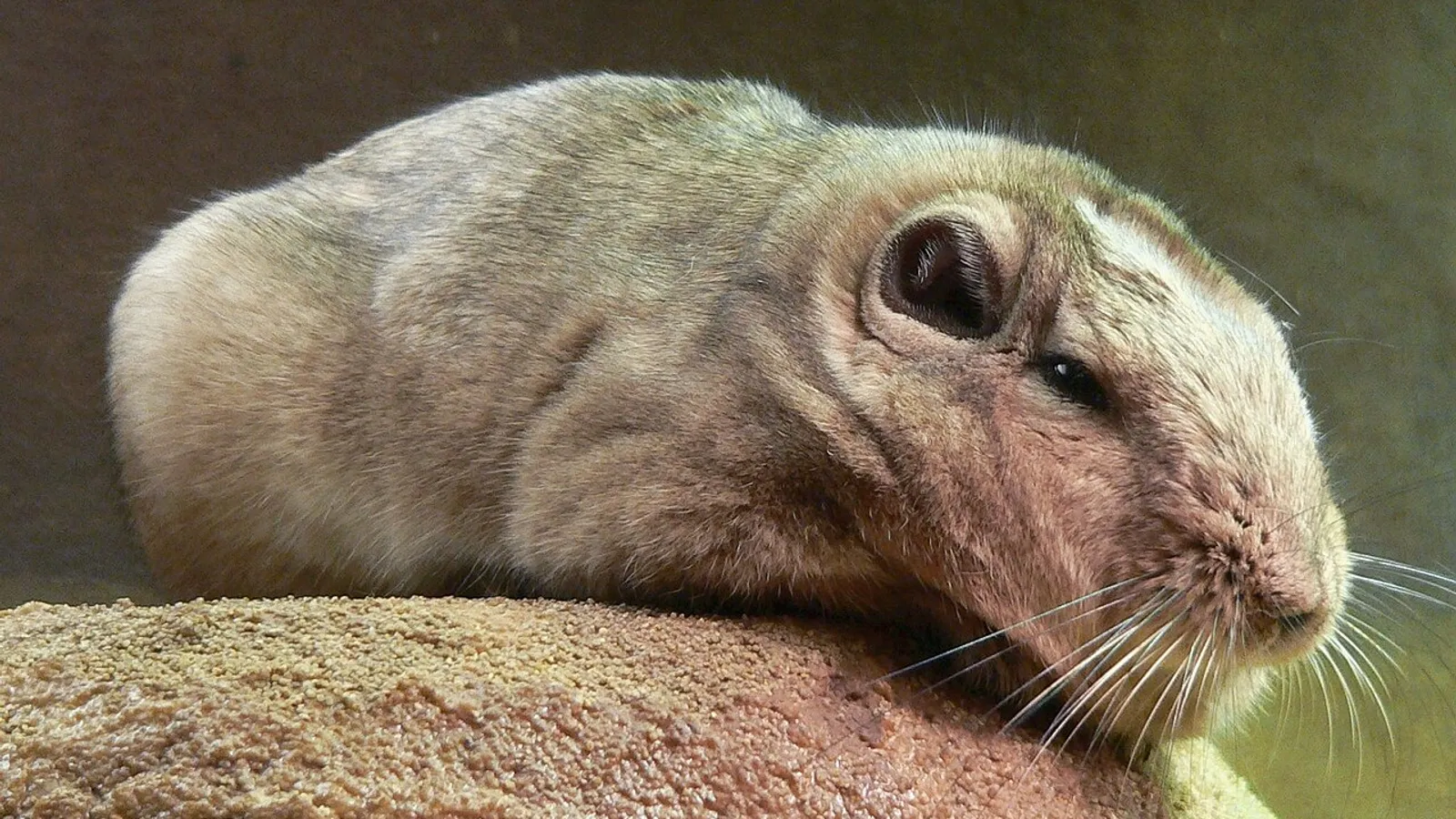
— Where the name comes from
Ctenodactylus is “comb finger”, from kteís, the comb, and dáktylos: on its hind toes it carries rows of stiff bristles with which it brushes the sand out of its fur. Gundi is the animal’s name in the Arabic of the Maghreb, gathered by European travellers in Libya. It lives on the rock outcrops of the northern Sahara.
— Facts
- Group
- Mammals · Mammalia
- Order
- Rodents
- Habitat
- Rock outcrops and desert escarpments
- Range
- Morocco, Algeria, Tunisia, Libya
- Size
- 16–20 cm, tail 1–2 cm, 170–200 g
- Diet
- Leaves, stems, seeds, desert flowers
- Lifespan
- 4 years
— Characteristics
- 01
It never drinks: it takes its water from plants and licks dew.
- 02
It suns itself on the rocks in the morning and withdraws into crevices in the heat.
- 03
It communicates with whistles and trills that echo between the stone walls.
— What sets it apart
It gives its name to one of the commonest parasites in the world, misspelling and all. In 1908, at the Pasteur Institute in Tunis, Charles Nicolle was studying leishmaniasis in gundis brought from southern Tunisia when he noticed an unknown protozoan in their spleens: he called it Toxoplasma gondii, transcribing the animal’s name wrongly. Ever since, the parasite that infects a third of humanity officially bears the garbled name of a Saharan rodent almost nobody has ever seen.
