
Greater cane rat
Thryonomys swinderianus
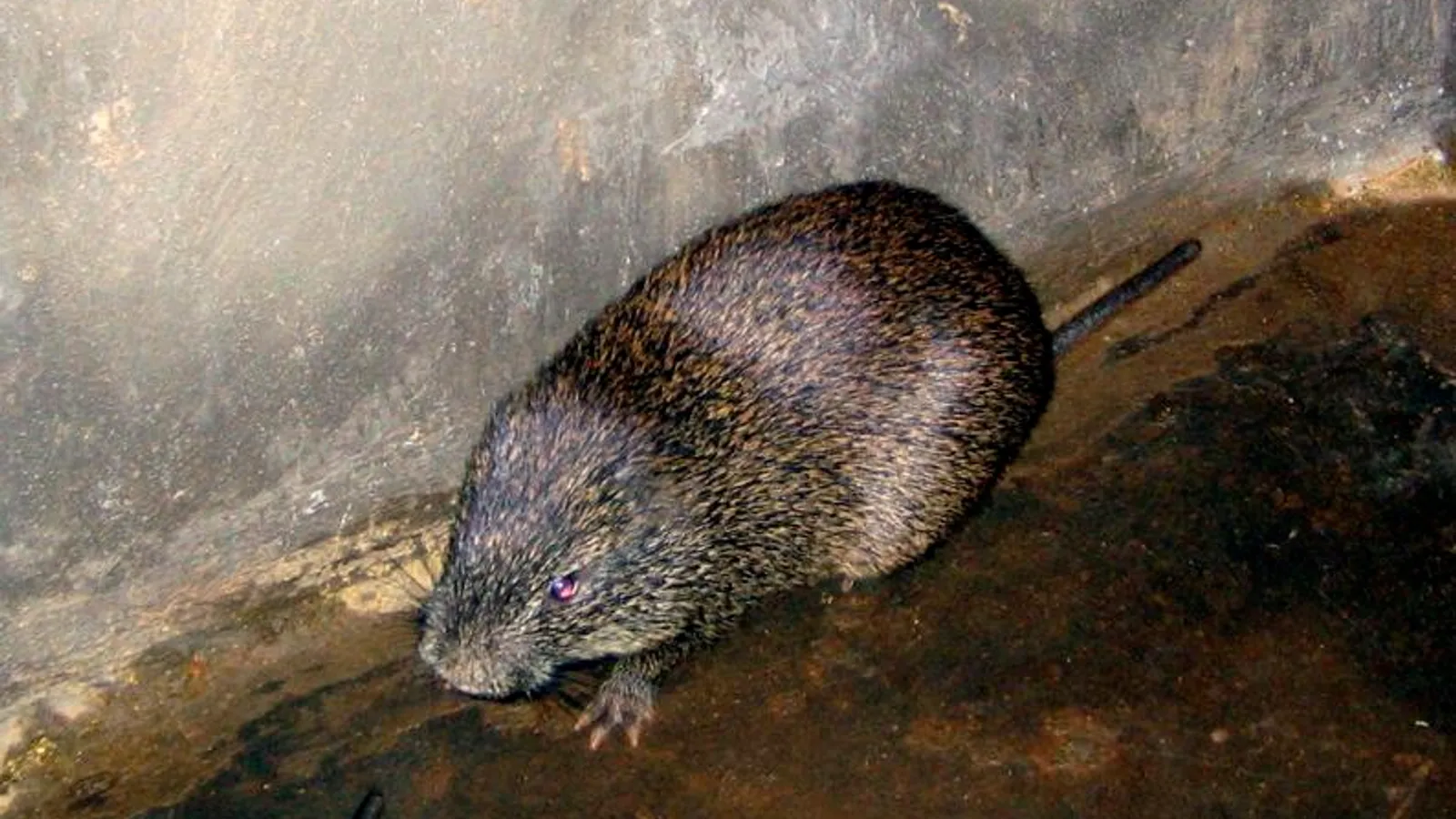
— Where the name comes from
Thryonomys is “reed mouse”, from thryon, the marsh reed, and mŷs. The epithet recalls Theodorus van Swinderen, a Dutch naturalist of Groningen. In West Africa it is called the grasscutter, or in French agouti — a name borrowed from a South American rodent that has nothing to do with it, and which causes confusion in every conversation between zoologists and cooks.
— Facts
- Group
- Mammals · Mammalia
- Order
- Rodents
- Habitat
- Reed beds, wet grassland, sugar cane fields
- Range
- Sub-Saharan Africa
- Size
- 35–60 cm, tail 6–25 cm, 3–9 kg
- Diet
- Reeds, tough grasses, roots, bark
- Lifespan
- 4 years
— Characteristics
- 01
It cuts stems at the base and eats them holding them in its forepaws.
- 02
It swims well and takes refuge in water when pursued.
- 03
Its orange incisors are coated in an iron-rich enamel.
— What sets it apart
It is the most widely eaten wild meat in West Africa, and for thirty years it has been farmed. Ghana, Benin and Nigeria run smallholder breeding schemes producing thousands of tonnes a year: it is cheap, it grows fast and it has a market already in place, which no imported species would have. It is one of the rare cases of domestication happening under our eyes — an animal making today the passage the pig and the sheep made ten thousand years ago.
