
Wallace's flying frog
Rhacophorus nigropalmatus
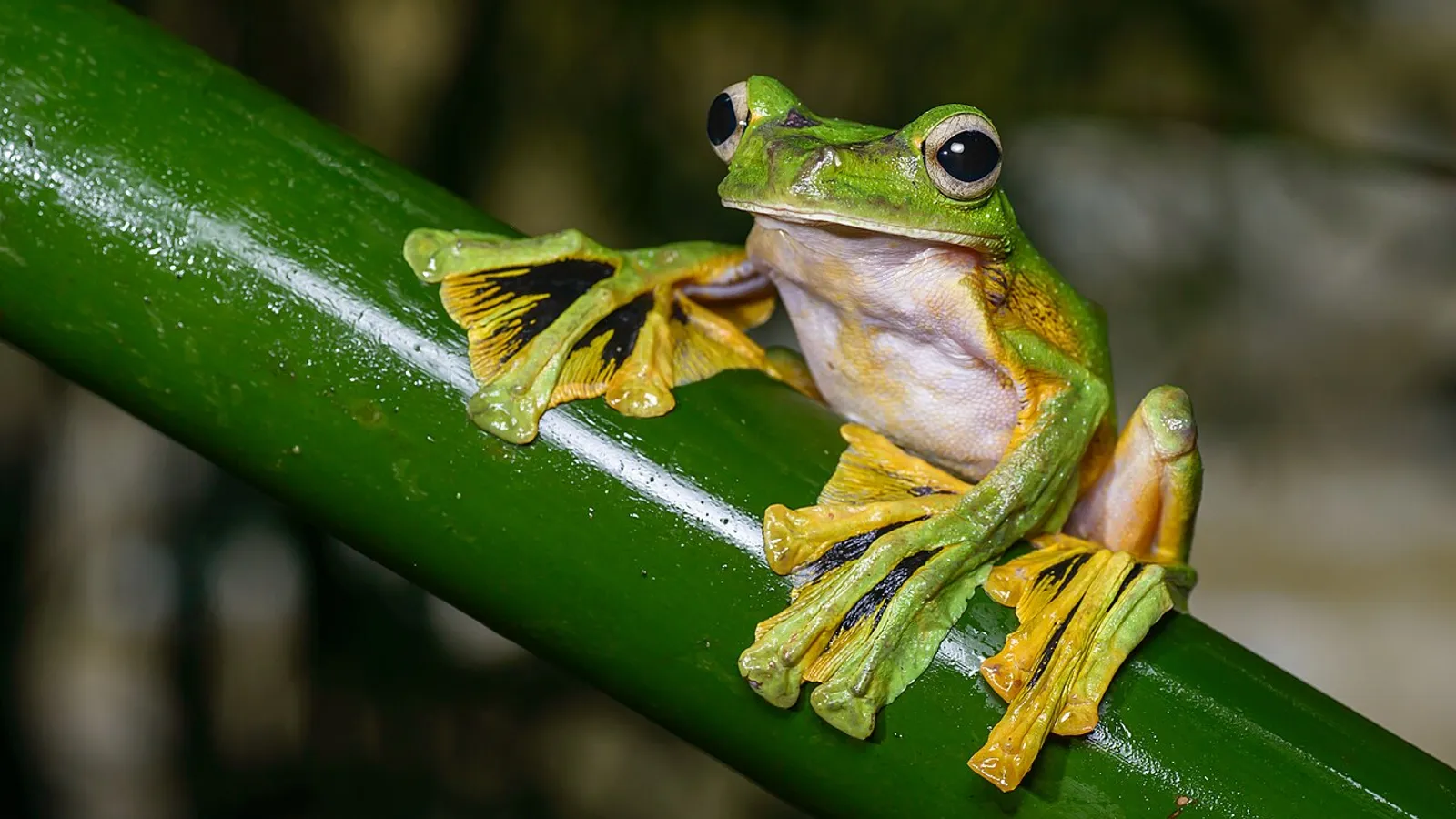
— Where the name comes from
Rhacophorus is “rag-bearer”, from rhákos and phérō, for the fringes of skin hanging along the limbs; nigropalmatus means “black-palmed”. The common name recalls Alfred Russel Wallace, who described it in Borneo in 1855 after a Chinese workman brought him one he had seen coming down from above “in a slanting direction, as if it were a kite”.
— Facts
- Group
- Amphibians · Amphibia
- Order
- Frogs and toads
- Habitat
- Primary rainforest, above pools and streams
- Range
- Borneo, Sumatra, peninsular Malaysia, Thailand
- Size
- 8–10 cm, 55–100 g
- Diet
- Insects, especially those drawn to elephant dung
- Lifespan
- 10 years
— Characteristics
- 01
The webs between the toes are enormous and black: opened, they act as a parachute.
- 02
It lays in foam nests hung from branches above water.
- 03
The tadpoles drop into the pool below when the foam dissolves.
— What sets it apart
Wallace, who arrived with Darwin at the idea of natural selection, described this frog in The Malay Archipelago, and the account holds a detail that seems minor and is not: the workmen brought it to him after watching it glide some twenty metres to the ground. Modern measurements agree — spreading its four feet and the fringes of its legs, this frog covers up to fifteen metres on the slant and chooses where to land. It is one of the few times a nineteenth-century naturalist believed a local account his colleagues would have dismissed.
