
Goliath frog
Conraua goliath
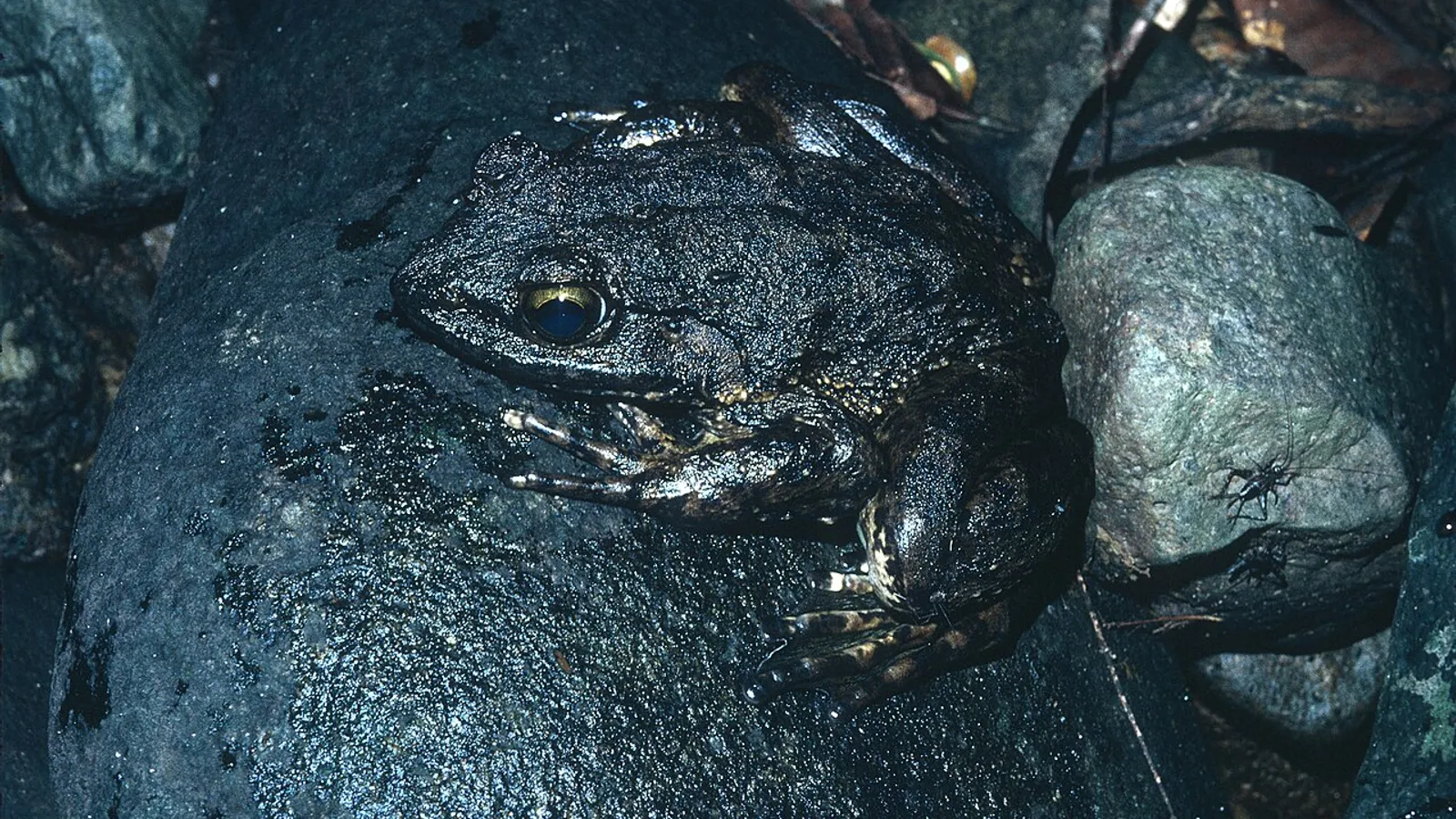
— Where the name comes from
Conraua recalls Gustav Conrau, a German trader and collector who gathered specimens in Cameroon and died there in 1899; goliath needs no explanation. It is the largest frog in the world: stretched out, from the tip of the snout to the toes of the hind legs, it passes eighty centimetres.
— Facts
- Group
- Amphibians · Amphibia
- Order
- Frogs and toads
- Habitat
- Fast, clear rainforest streams
- Range
- South-western Cameroon and Equatorial Guinea
- Size
- 17–32 cm of body, 0.6–3.3 kg
- Diet
- Crabs, insects, fish, other amphibians, small snakes
- Lifespan
- 15 years
— Characteristics
- 01
It jumps three metres from a standing start.
- 02
It has no vocal sacs: it communicates with whistles made with an open mouth.
- 03
It lives only along a stretch of coast a few hundred kilometres long.
— What sets it apart
In 2019 it became clear why it is so large: it builds nests. Along the streams it moves stones weighing as much as two kilos, digs circular basins among the rocks and clears them of debris, producing pools sheltered from the current in which the female lays and which the male then guards. It is the only African amphibian known to do anything of the kind, and it takes the strength of a three-kilo animal to do it: the size is not an evolutionary whim, it is a mason’s tool.
