
Madagascar tomato frog
Dyscophus antongilii
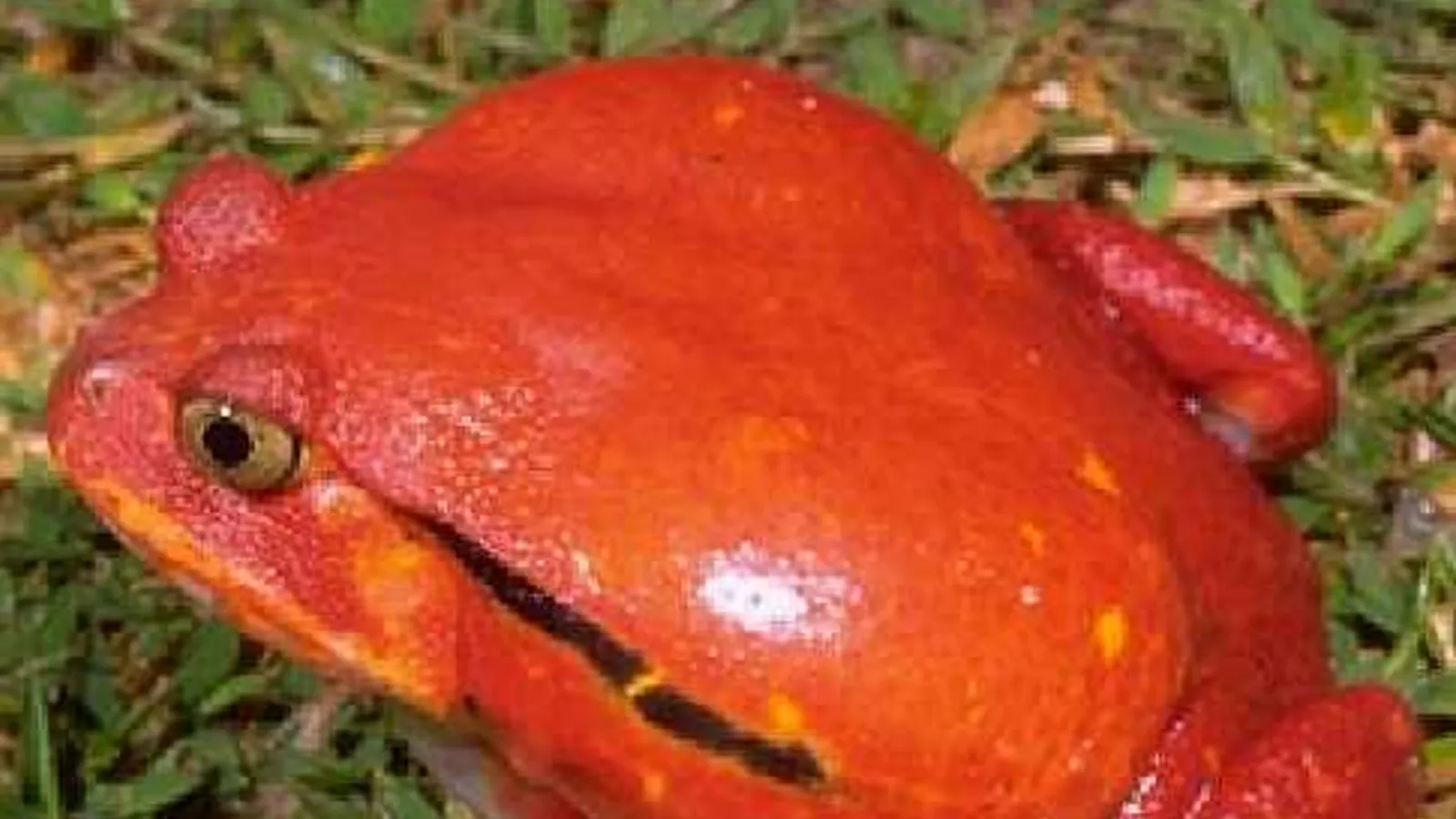
— Where the name comes from
Antongilii comes from Antongil Bay, on the north-east coast of Madagascar, where the species was collected; Dyscophus is made of Greek elements alluding to a difficulty of perception, perhaps referring to the subdued call. The common name, in every language, looks at the colour: adult females are a uniform glossy orange-red.
— Facts
- Group
- Amphibians · Amphibia
- Order
- Frogs and toads
- Habitat
- Ditches, pools, canals, damp gardens and farmland
- Range
- North-eastern Madagascar
- Size
- 6–10.5 cm, 40–230 g
- Diet
- Insects, worms, soil invertebrates
- Lifespan
- 10 years
— Characteristics
- 01
The female is red and large, the male orange and much smaller.
- 02
It spends the day buried and emerges after rain.
- 03
It puffs itself up with air to look bigger when threatened.
— What sets it apart
Seized, it secretes from its skin a white sticky foam that glues the predator’s mouth shut and forces it to let go; in humans that substance can provoke an allergic reaction, and anyone handling one washes their hands at once. It is an unusual defence among frogs, which normally rely on poison or on camouflage: this one relies on glue, that is on making the meal physically awkward rather than dangerous.
