
Darwin's frog
Rhinoderma darwinii
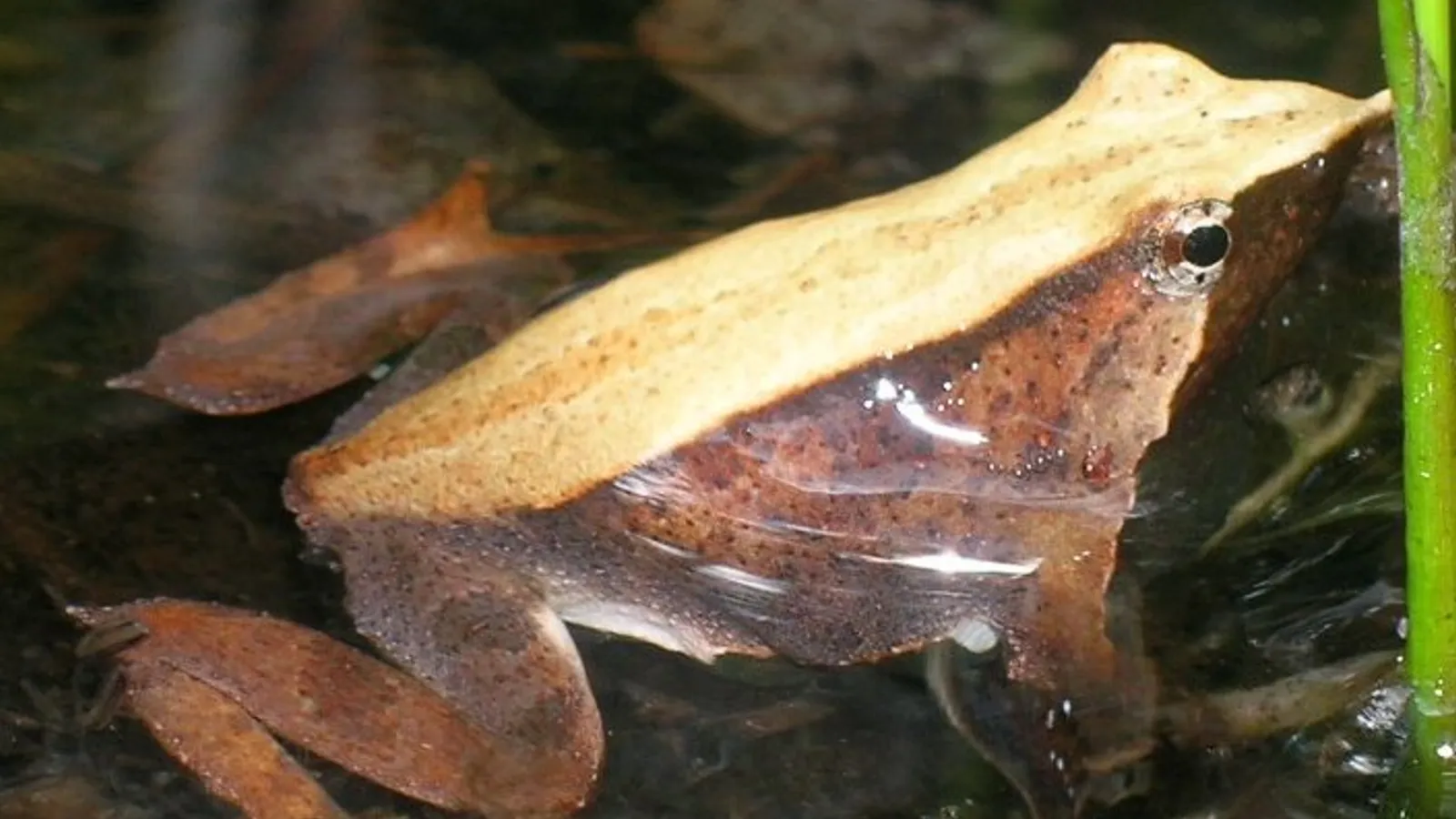
— Where the name comes from
Rhinoderma is “nose skin”, from rhís and dérma, for the pointed appendage on the tip of the snout that gives it the look of a leaf. Darwinii recalls the man who collected it: Charles Darwin, during the Chilean leg of the Beagle voyage, in 1834, without suspecting what the animal did.
— Facts
- Group
- Amphibians · Amphibia
- Order
- Frogs and toads
- Habitat
- Damp understorey of temperate southern beech forest
- Range
- Southern Chile and Argentina
- Size
- 2.5–3.5 cm, 2–5 g
- Diet
- Minute insects, spiders, molluscs
- Lifespan
- 15 years
— Characteristics
- 01
It looks like a dead leaf: discovered, it freezes or plays dead.
- 02
The female lays a few eggs on the ground and leaves.
- 03
The male stays to guard them for three weeks.
— What sets it apart
When the embryos start to move, the male swallows them — and not to eat them. The tadpoles pass down into his vocal sac, where they stay six or seven weeks feeding on secretions from its walls, and emerge from their father’s mouth as complete froglets. No other vertebrate in the world raises its young inside its throat. The sister species, which brooded in the same way, has not been seen since 1980 and is considered extinct: its disappearance is among the first attributed to the fungus now decimating amphibians.
