
Purple frog
Nasikabatrachus sahyadrensis
— Where the name comes from
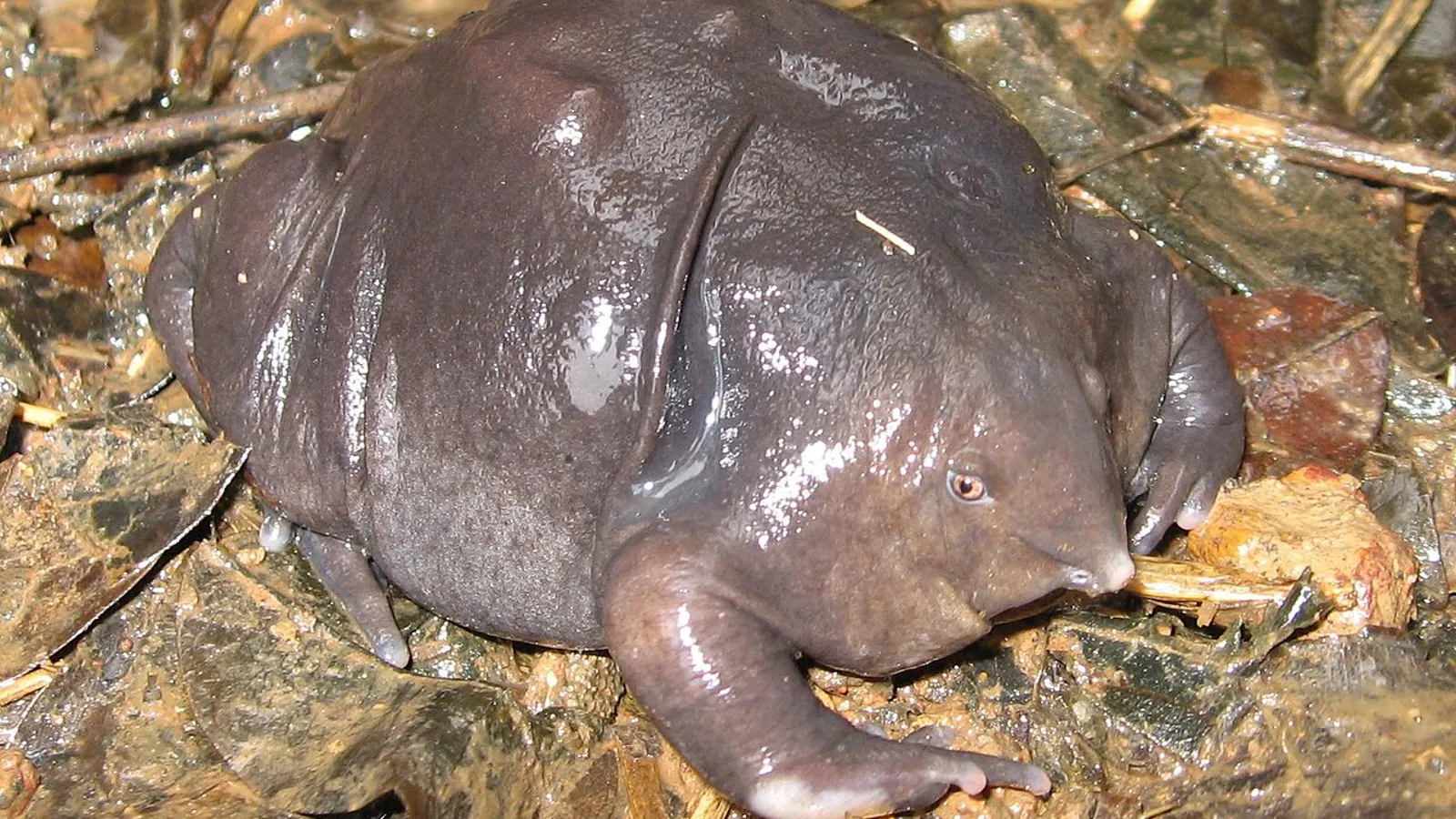
Nasikabatrachus is “nose frog”, from the Sanskrit nāsikā and the Greek batrachos: the snout ends in a white cartilaginous point with which it bores through soil to reach termites. Sahyadrensis comes from the Sahyadri, the Indian name of the Western Ghats. It was described only in 2003, and not because it is small: it weighs about as much as an apple.
— Facts
- Group
- Amphibians · Amphibia
- Order
- Frogs and toads
- Habitat
- Damp forest soil, tens of centimetres down
- Range
- The Western Ghats, south-western India
- Size
- 5–9 cm, 100–200 g
- Diet
- Termites, ants, small worms, sucked up from underground
- Lifespan
- unknown
— Characteristics
- 01
It lives underground all year and surfaces for only a few days.
- 02
Its body is bloated, its head tiny and its skin a glossy purple.
- 03
It feeds without coming out, pushing its grooved tongue into termite galleries.
— What sets it apart
It is a living fossil nobody had noticed. Its closest relatives are not in Asia but in the Seychelles, three thousand kilometres away, and the two families parted when India and those islands were still one piece of Gondwana: more than a hundred million years ago, before the Ghats existed. A lineage that has crossed continental drift, the extinction of the dinosaurs and the whole history of India, and that was described for science in the same year Skype was launched.
