
Common frog
Rana temporaria
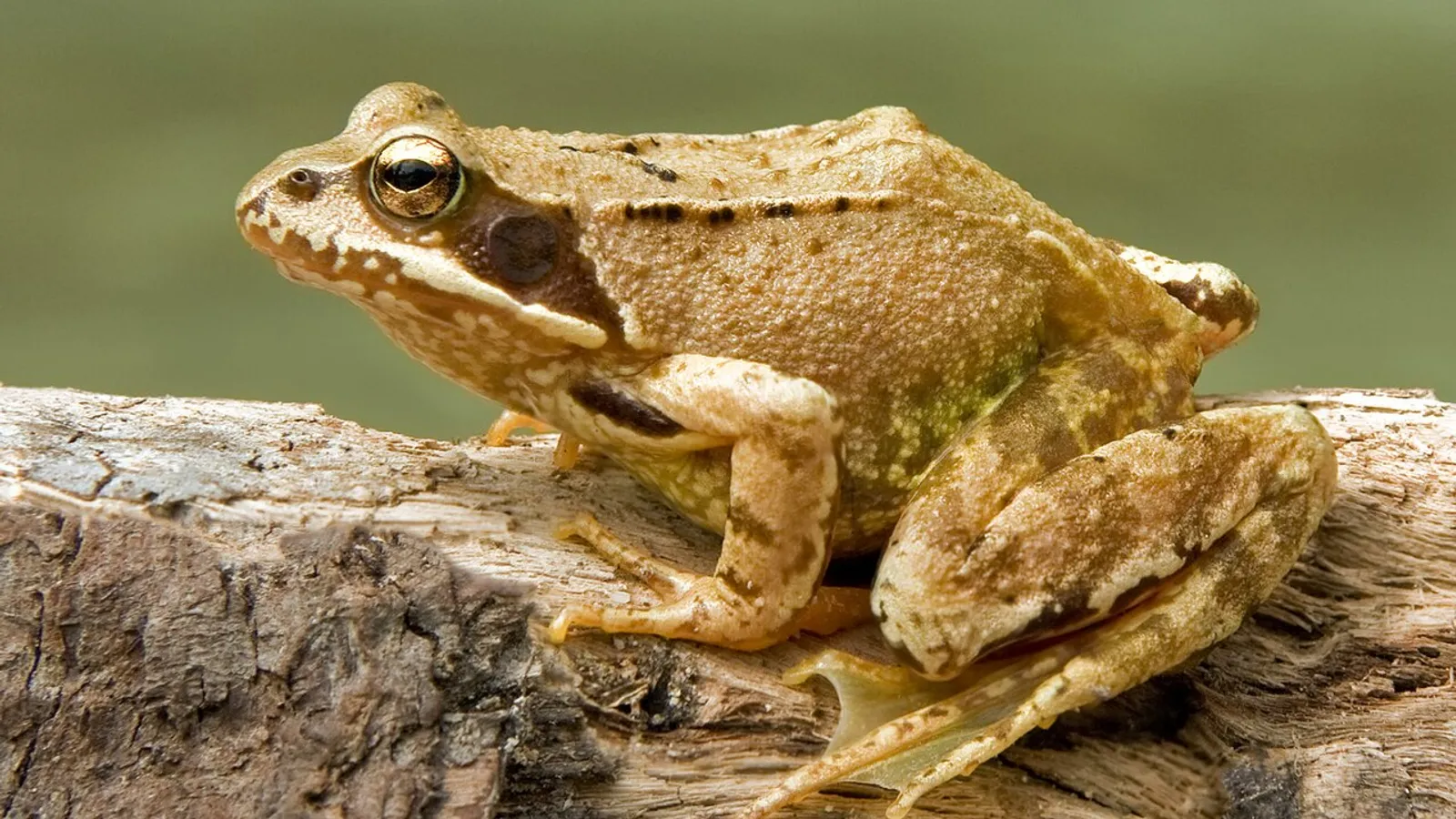
— Where the name comes from
Rana is Latin, perhaps onomatopoeic from the croak. Temporaria refers to the dark patch on the temple, behind the eye, that covers the eardrum — not, as is often written, to the shortness of the animal’s life.
— Facts
- Group
- Amphibians · Amphibia
- Order
- Frogs and toads
- Habitat
- Damp woodland, meadows, temporary pools up to 2,500 m
- Range
- Europe, from Ireland to the Urals
- Size
- 6–10 cm
- Diet
- Insectivore
- Lifespan
- about 8 years
— Characteristics
- 01
It breathes through its skin as well, which must stay moist.
- 02
Lays thousands of eggs in jelly masses.
- 03
The tadpole is a herbivore; the adult is a carnivore.
— What sets it apart
At colder latitudes the common frog spends the winter on the bottom of a pond, breathing only through its skin in water at 4 °C. Some close relatives, such as Rana sylvatica, take it further: they let themselves freeze. The heart stops, the blood stops moving, and glucose and urea keep the ice crystals from tearing the cells apart. In spring the animal thaws and starts again.
