
Fire salamander
Salamandra salamandra
— Where the name comes from
The Greek salamándra is a word of uncertain origin, perhaps Anatolian or Iranian, which came from the east along with the legend of an animal that lives in fire. The legend has a mundane basis: salamanders overwinter in hollow logs, and came out of the wood thrown on the hearth.
— Facts
- Group
- Amphibians · Amphibia
- Order
- Salamanders
- Habitat
- Damp broadleaf woodland, near streams
- Range
- Central and southern Europe; common in the Apennines
- Size
- 15–25 cm
- Diet
- Insectivore — earthworms, slugs
- Lifespan
- Over 20 years
— Characteristics
- 01
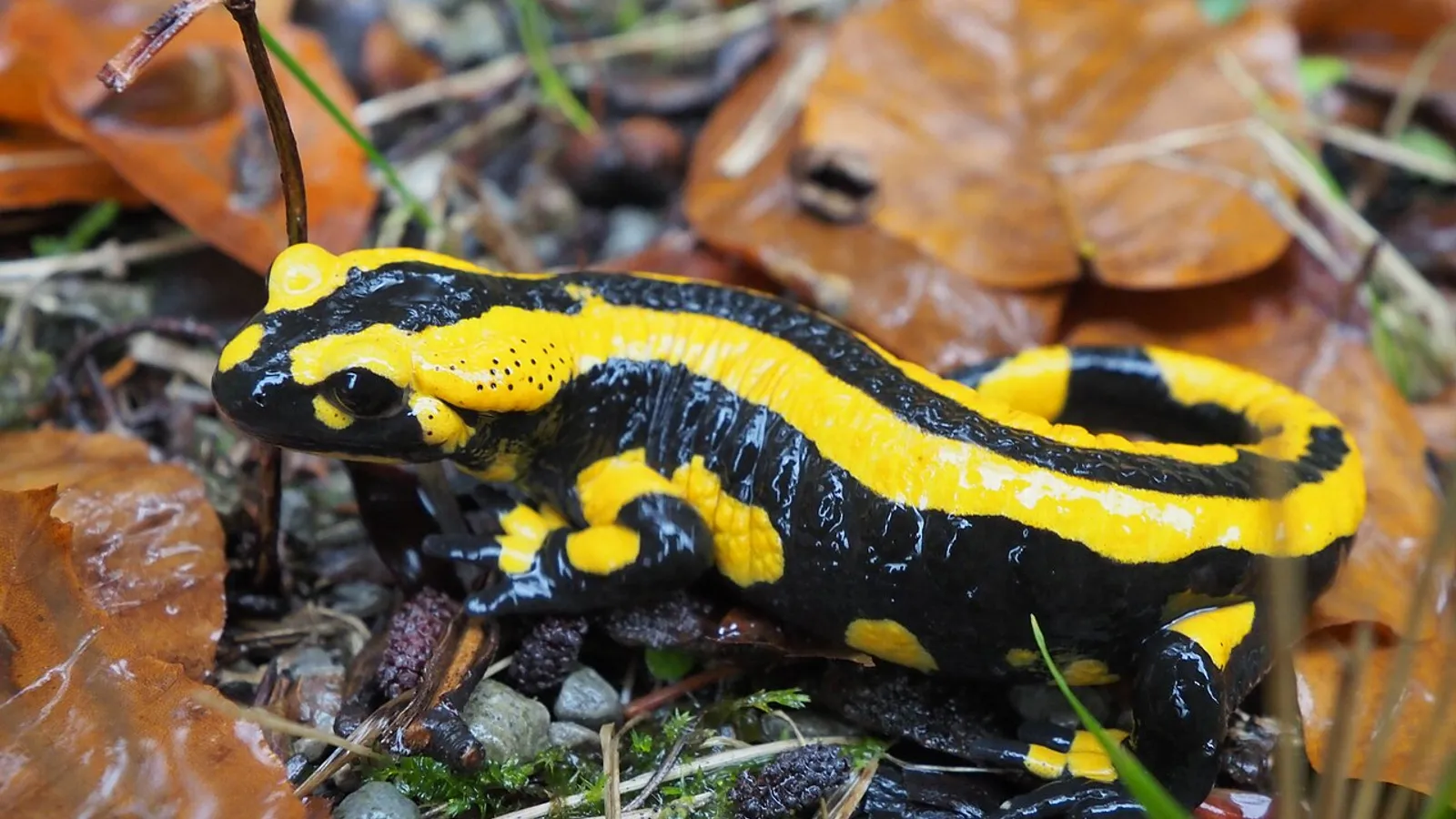
The yellow markings are aposematic: they advertise toxicity.
- 02
The parotoid glands secrete samandarin, a neurotoxic alkaloid.
- 03
Many populations are viviparous: they give birth to larvae, not eggs.
— What sets it apart
Salamanders regrow limbs, tail, jaws, spinal cord, retina and parts of the heart, without scarring and without any limit of age. The cells around the wound step back to an immature state, rebuild the missing structure and specialise again. It is the reference model of regenerative medicine: we study a salamander to understand why we, who can repair a liver, cannot grow back a finger.
