
Marsh frog
Pelophylax ridibundus
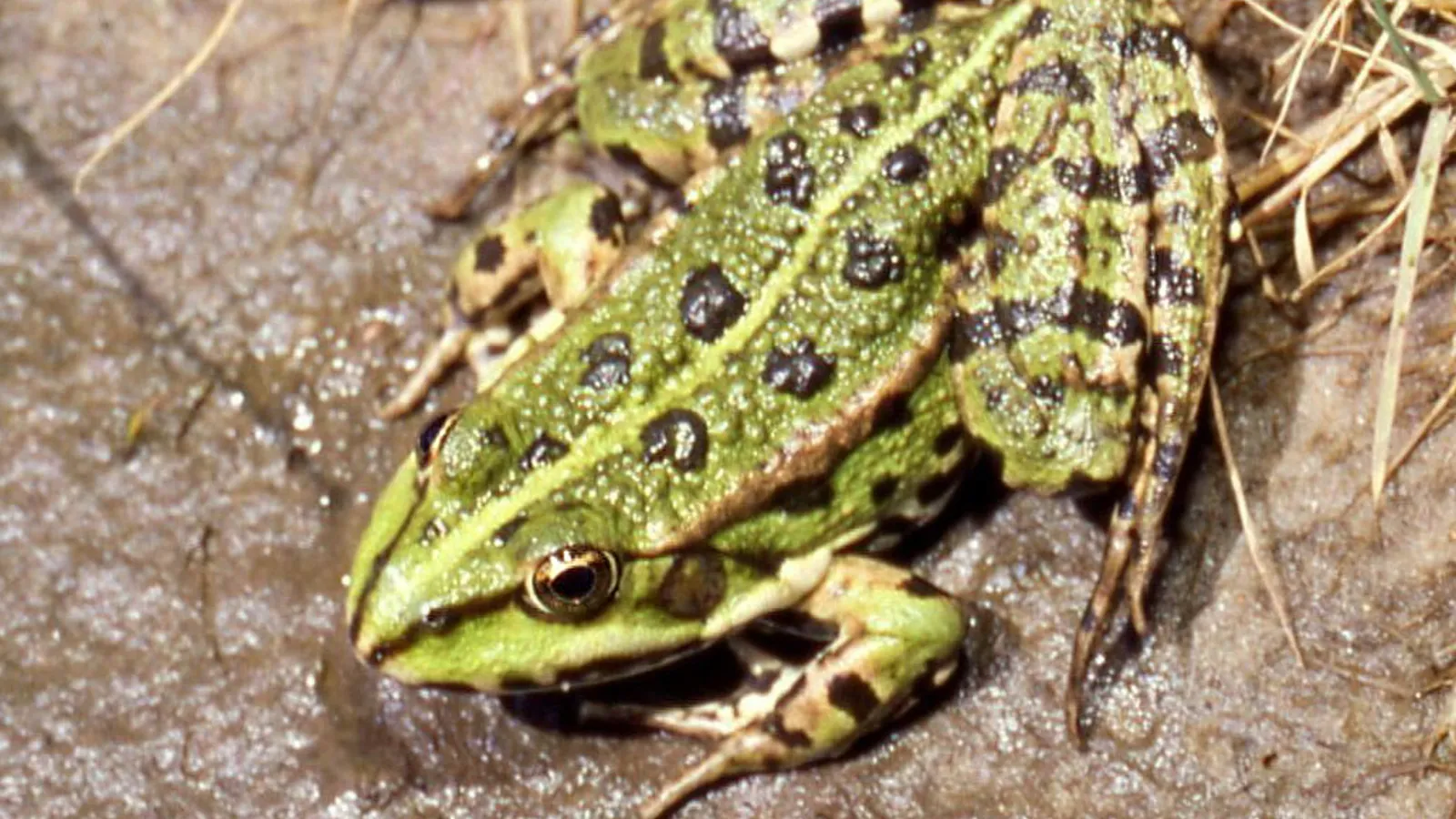
— Where the name comes from
Pelophylax is “guardian of the mud”, from pēlós and phýlax; ridibundus means “laughing”, for the call — a hoarse, jerky croaking that really does sound like coarse laughter and that on a summer night carries hundreds of metres from a pond.
— Facts
- Group
- Amphibians · Amphibia
- Order
- Frogs and toads
- Habitat
- Ponds, canals, slow rivers, rice fields, ditches
- Range
- Central and eastern Europe, western Asia
- Size
- 8–12 cm, up to 17 cm; 60–250 g
- Diet
- Insects, snails, tadpoles, small fish, smaller frogs
- Lifespan
- 10 years
— Characteristics
- 01
It is the largest frog in Europe.
- 02
It is always in the water or on the bank, ready to dive.
- 03
The male inflates two grey vocal sacs at the corners of the mouth.
— What sets it apart
Its relatives invented a way of breeding that undoes the definition of a species. The common green frog of Italian ponds is a hybrid between this one and the pool frog, and it is not sterile: it makes gametes by throwing away half its own genome each time and keeping only one parent’s. The result is a population of hybrids that reproduces indefinitely but cannot survive alone, because in every generation it must mate with one of the two original species.
