
Angler
Lophius piscatorius
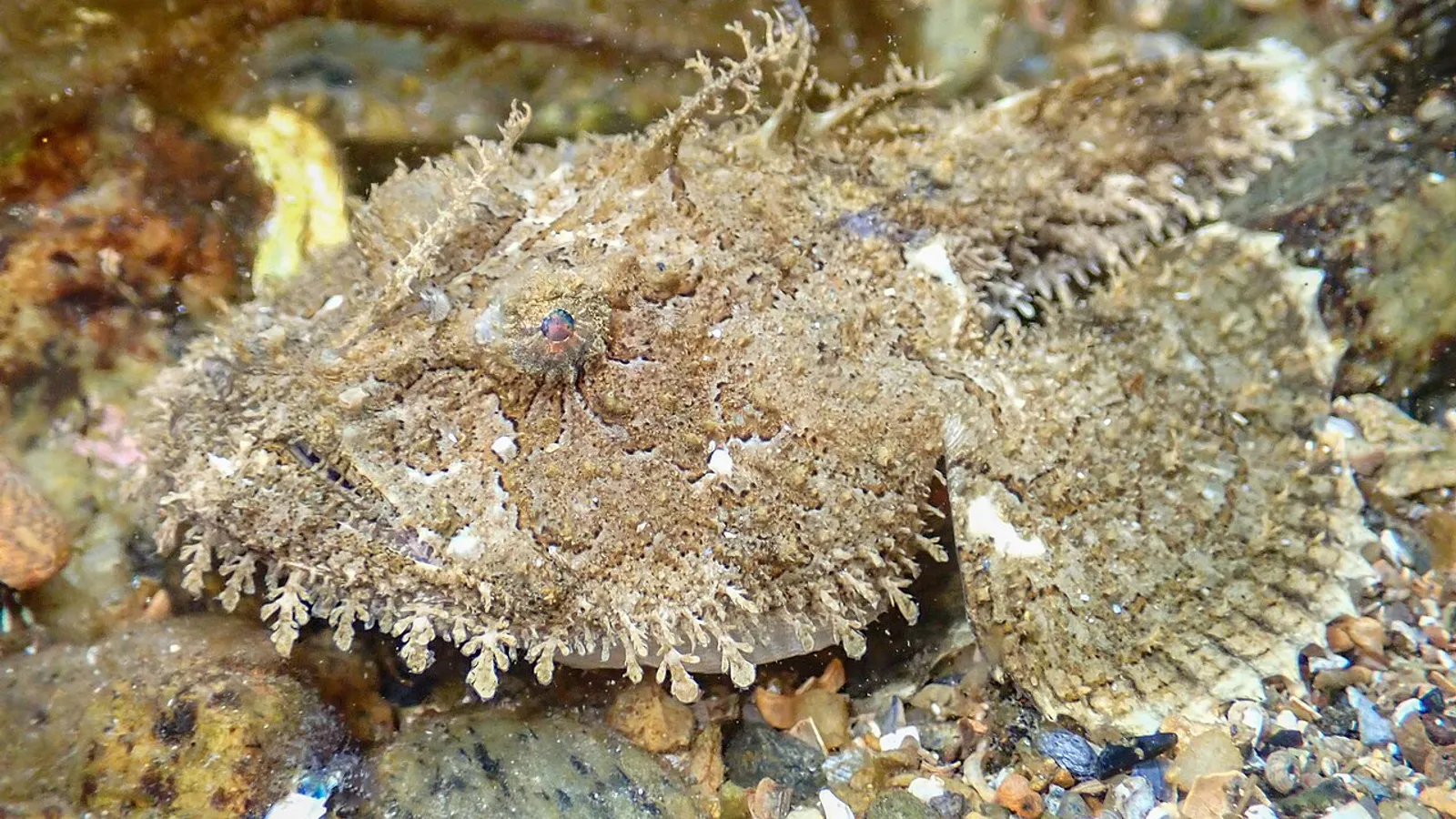
— Where the name comes from
Lophius comes from the Greek lóphos, the crest or tuft, for the filaments on its head; piscatorius means “of the fisherman”, and is an exact description of its trade. The Italian name refers instead to the enormous mouth and flattened body, and in the kitchen the same species is coda di rospo, toad’s tail — three different animals for one fish.
— Facts
- Group
- Fish · Actinopterygii · Chondrichthyes
- Order
- Anglerfishes
- Habitat
- Sandy and muddy bottoms between 20 and 1,000 metres
- Range
- The eastern Atlantic from Norway to Senegal, and the Mediterranean
- Size
- 70–120 cm, up to 200 cm; 5–20 kg, record 57 kg
- Diet
- Fish, cephalopods, occasionally seabirds
- Lifespan
- 20 years
— Characteristics
- 01
The first dorsal ray is a rod with a lure at the end.
- 02
It can swallow prey as large as itself.
- 03
It walks on the bottom propped on jointed pectoral fins.
— What sets it apart
It is the first animal to have invented the fishing rod. The front ray of the dorsal fin has become a mobile shaft — the illicium — with a fleshy tag at the tip that the animal waves in front of its mouth in imitation of a small worm; when something approaches, the mouth opens in six hundredths of a second and the drop in pressure sucks everything in. The rest of the body, flat, fringed and mud-coloured, exists only to make that scene work: it is a lure with a fish attached behind.
