
Striated frogfish
Antennarius striatus
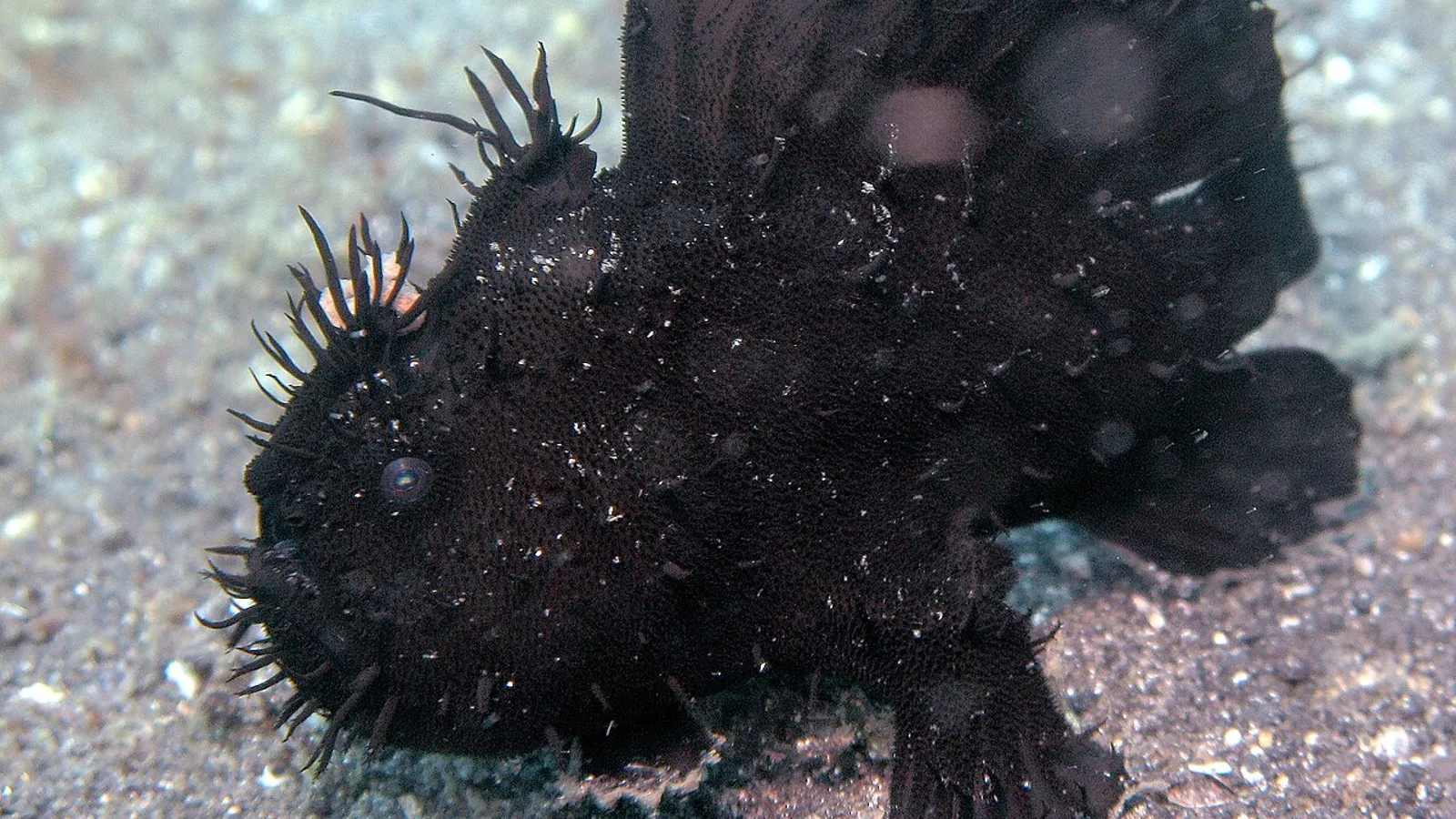
— Where the name comes from
Antennarius comes from antenna, for the mobile rod it carries on its snout; striatus describes the dark stripes running along the body. The common name, in Italian as in English, looks at how it moves: it does not swim, it walks on the bottom on its pectoral fins like a frog on a leaf.
— Facts
- Group
- Fish · Actinopterygii · Chondrichthyes
- Order
- Anglerfishes
- Habitat
- Bottoms with sponges, weed and debris between 10 and 200 metres
- Range
- Tropical and subtropical seas worldwide
- Size
- 10–22 cm, 100–300 g
- Diet
- Fish and crustaceans drawn in by the lure
- Lifespan
- 10 years
— Characteristics
- 01
The lure on its snout is a branched filament imitating a worm.
- 02
It changes colour over weeks to match the bottom.
- 03
It has jointed pectoral fins with which it grips and walks.
— What sets it apart
It has the fastest bite ever measured in a vertebrate: six thousandths of a second from open to shut, twelve times quicker than a blink. Expanding its mouth suddenly creates a vacuum that pulls the prey in along with the water, and the volume of the mouth cavity increases twelvefold in the same instant. It chases nothing — it simply sits still disguised as a sponge and waits for something to come and bite the false worm.
