
Golden poison frog
Phyllobates terribilis
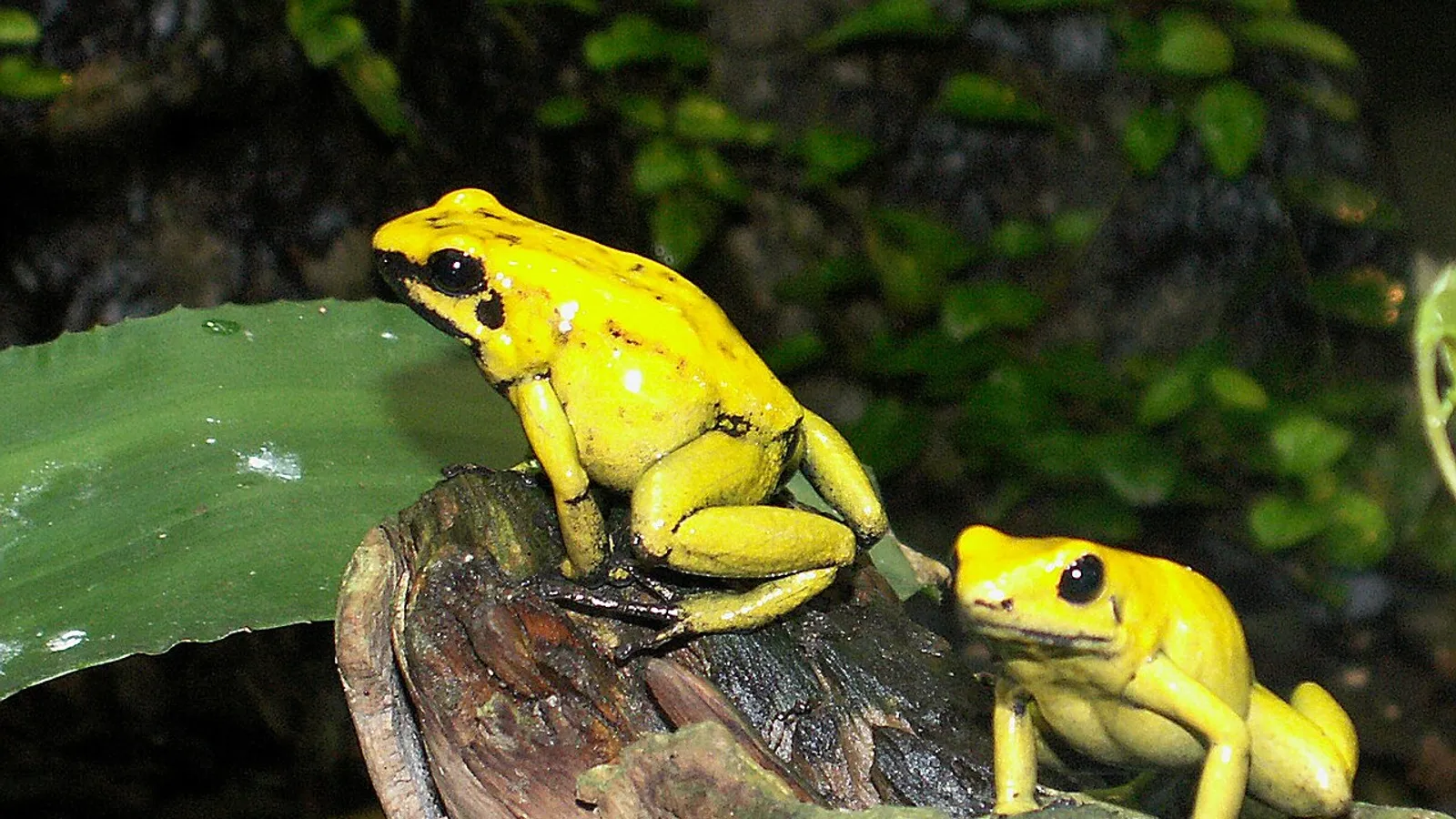
— Where the name comes from
Phyllobates is Greek, “leaf walker” (phýllon, leaf + bátēs, walker). Terribilis is Latin and needs no translation: it was chosen in 1978 by Myers and Daly, who found out how toxic the animal was by handling it.
— Facts
- Group
- Amphibians · Amphibia
- Order
- Frogs and toads
- Habitat
- Rainforest leaf litter
- Range
- A small patch of the Colombian Pacific coast
- Size
- 4–5 cm
- Diet
- Insectivore — ants, mites, termites
- Lifespan
- about 10 years
— Characteristics
- 01
A single individual carries poison enough to kill ten adult people.
- 02
The bright colour is a warning, not a disguise.
- 03
The male carries the tadpoles on his back.
— What sets it apart
The frog does not make its own poison: it sequesters it from the arthropods it eats. Raised in captivity on laboratory fruit flies it is entirely harmless, and stays harmless for good. The batrachotoxin that makes it lethal is, in effect, a property of the forest — the frog is only the vessel that concentrates it. To lose that forest is to lose a molecule no laboratory could build from scratch.
