
La Palma glass frog
Hyalinobatrachium valerioi
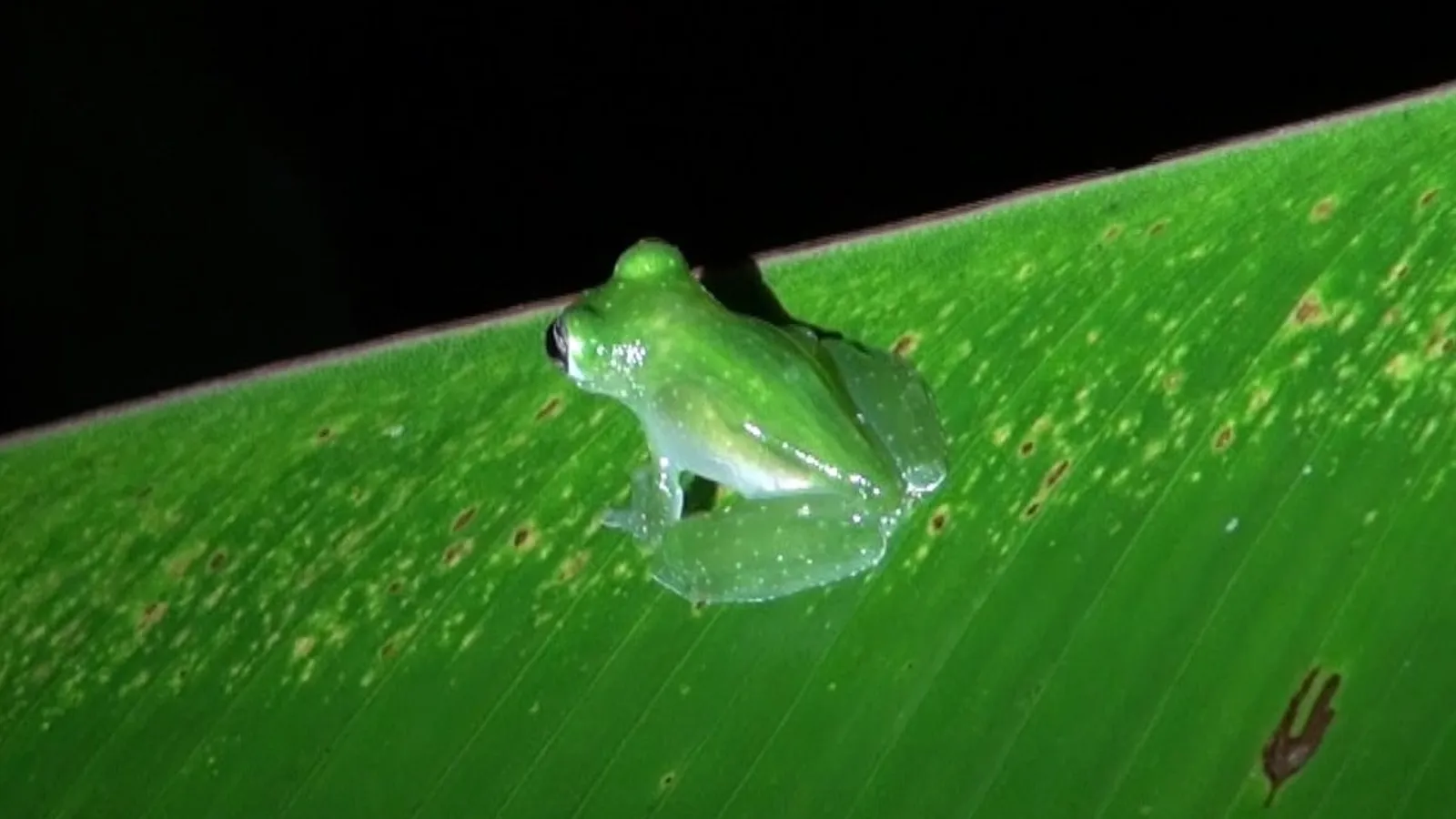
— Where the name comes from
Hyalinobatrachium is “glass frog”, from hyálinos, glassy, and batrachos, the frog: the skin of the belly is transparent and through it one sees the beating heart, the gut and the eggs. Valerioi recalls Manuel Valerio, a Costa Rican naturalist. It is one of the few animals whose circulation can be watched without opening it.
— Facts
- Group
- Amphibians · Amphibia
- Order
- Frogs and toads
- Habitat
- Leaves above rainforest streams
- Range
- From Costa Rica to western Ecuador
- Size
- 2–2.7 cm, 1–2 g
- Diet
- Midges, spiders, minute insects
- Lifespan
- 5 years
— Characteristics
- 01
The male guards the eggs hung beneath leaves and keeps them wet.
- 02
Seen from above it is translucent green and vanishes against the leaf.
- 03
The spots on its back imitate its own eggs, confusing predators.
— What sets it apart
Asleep, it becomes genuinely invisible. In 2022 it was measured that during daytime rest these frogs move nearly ninety per cent of their red blood cells into the liver, which hides them behind a reflective wall: the blood vanishes from the body, the animal turns almost clear, and there is nothing left to see on the leaf. On waking, the cells return to circulation. In any other vertebrate, packing blood into an organ like that would cause fatal clots, and how these frogs avoid it is still an open question.
