
Harlequin poison frog
Oophaga histrionica
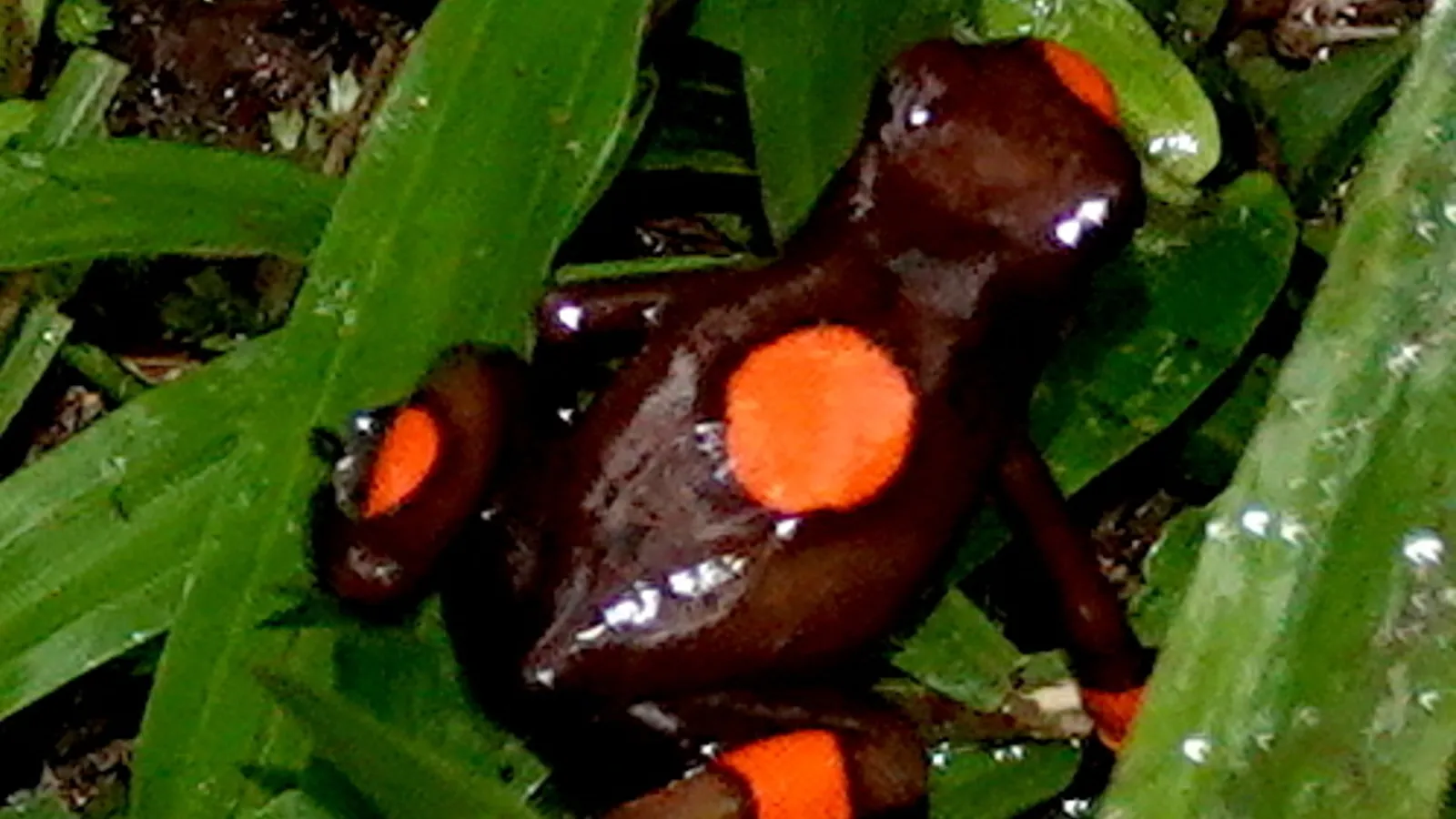
— Where the name comes from
Oophaga is “egg-eater”, from ōón and phageîn, and it describes a maternal behaviour rather than a diet; histrionica comes from histrio, the actor, for a livery that looks like a stage costume. Every population has different colours — red, yellow, white, blue — so much so that for decades they were described as separate species.
— Facts
- Group
- Amphibians · Amphibia
- Order
- Frogs and toads
- Habitat
- Leaf litter and understorey of the Chocó rainforest
- Range
- Western Colombia
- Size
- 2.5–3.8 cm, 2–4 g
- Diet
- Ants, mites, termites
- Lifespan
- 8 years
— Characteristics
- 01
Its skin holds alkaloids taken from the ants it feeds on.
- 02
It is active by day and moves about in the open.
- 03
The male calls from a fixed point and defends a small territory.
— What sets it apart
The mother carries her young one at a time and then comes back to feed them. As soon as the tadpoles hatch she loads them onto her back and deposits each in a different pocket of water among the leaves of a bromeliad; then, for weeks, she visits every pool and lays in it an unfertilised egg for the tadpole to eat. Without those visits the young starve, and the mother has to remember where she left each one: ten or fifteen separate addresses scattered through a vertical forest.
