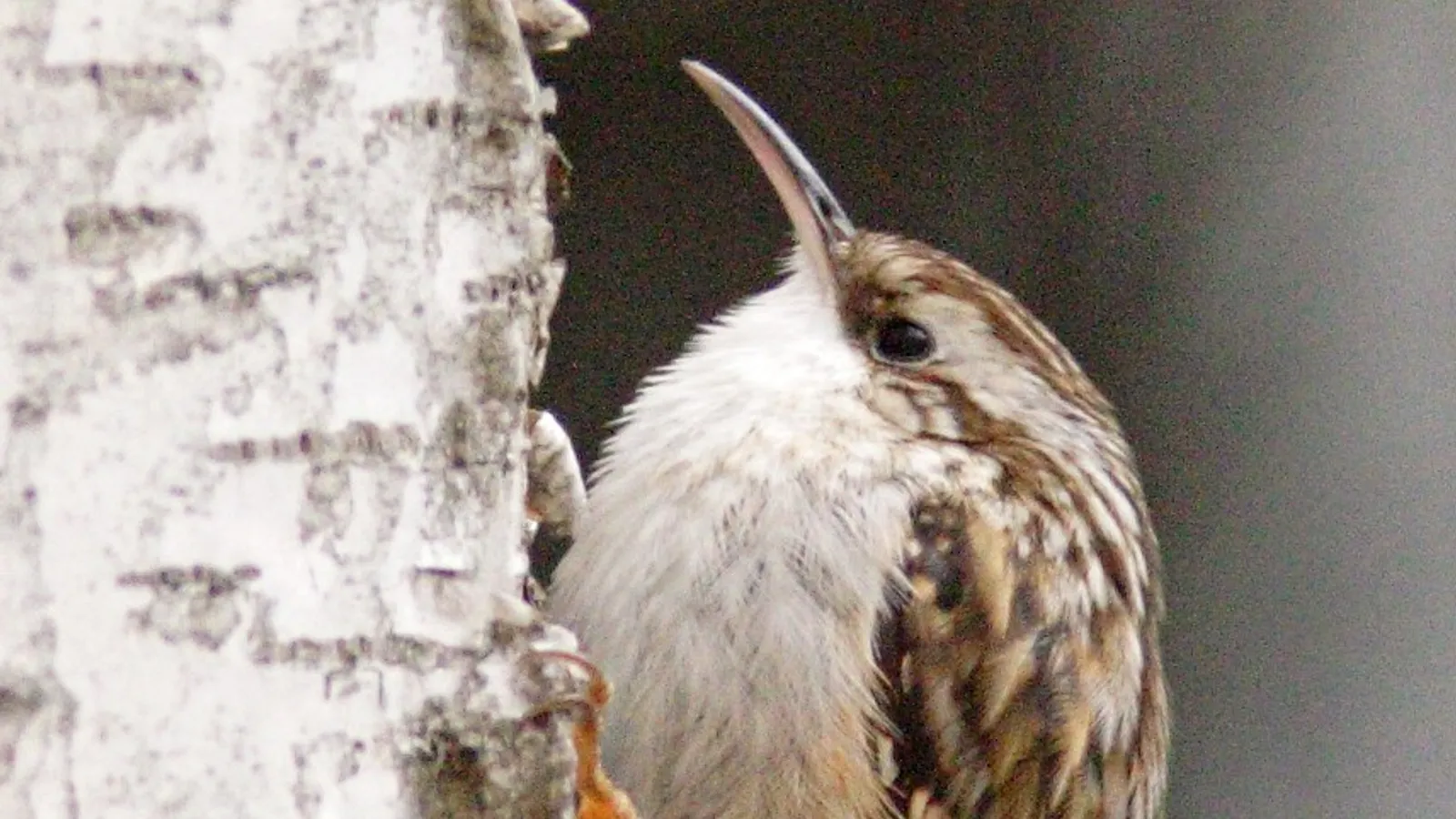
Short-toed treecreeper
Certhia brachydactyla
— Where the name comes from
Certhia comes from kérthios, a small tree bird mentioned by Aristotle. Brachydactyla is Greek, brachýs, “short”, and dáktylos, “toe”: its hind claw is shorter than that of its twin, the Eurasian treecreeper, and it is one of the few details that let you tell them apart in the hand. The Italian rampichino is the diminutive of rampicare, “to climb”: the little climber.
— Facts
- Group
- Birds · Aves
- Order
- Passerines
- Habitat
- Broadleaf woodland, parks, tree-lined avenues, orchards
- Range
- Western and southern Europe, North Africa, Asia Minor
- Size
- 12–13 cm, 8–11 g
- Diet
- Insects, larvae and spiders prised from bark
- Lifespan
- A few years
— Characteristics
- 01
It climbs trunks in a spiral, propped on its stiff tail.
- 02
It has a thin, curved bill, made for probing cracks in bark.
- 03
In winter several birds roost together packed into a hole.
— What sets it apart
It never goes down. It lands at the foot of a trunk, spirals up to the branches, then drops off in flight to the base of the next tree and starts again: a system that lets it inspect every side of the bark without passing the same spot twice. In Italy the short-toed treecreeper lives in lowland and hill woods and the Eurasian treecreeper in mountain ones, but where they meet they are so alike that the only sure way to tell them apart at a distance is to listen to the song.