Medium ground finch
Geospiza fortis
— Where the name comes from
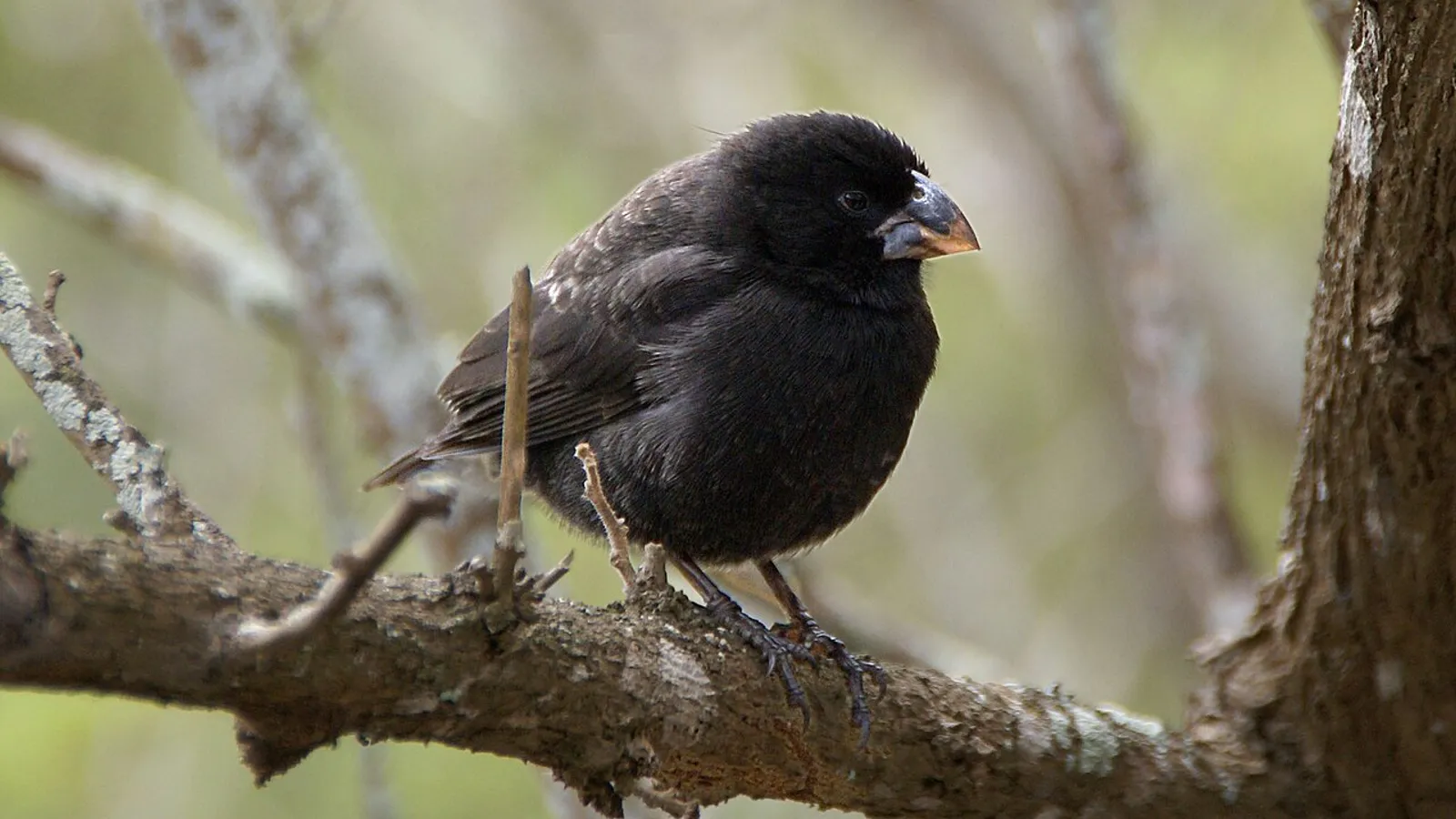
Geospiza joins the Greek gê, “earth”, and spíza, “finch”: the finch that looks for seeds on the ground. Fortis means “strong”, for its sturdy beak. It is one of the famous Darwin’s finches, although Darwin, when he collected them in the Galápagos in 1835, did not realise they were all related and did not note which island each came from.
— Facts
- Group
- Birds · Aves
- Order
- Passerines
- Habitat
- Dry lowland scrub
- Range
- The Galápagos Islands
- Size
- 12–13 cm, 17–25 g
- Diet
- Seeds, mostly of medium hardness; some insects
- Lifespan
- A few years, over 10 the record
— Characteristics
- 01
The adult male is black, the female brown and streaked.
- 02
Beak shape varies greatly from one bird to another.
- 03
Song is learnt from the father and passed down the generations.
— What sets it apart
It is the animal in which evolution was seen happening. From 1973 Peter and Rosemary Grant measured almost every finch on the islet of Daphne Major, year after year. In the drought of 1977 the small seeds ran out and the survivors were mostly birds with larger beaks, able to crack the hard ones: the very next generation had measurably bigger beaks. A few years later, after the El Niño rains, small seeds became plentiful again and selection changed direction. Darwin thought it would take thousands of years to see natural selection at work; two seasons were enough.