
Western green lizard
Lacerta bilineata
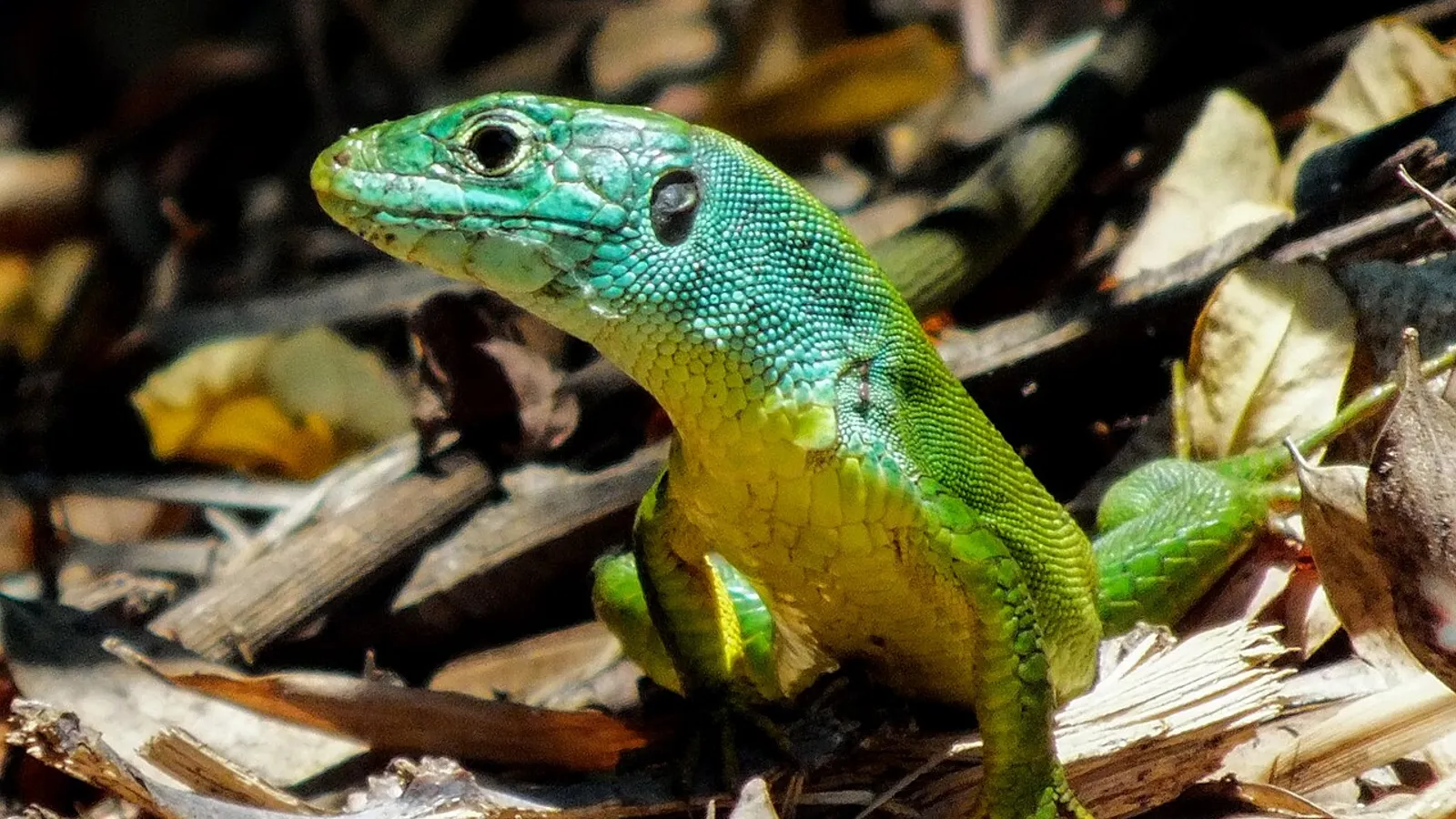
— Where the name comes from
Lacerta is the lizard in Latin, and it is the word from which, by way of the Spanish el lagarto, both the English lizard and the alligator derive. Bilineata, “two-lined”, describes the young, which carry two pale stripes down the back and turn wholly green as adults. The Italian name comes instead from the Latin ramex, the branch, for its habit of climbing into bushes.
— Facts
- Group
- Reptiles · Reptilia
- Order
- Squamates
- Habitat
- Hedges, woodland edges, vineyards, sunny brambly banks
- Range
- Italy, France, northern Spain, Slovenia, Switzerland
- Size
- 30–40 cm including the tail, 35 g
- Diet
- Large insects, spiders, snails, eggs, fruit
- Lifespan
- 10 years
— Characteristics
- 01
In spring the male’s throat turns brilliant blue.
- 02
Chased, it dives into the nearest bramble with a distinctive rustle.
- 03
It spends five months dormant in a hole among roots.
— What sets it apart
In the Italian countryside it has been said for centuries that the green lizard is a friend to people and wakes anyone sleeping in the shade when a viper approaches. It is not true, but the belief has an accidental basis: where green lizards live the undergrowth is open and sunlit, which vipers frequent little, and a fleeing green lizard makes enough noise to wake anyone. It is because of that story that in many districts this is the one reptile nobody has ever killed.
