
Viviparous lizard
Zootoca vivipara
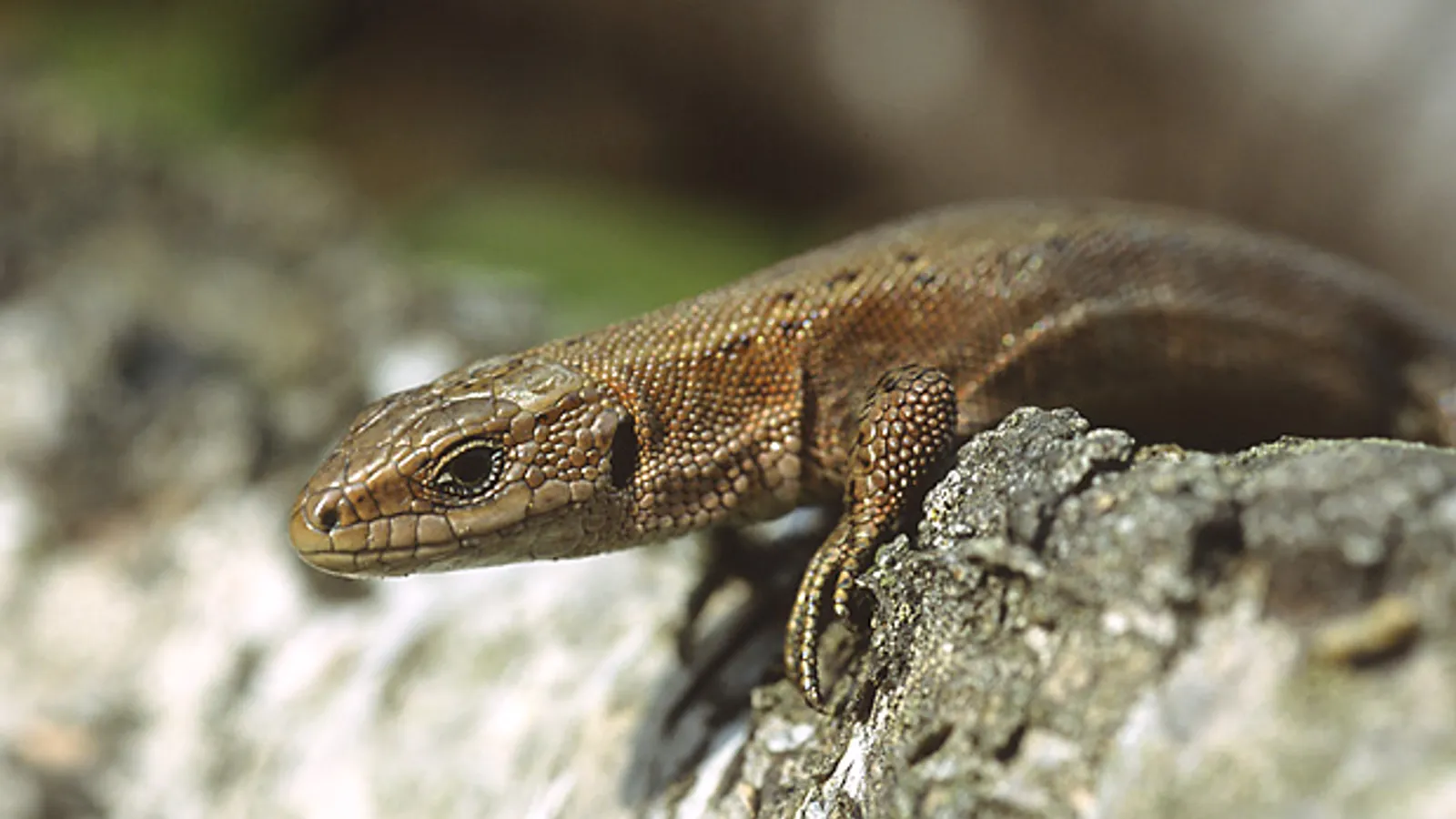
— Where the name comes from
The name says the same thing twice in two languages: Zootoca is Greek, from zōós and tókos, “bearing live young”, and vivipara is the Latin with the same meaning. Whoever named it wanted to mark the exception — nearly all lizards lay eggs — without knowing that this species’ oddest distinction would be something else.
— Facts
- Group
- Reptiles · Reptilia
- Order
- Squamates
- Habitat
- Peat bogs, heaths, damp meadows, clearings, tundra
- Range
- From Ireland to Sakhalin, north of the Arctic Circle
- Size
- 12–18 cm including the tail, 3–6 g
- Diet
- Spiders, insects, small invertebrates
- Lifespan
- 8 years
— Characteristics
- 01
It is the most widely distributed land reptile in the world.
- 02
It lives further north than any other reptile: to seventy degrees of latitude.
- 03
The young are born wrapped in a thin membrane which they break at once.
— What sets it apart
The same species has young in two different ways. The populations of the Pyrenees, the western Alps and Slovenia lay eggs like every other lizard; those of the rest of Europe and Asia give birth to fully formed young. They are not separate species — where the two groups meet they interbreed, if with difficulty — and it is one of very few vertebrates caught in the middle of the transition. The advantage shows on the map: carrying the eggs around inside, in the warm, is what let a reptile cross the Arctic Circle.
