
Common slow worm
Anguis fragilis
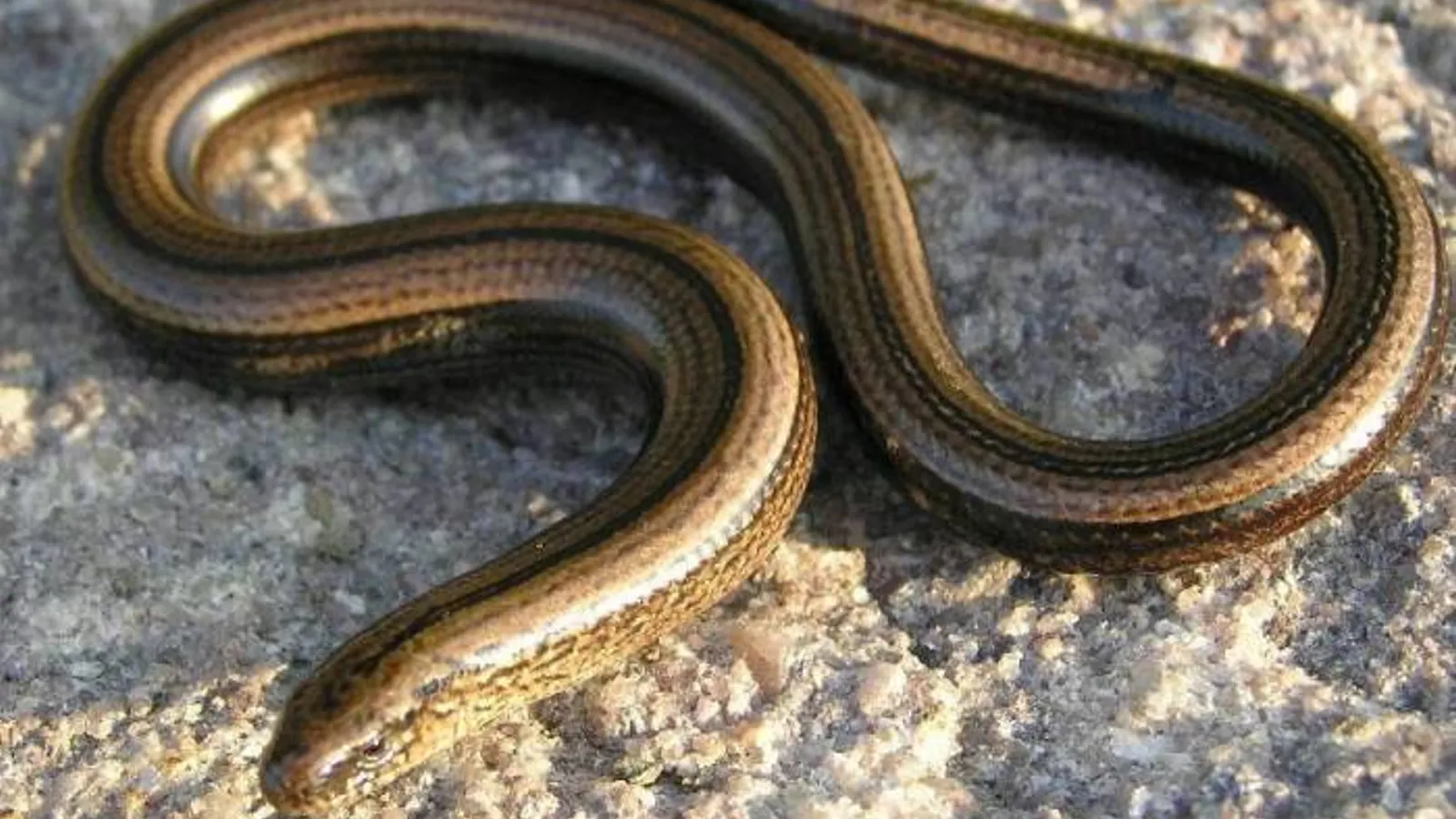
— Where the name comes from
Anguis in Latin is the snake, and fragilis says how easily the tail breaks. The Italian name comes instead from orbo, blind: the belief that it had no sight — and was venomous, and could blind people — has had it killed for centuries. It is not blind, it is not venomous, and it is not even a snake: it is a lizard that lost its legs.
— Facts
- Group
- Reptiles · Reptilia
- Order
- Squamates
- Habitat
- Damp meadows, hedges, open woodland, gardens, walls
- Range
- Europe and western Asia as far as the Caucasus
- Size
- 30–50 cm including the tail, 20–100 g
- Diet
- Slugs, earthworms, larvae
- Lifespan
- over 30 years in the wild
— Characteristics
- 01
It has movable eyelids and ear openings: snakes have neither.
- 02
It moves very slowly and cannot bite: its only defence is to shed its tail.
- 03
Beneath the skin it keeps minute remnants of the limb skeleton.
— What sets it apart
A specimen kept at Copenhagen zoo lived fifty-four years, the longevity record for a lizard: longer than a dog, longer than a horse, in an animal that weighs about as much as a bar of chocolate. Its slowness has cost it dearly where people are concerned — it is the species most often killed by spades and hoes in the gardens of Europe, nearly always through the mistake of taking it for an adder.
