
Golden silk orb-weaver
Trichonephila clavipes
— Where the name comes from
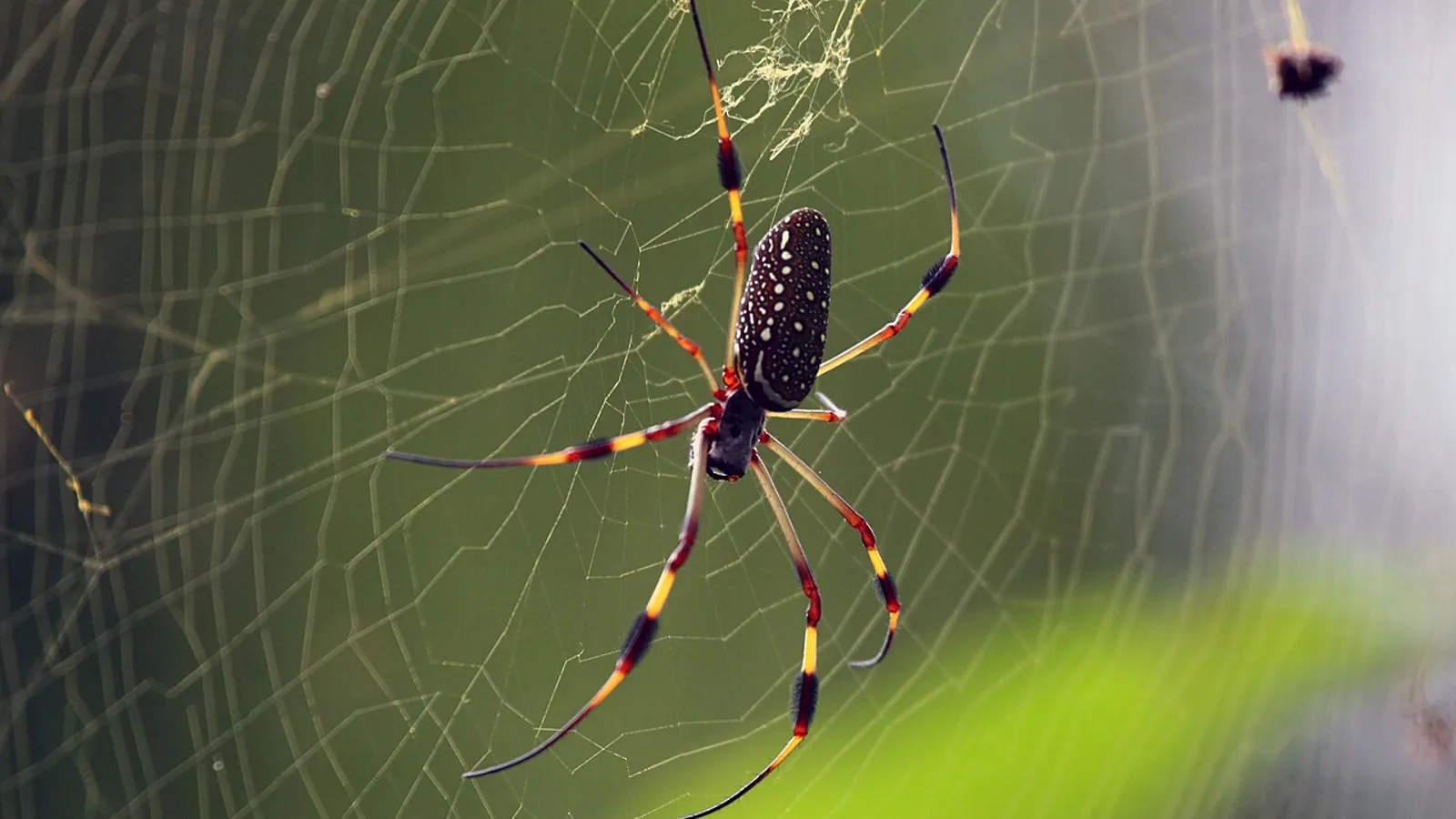
Nephila, inside the genus name, reads as “fond of spinning”, from nêin, to spin, and phílos: few animals have earned such a name. Clavipes is “club-footed”, for the tufts of dark hair thickening the female’s legs. The common name looks instead at the silk, which really is golden and shines in the sun like metal.
— Facts
- Group
- Arachnids · Arachnida
- Order
- Spiders
- Habitat
- Clearings and forest edges, where large webs can be hung
- Range
- From the southern United States to Argentina
- Size
- Female 24–40 mm, male 4–6 mm
- Diet
- Flying insects, occasionally small birds
- Lifespan
- 1 year
— Characteristics
- 01
The web reaches a metre and a half across and lasts for years.
- 02
The silk really is yellow, and the colour attracts pollinating insects.
- 03
The male is ten times smaller than the female and lives at the edge of her web.
— What sets it apart
Its silk is tougher than steel for its weight and more elastic than Kevlar, and for two centuries people have tried to weave it. It has been managed on a visible scale only once: between 2004 and 2009 a team in Madagascar collected over a million spiders of the related species, milked each of a few dozen metres of thread, and produced two golden textiles, now on show in London and New York. They are the only ones in the world. Farming the spiders is impossible because they eat one another, which is why spider silk is now being made with genetically modified bacteria and yeasts instead.
