
Mediterranean recluse spider
Loxosceles rufescens
— Where the name comes from
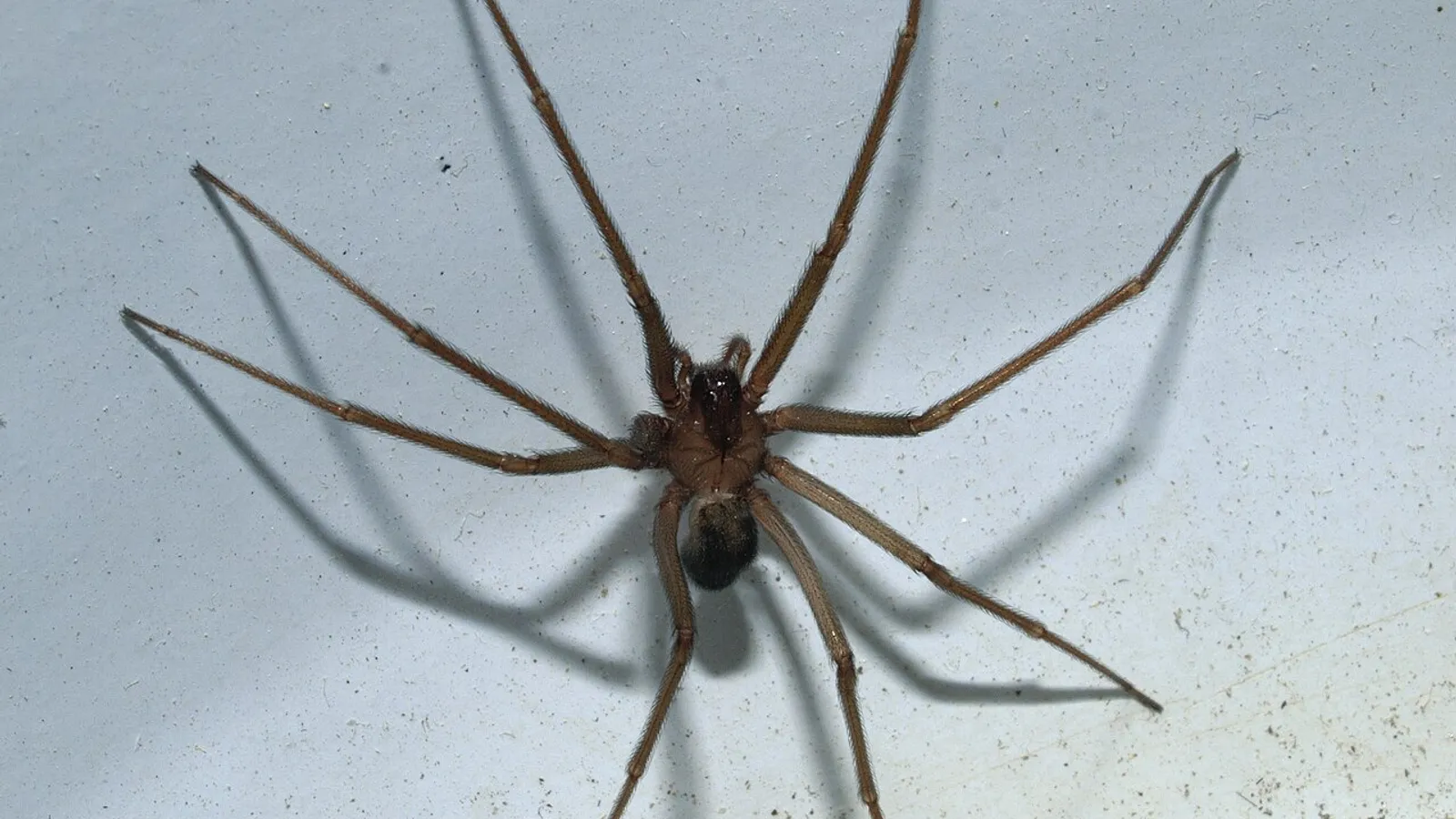
Loxosceles is “slant-legged”, from loxós, oblique, and skélos, the leg: it stands with its legs bent and splayed like a crooked star. Rufescens is the colour, a dull reddish brown. The Italian name comes instead from the dark mark on the cephalothorax, shaped like a violin with the neck pointing backwards — the only character that allows it to be recognised at a glance.
— Facts
- Group
- Arachnids · Arachnida
- Order
- Spiders
- Habitat
- Houses, cellars, dry stone walls, dry undisturbed places
- Range
- The Mediterranean basin; introduced across much of the world
- Size
- 7–9 mm of body
- Diet
- Small insects, hunted at night without a web
- Lifespan
- 2–4 years
— Characteristics
- 01
It has six eyes arranged in pairs, not eight like almost all spiders.
- 02
It builds no hunting web: it wanders at night looking for prey.
- 03
The bite is painless at the time and shows itself hours later.
— What sets it apart
It is the only dangerous spider common in Italy alongside the Mediterranean black widow, but its reputation far outruns the facts: most bites produce nothing serious, and a great many skin lesions attributed to it in emergency rooms turn out to be bacterial infections. When the venom does act, it contains a rare enzyme — a sphingomyelinase — that destroys cell membranes and can open a necrosis slow to heal. It is shy, and bites only when pressed against skin: the typical cases are a jumper left in a cellar or a sheet hung outside.
