
Raft spider
Dolomedes fimbriatus
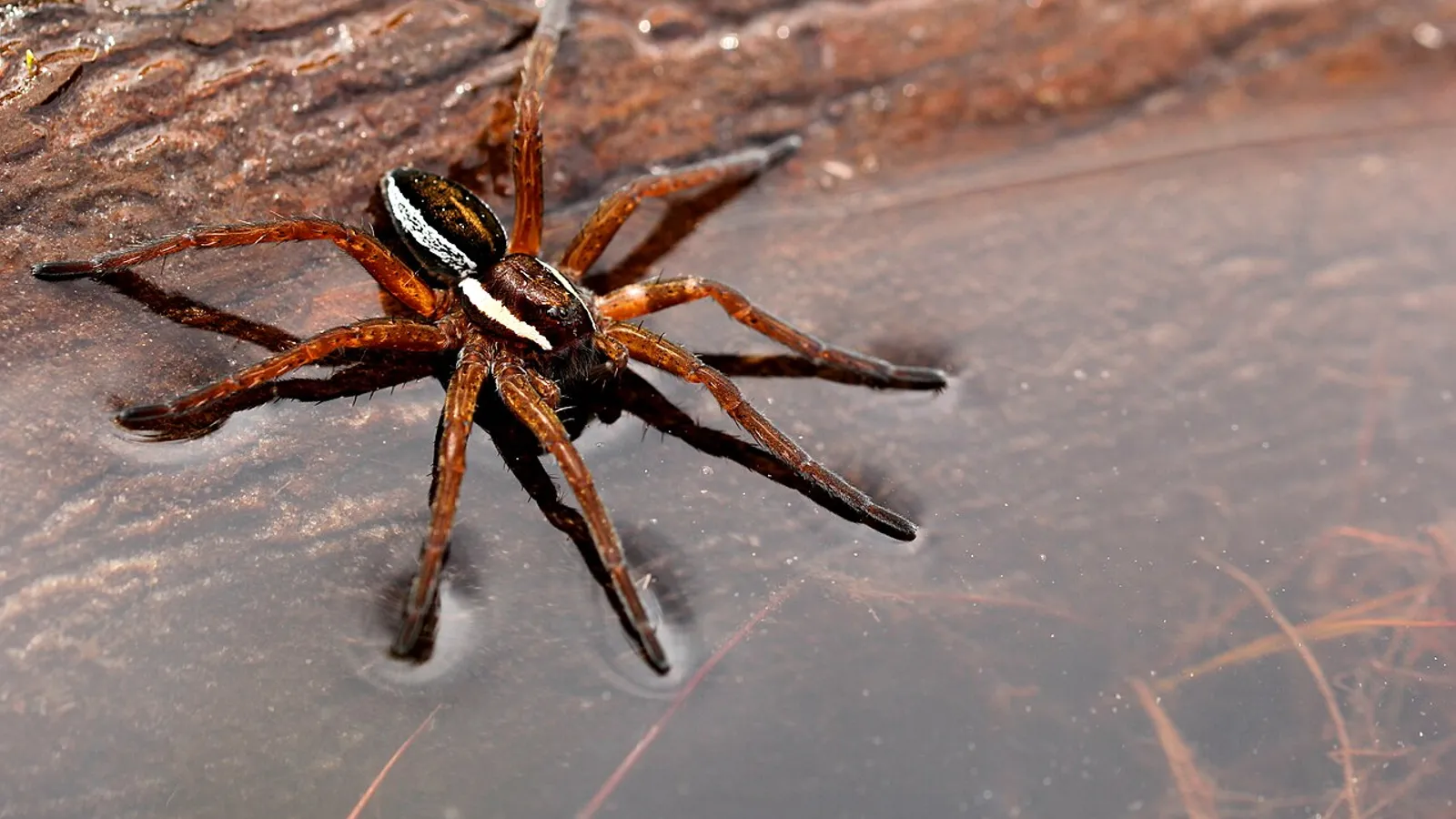
— Where the name comes from
Dolomedes comes from the Greek dolomḗdēs, “full of wiles”, made of dólos — trickery, the same word as the Trojan horse’s — and mêdos, the plan. It is the adjective Homer uses of Odysseus. Fimbriatus means “fringed”, for the pale band edging its flanks. A spider that lies in wait on the surface film could not be better named.
— Facts
- Group
- Arachnids · Arachnida
- Order
- Spiders
- Habitat
- Bogs, ponds and still water with emergent vegetation
- Range
- Europe and northern Asia
- Size
- Female up to 22 mm, male 13 mm
- Diet
- Aquatic insects, tadpoles, fry
- Lifespan
- 2 years
— Characteristics
- 01
It walks on water, setting its legs down without breaking the surface.
- 02
It dives and stays under for several minutes, wrapped in a film of air.
- 03
It senses prey from the ripples crossing the surface.
— What sets it apart
It uses the water as a web. It rests its front legs on the surface and reads the ripples made by a fallen insect: from their frequency it tells struggling prey from the tremor of the wind, and launches in the right direction. If a bird threatens it, it dives down a stem, held under a sheet of air that its water-repellent hairs keep against it, and can stay there for several minutes. The larger females take tadpoles and small fish heavier than themselves, dragging them ashore to eat at leisure.
