
Mediterranean tarantula
Lycosa tarantula
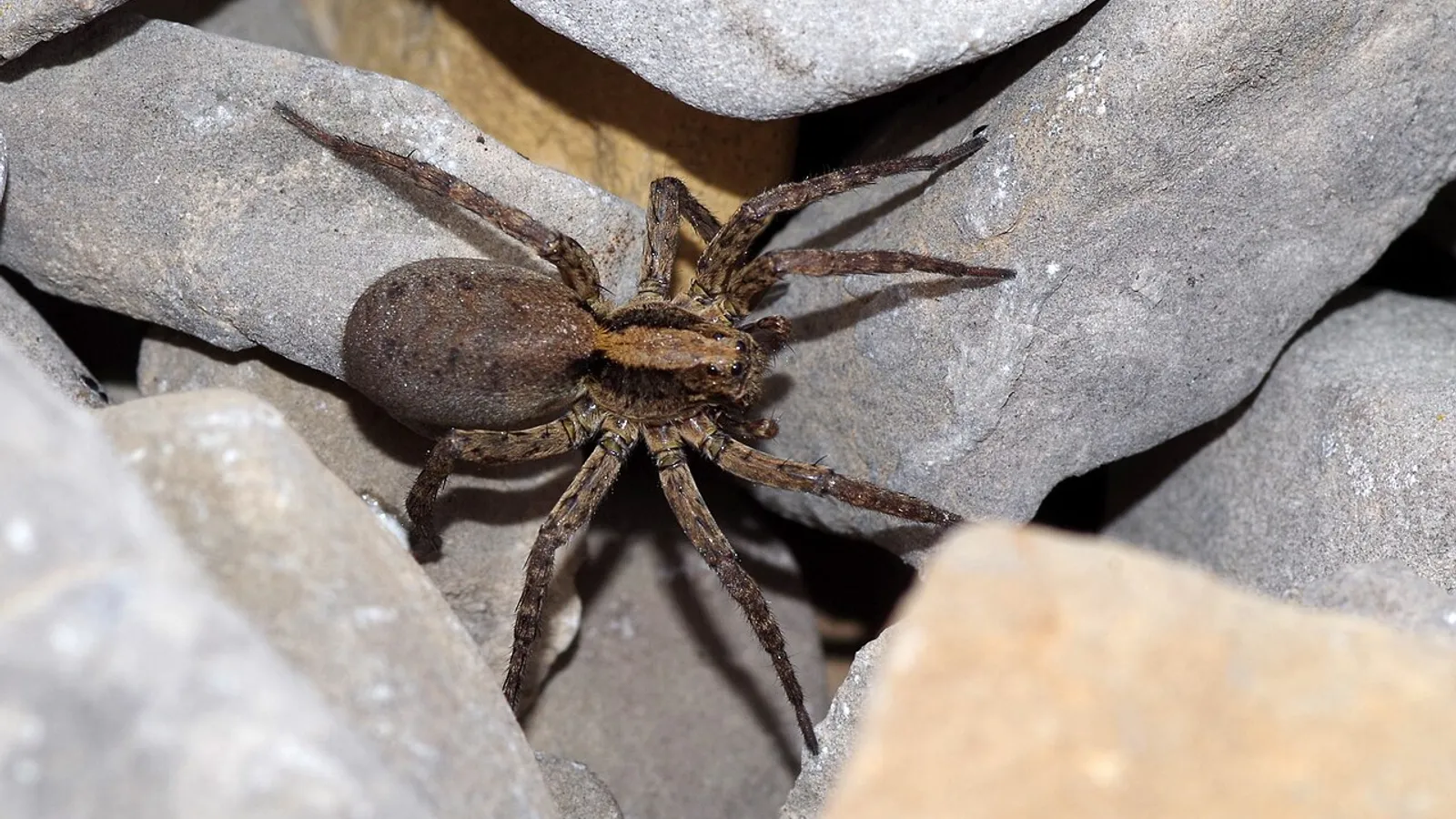
— Where the name comes from
This is the spider that gave its name to all the others. Tarantula comes from Taranto, where its bite was held to cause tarantism, the crisis cured by dancing to exhaustion: from there come the tarantella and the word “tarantula”. Then the name travelled — European colonists in America stuck it on the big hairy spiders, which have nothing to do with it — and today “tarantula” means, almost everywhere, animals other than this one. Lycosa is instead the Greek lýkos, the wolf: it hunts by pursuit, not with a web.
— Facts
- Group
- Arachnids · Arachnida
- Order
- Spiders
- Habitat
- Dry sunlit ground, in vertical burrows lined with silk
- Range
- Southern Europe, from Spain to the Balkans
- Size
- Female up to 30 mm, male 19 mm
- Diet
- Insects and other arthropods taken at the burrow mouth
- Lifespan
- Female up to 4 years
— Characteristics
- 01
It digs a vertical burrow 20–30 cm deep and guards the entrance.
- 02
The mother carries her young on her abdomen for weeks after they hatch.
- 03
The bite is painful but not dangerous to humans.
— What sets it apart
Tarantism was not poisoning. This spider’s bite causes local pain and nothing more, and the physicians who went to Apulia to check noticed as much already in the eighteenth century: what was happening was a cultural phenomenon, a healing rite in which the crisis — nearly always a woman’s — was recognised, accompanied by music and dissolved in dance. Ernesto De Martino studied it in 1959 and made of it The Land of Remorse, one of the founding books of Italian anthropology. Of the spider, meanwhile, the name survives, lent to half the world and to a dance still played.
