
Quokka
Setonix brachyurus
— Where the name comes from
Quokka comes from the Noongar gwaga, the Aboriginal language of south-western Australia. Setonix is Greek and Latin, saeta, “bristle”, and ónyx, “claw”, for the stiff nails; brachyurus means “short-tailed”. The name of the island where it is most abundant, Rottnest, is Dutch and means “rats’ nest”: the explorer Willem de Vlamingh, in 1696, mistook the quokka colonies for giant rats.
— Facts
- Group
- Mammals · Mammalia
- Order
- Diprotodont marsupials
- Habitat
- Dense scrub, coastal heath, wetlands with low vegetation
- Range
- South-western Australia; the main population on Rottnest Island
- Size
- 40–54 cm long plus 25–30 of tail, 2.5–5 kg
- Diet
- Herbivore — leaves, grasses, bark, succulent shrubs
- Lifespan
- About 10 years
— Characteristics
- 01
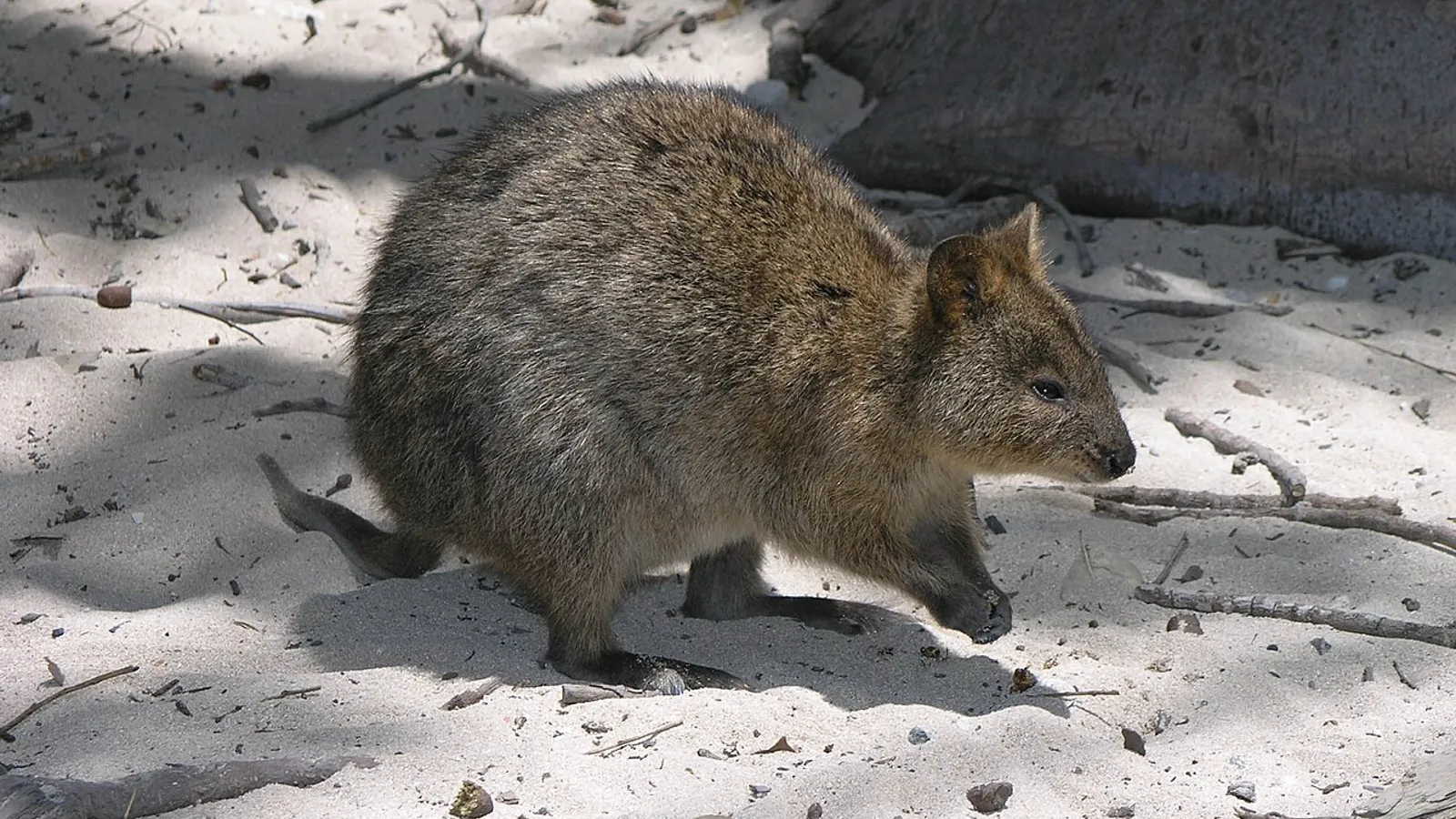
The shape of the mouth at rest resembles a smile, which is why it has become a social media phenomenon.
- 02
It can survive months without fresh water, taking it from vegetation.
- 03
It climbs bushes and low trees to a metre and a half to reach leaves.
— What sets it apart
Like many marsupials it practises embryonic diapause: after giving birth the female immediately conceives a second embryo and holds it suspended at the blastocyst stage, motionless, for months. If the joey in the pouch survives, that embryo stays waiting; if it dies, development restarts at once and within a few weeks a replacement is born. It is a biological backup copy, kept paused in an environment where drought can wipe out a litter from one month to the next.
