
Atlantic puffin
Fratercula arctica
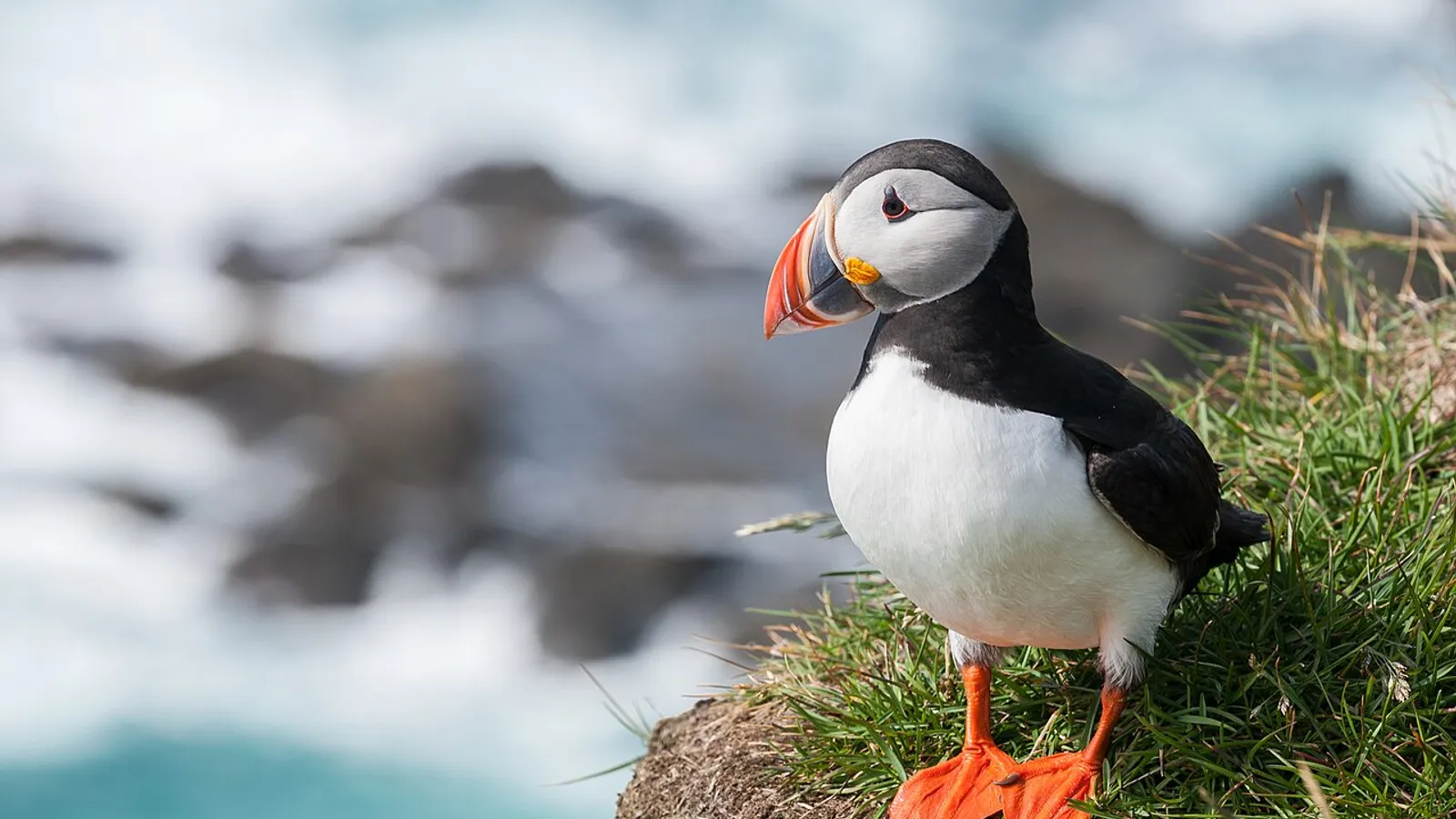
— Where the name comes from
Fratercula is medieval Latin for “little friar”, from the black and white plumage that recalls a habit; arctica, “of the north”. The Italian name evokes the Pulcinella mask for the coloured bill and the comic look. In English it is the puffin. It resembles a penguin, but is not one: it flies superbly.
— Facts
- Group
- Birds · Aves
- Order
- Shorebirds
- Habitat
- Sea cliffs for nesting, open sea the rest of the year
- Range
- The coasts of the North Atlantic
- Size
- 28–30 cm, wingspan 47–63 cm
- Diet
- Fish eater — small fish such as sand eels and herring
- Lifespan
- 20–30 years
— Characteristics
- 01
The bright orange and blue bill only lights up in the breeding season and then fades.
- 02
It beats its wings up to 400 times a minute, hurtling along at 80 km/h.
- 03
It digs a burrow in the cliff-top soil with its feet, and lays a single egg there.
— What sets it apart
The puffin can hold dozens of small fish in its bill at once, lined up and still alive, while it goes on catching more: the bill carries backward-pointing horny spines and a muscular tongue that press each fish against the palate, holding it without biting. The documented record is over sixty fish in one load. That way it can provision the chick in a single trip, instead of climbing back up the cliff empty every time.
