
Grey heron
Ardea cinerea
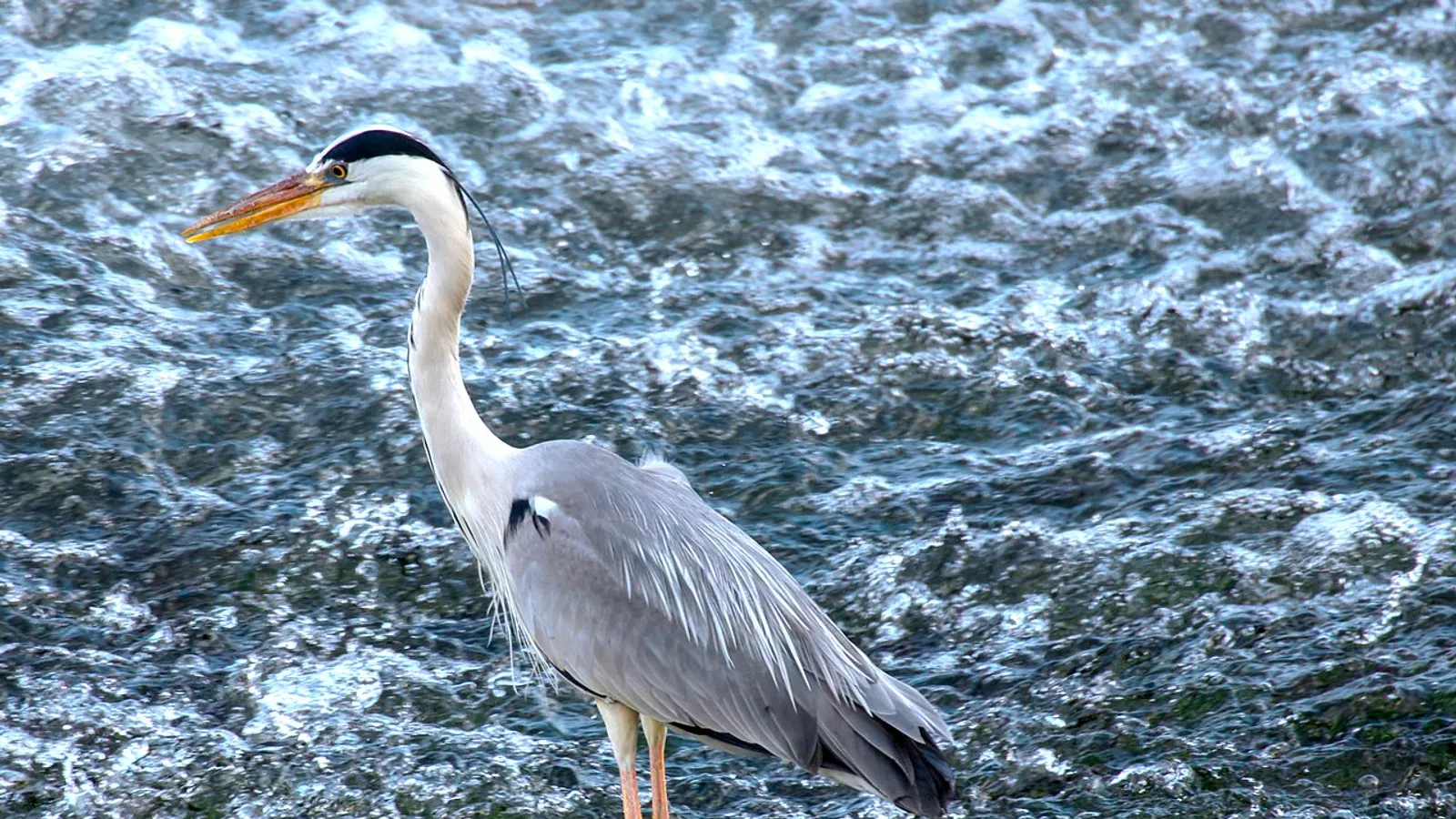
— Where the name comes from
Ardea is the Latin name of the heron, perhaps linked to a mythical town in Latium which, burnt to the ground, was said to have risen from the ashes as a bird. Cinerea, “ashen”, from the grey of the plumage: the colour and the legend hold hands inside the name.
— Facts
- Group
- Birds · Aves
- Order
- Pelicans and allies
- Habitat
- River banks, lakes, ponds, coasts, rice fields
- Range
- Europe, Asia, Africa
- Size
- 84–102 cm, wingspan 155–195 cm
- Diet
- Carnivore — fish, amphibians, small mammals, insects
- Lifespan
- 5–15 years
— Characteristics
- 01
It fishes motionless for long minutes, then strikes with a lightning uncoiling of the neck.
- 02
It flies with the neck folded into an S, not stretched forward like a stork.
- 03
It nests in noisy tree colonies, heronries, shared with other herons.
— What sets it apart
The heron hunts with absolute patience: it stands still on one leg, neck gathered like a spring, until a fish comes close, then strikes in a flash. It also has a little-known trick: from the breast feathers it produces a special “powder”, a crumbling down it deliberately breaks up and rubs itself with to absorb fish slime and oil, cleaning its plumage without water. Few birds wash themselves with their own face powder.
